
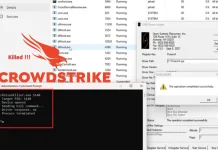
Researcher Reverse Engineered 0-Day Used to Disable CrowdStrike EDR
Endpoint Detection and Response (EDR) solutions are the frontline defenders in modern cybersecurity, designed to catch even the most sophisticated threats. But what happens when these critical tools can be bypassed or even disabled? A recent discovery by a cybersecurity researcher has sent ripples through the industry, revealing a novel Bring Your Own Vulnerable Driver (BYOVD) attack capable of neutralizing top-tier EDR systems, including the formidable CrowdStrike Falcon.
This isn’t merely theoretical; it’s a stark reminder that even the most robust security architectures can have exploitable blind spots. Understanding this attack vector is paramount for IT professionals, security analysts, and developers striving to fortify their digital defenses.
The BYOVD Threat: A Deep Dive into a Nuisance
The term “Bring Your Own Vulnerable Driver” (BYOVD) describes a class of attacks where threat actors leverage legitimate, but vulnerable, kernel-mode drivers to achieve privileged access or disrupt system operations. These drivers, often signed by trusted vendors, are typically used for hardware communication or system optimization. The critical flaw lies not in the driver’s original intent, but in its exploitable vulnerabilities, which attackers can weaponize.
In this particular case, the researcher reverse-engineered a previously unknown zero-day kernel driver. This driver, whose identity has not been publicly disclosed by the initial report, allowed the attacker to gain deep insights into its internal workings. The core revelation is how threat actors skillfully manipulate these legitimate drivers to achieve a complete bypass of EDR systems.
How the 0-Day Disables CrowdStrike EDR
The essence of this particular BYOVD attack against CrowdStrike Falcon, and likely other EDR solutions, resides in its ability to manipulate the operating system at a fundamental level. EDRs operate by installing their own kernel-mode drivers to monitor system calls, process activity, file operations, and network traffic. They rely on the integrity of the operating system’s kernel to function effectively.
By exploiting a zero-day vulnerability within a legitimately signed driver, the attacker can achieve kernel-level privileges. This elevated access allows them to directly interact with and manipulate the operating system’s core functions. In the context of EDRs, this translates to the ability to:
- Unload or Disable EDR Drivers: The attacker, with kernel-level access, can issue commands to unload or disable the CrowdStrike Falcon driver, effectively blinding the EDR.
- Hook EDR Functions: Alternatively, the attacker could hook into the EDR’s functions, manipulating their behavior or preventing them from reporting malicious activity.
- Bypass EDR Protections: By operating at a lower level than the EDR, the attacker can execute malicious code or perform actions that the EDR is designed to prevent, making them invisible to its detection mechanisms.
The significance here is that the attack leverages a signed driver, meaning it carries a digital signature that makes it appear trustworthy to the operating system. This makes traditional signature-based detection methods ineffective, as the initial malicious activity originates from a seemingly legitimate source.
Understanding the Impact: Why This Matters
The ability to disable leading EDR solutions like CrowdStrike Falcon represents a significant escalation in attacker capabilities. EDRs are designed to detect and respond to advanced persistent threats (APTs) and sophisticated attacks that bypass traditional perimeter defenses. If these systems can be neutralized, organizations face:
- Blind Spots: Undetected malicious activity can persist within the network, leading to data breaches, ransomware attacks, or espionage.
- Increased dwell time: Without active EDR monitoring, threat actors can maintain a foothold in victim networks for extended periods, increasing the potential for damage.
- Erosion of Trust: If trusted drivers can be weaponized in this manner, it complicates trust models within the operating system.
Remediation Actions and Mitigations
Addressing BYOVD attacks requires a multi-layered approach that goes beyond simply patching known vulnerabilities. Given the nature of these sophisticated attacks, organizations should consider the following remediation actions:
- Strict Driver GRC (Governance, Risk, and Compliance): Implement rigorous policies for driver installation. Only allow whitelisted, essential drivers signed by trusted vendors. Leverage driver blocklists where possible.
- Patch Management: While this specific attack used a zero-day, it underscores the importance of a robust patch management program for all software, including third-party drivers. Attackers often pivot from known vulnerabilities to discover new ones.
- Enhanced Endpoint Visibility and Monitoring: Even if an EDR is temporarily disabled, other logs and system telemetry might reveal anomalous behavior. Strengthen logging and monitoring across all endpoints.
- Application Control/Whitelisting: Implement strict application control policies to prevent the execution of unauthorized executables and drivers. This can effectively block malicious drivers from loading even if they acquire a legitimate signature.
- Memory Integrity (Hypervisor-Enforced Code Integrity – HVCI): For Windows environments, enable HVCI. This feature, part of Windows Defender Application Guard, uses virtualization-based security to protect kernel-mode processes and drivers from tampering.
- Regular Security Audits and Penetration Testing: Conduct frequent security audits and penetration tests that specifically include scenarios for BYOVD and EDR bypass attempts.
- Endpoint Privilege Management: Limit administrative privileges on endpoints to reduce the attack surface.
- Investigate Alerts Thoroughly: Any anomalous behavior related to signed drivers, kernel activity, or EDR service status should be investigated immediately.
Relevant Tools for Detection and Mitigation
While this particular zero-day highlights a challenging attack vector, several categories of tools can aid in detection, analysis, and mitigation of BYOVD and related threats:
| Tool Name | Purpose | Link |
|---|---|---|
| Sysinternals Suite (e.g., Process Monitor, Autoruns) | Advanced system monitoring and analysis of running processes, loaded drivers, and startup items. | https://learn.microsoft.com/en-us/sysinternals/downloads/ |
| Windows Defender Application Control (WDAC) | Configurable policies for strict application and driver whitelisting/blacklisting. | https://learn.microsoft.com/en-us/windows/security/application-security/application-control/windows-defender-application-control/wdac-design-guide/ |
| Malwarebytes Endpoint Detection and Response | EDR for behavior-based detection and remediation, complementing primary EDR solutions. | https://www.malwarebytes.com/business/products/endpoint-detection-response |
| Threat Intelligence Platforms | Aggregation of known malicious driver hashes and indicators of compromise (IoCs). | (Various commercial and open-source options) |
Conclusion: Adapting to the Evolving Threat Landscape
The discovery of a zero-day BYOVD attack capable of disabling CrowdStrike EDR is a critical reminder of the constant arms race in cybersecurity. It highlights the need for organizations to look beyond signature-based protections and embrace a defense-in-depth strategy that incorporates robust endpoint controls, proactive threat hunting, and continuous security posture management. While no single solution offers absolute immunity, a layered defense, coupled with vigilant monitoring and rapid response capabilities, remains the most effective approach to safeguarding critical assets in an increasingly complex threat landscape.




