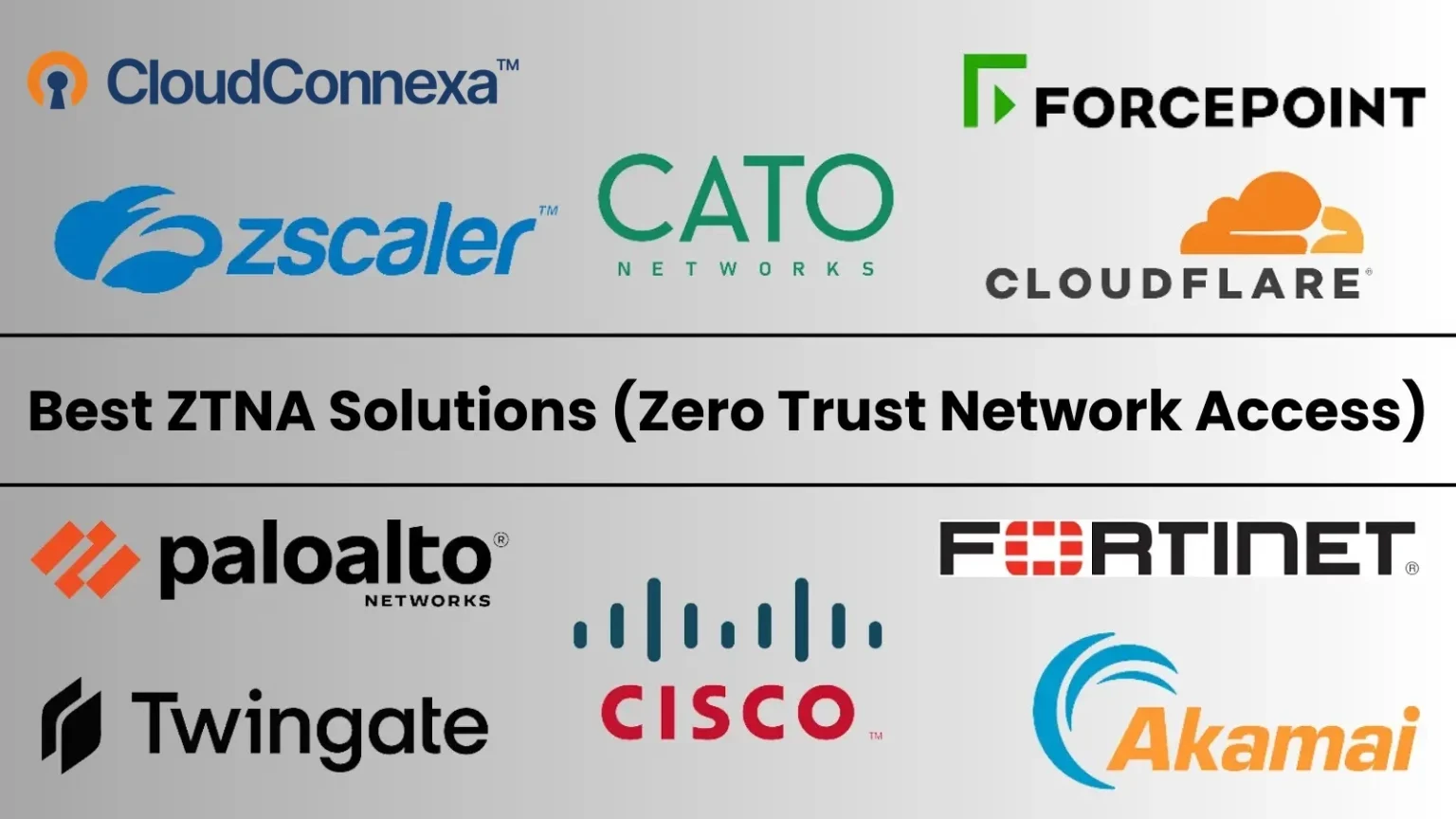
10 Best ZTNA Solutions (Zero Trust Network Access) In 2026
Securing the Borderless Enterprise: 10 Leading ZTNA Solutions for 2026
The landscape of enterprise cybersecurity has fundamentally shifted. With remote work becoming standard, cloud adoption accelerating, and hybrid infrastructures dominating, traditional perimeter-based security models are obsolete. Organizations are now operating in a world where access requests originate from anywhere, on any device, accessing resources housed everywhere. This paradigm demands a new approach: Zero Trust Network Access (ZTNA). ZTNA isn’t just another buzzword; it’s a critical strategy for data protection, ensuring regulatory compliance, and enabling agile, geographically dispersed teams.
At its core, ZTNA embodies the principle of “never trust, always verify.” It dictates that no user or device is inherently trusted, regardless of their location within or outside the corporate network. Every access request is rigorously authenticated and authorized before granting granular access to specific applications and resources, significantly shrinking the attack surface and thwarting lateral movement by malicious actors. Navigating the crowded ZTNA market to find the right fit, however, can be challenging. This article highlights the 10 best ZTNA solutions poised to lead the charge in 2026, offering a comprehensive look at their capabilities and how they address the evolving threat landscape.
Understanding Zero Trust Network Access (ZTNA)
ZTNA fundamentally redefines how access is granted to corporate resources. Unlike traditional VPNs, which often provide broad network access once authenticated, ZTNA operates on a principle of least privilege. It establishes secure, encrypted connections between authenticated users/devices and specific applications, effectively segmenting access and making resources invisible to unauthorized entities. This approach is location-agnostic, meaning a user accessing an application from a coffee shop receives the same rigorous verification as someone on the corporate campus.
Key benefits of implementing ZTNA include:
- Reduced Attack Surface: By limiting access to only necessary applications, ZTNA minimizes the pathways attackers can exploit.
- Prevention of Lateral Movement: Even if an attacker compromises one application, their access is contained, preventing them from moving freely across the network.
- Enhanced Data Protection: Granular access controls ensure sensitive data is only accessible to authorized individuals.
- Improved Compliance: ZTNA facilitates easier adherence to various regulatory requirements by providing detailed audit trails and enforcing strict access policies.
- Secure Remote and Hybrid Work: It seamlessly secures access for a distributed workforce, regardless of their physical location or the device they use.
The Rise of ZTNA in 2026
The push towards ZTNA is not slowing down. As organizations continue to embrace cloud-native applications and microservices architectures, the perimeter dissolves entirely. In 2026, ZTNA will be an indispensable component of any robust cybersecurity strategy. The demand for solutions that can integrate seamlessly with existing identity providers, offer advanced threat intelligence, and provide a frictionless user experience will drive innovation and adoption.
The market is responding with increasingly sophisticated offerings that go beyond basic access control, incorporating elements like continuous monitoring, behavioral analytics, and integration with Security Service Edge (SSE) platforms. The aim is to create a dynamic, adaptive security posture that can react in real-time to evolving threats and user contexts.
Top 10 ZTNA Solutions for 2026
While the full list of the 10 best ZTNA solutions for 2026 can be found in the original Cyber Security News article, we can highlight key characteristics and examples of the leaders in this space. These solutions differentiate themselves through their comprehensive features, scalability, ease of deployment, and advanced security capabilities.
Leading ZTNA providers are anticipated to excel in areas such as:
- Identity-centric Security: Deep integration with Identity and Access Management (IAM) systems.
- Device Posture Checks: Continuous assessment of device health and compliance before granting access.
- Micro-segmentation: Ability to create fine-grained access policies for individual applications and services.
- Cloud-Native Architecture: Designed for scalability and performance in cloud environments.
- Integrated Threat Protection: Combining ZTNA with other security services like SWG (Secure Web Gateway) and CASB (Cloud Access Security Broker).
- Exceptional User Experience: Providing secure access without hindering productivity.
Why ZTNA is Not a Remediation Action, But a Proactive Strategy
It’s important to clarify that ZTNA itself is not a remediation action for a specific vulnerability, but rather a fundamental architectural shift designed to prevent a wide array of cyberattacks. Instead of reacting to breaches, ZTNA proactively shrinks the attack surface, making it significantly harder for threat actors to succeed. For example, while a vulnerability like CVE-2023-XXXXX (placeholder for a hypothetical, relevant CVE) might exploit weaknesses in a traditional network, a well-implemented ZTNA solution would likely prevent access to the vulnerable system in the first place or severely limit the scope of compromise.
However, the implementation of ZTNA solutions does involve remediation in the sense of addressing existing security gaps. This includes migrating away from outdated VPNs, enforcing multi-factor authentication (MFA) everywhere, and rigorously defining access policies. The “remediation” is in shoring up the fundamental architecture rather than patching a specific software flaw.
Key Takeaways for ZTNA Adoption
The shift to Zero Trust Network Access is an imperative for organizations navigating the complexities of the modern digital world. As we move further into 2026, the solutions highlighted in the full report will be instrumental in defining the next generation of enterprise security. Prioritizing ZTNA means embracing a security model that is agile, resilient, and inherently more secure than its predecessors.
When evaluating ZTNA solutions, consider scalability, integration capabilities, user experience, and the vendor’s commitment to continuous innovation. The goal is to choose a partner that can not only meet your current security needs but also evolve with your organization as the threat landscape continues to change.