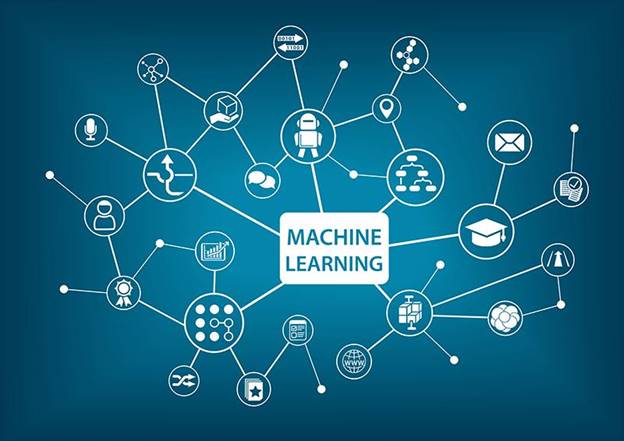
The Role of Machine Learning in Threat Detection
The Role of AI and Machine Learning in Cybersecurity Threat Detection
In today’s digital landscape, where evolving cyber threats pose significant risks to businesses of all sizes, the integration of artificial intelligence (AI) and machine learning (ML) into cybersecurity strategies is not just an advantage but a necessity. Teamwin Global Technologica recognizes the paramount importance of leveraging these advanced technologies to enhance threat detection and ensure the security of enterprise data and intellectual property.
Introduction to Cybersecurity and AI
Understanding Cybersecurity
Cybersecurity is the practice of protecting computer systems, networks, and digital data from cyber threats, which include unauthorized access, theft, damage, or disruption. Effective cybersecurity measures are essential for maintaining:
- Confidentiality
- Integrity
- Availability of information
Teamwin Global Technologica specializes in empowering clients through a comprehensive suite of IT security solutions, including firewalls, endpoint security, privileged access management (PAM), and endpoint protection management (EPM). These solutions are designed to safeguard against known threat actors and vulnerabilities, ensuring robust protection for businesses.
The Emergence of AI and Machine Learning
The emergence of AI and machine learning has revolutionized various fields, including cybersecurity. AI, encompassing the development of intelligent agents that can reason, learn, and act autonomously, offers unprecedented capabilities for analyzing vast amounts of data. Machine learning, a subset of AI, enables systems to learn from data without explicit programming. These advancements are particularly valuable in cybersecurity, where the ability to analyze network traffic, identify patterns, and predict potential threat activities is crucial for proactive defense.
Importance of Threat Detection
Threat detection is a critical component of cybersecurity, involving the identification and analysis of potential threat activities before they can cause harm. Traditional security systems often struggle to keep pace with the sophistication and volume of modern cyber threats. However, by harnessing the power of AI and machine learning, organizations can significantly enhance threat detection capabilities. Teamwin Global Technologica offers enterprise AI-driven next-generation firewalls and real-time Dark Web monitoring to anticipate and mitigate cyber risks, ensuring a robust security posture and swift detection and response to potential threats.
Machine Learning Techniques in Cybersecurity

Types of Machine Learning
The landscape of machine learning in cybersecurity encompasses several types of learning techniques. These techniques offer unique capabilities, and include:
- Supervised learning, which involves training a model on labeled data to predict future outcomes, making it invaluable for tasks like malware detection and spam filtering.
- Unsupervised learning, which excels at identifying patterns and anomalies in unlabeled data, enabling the discovery of previously unknown security threats.
Reinforcement learning, another key technique, involves training agents to make decisions in an environment to maximize a reward, which can be applied to optimize security policies and responses.
Learning Models and Algorithms
Various learning models and machine learning algorithms power machine learning in cybersecurity, each suited for specific tasks. These machine learning algorithms are varied, and include options such as:
- Decision trees
- Support vector machines
- Neural networks
These algorithms are employed to analyze vast amounts of data and identify patterns indicative of potential threats. Deep learning, a subset of machine learning, utilizes artificial neural networks with multiple layers to extract complex features from data, enhancing the accuracy of threat detection capabilities. The choice of machine learning algorithms depends on the specific security challenge and the nature of the data being analyzed, requiring careful consideration to ensure optimal performance.
Machine Learning for Threat Detection
The role of machine learning in enhancing threat detection is pivotal in modern cybersecurity. By leveraging machine learning, security teams can automate the analysis of network traffic, system logs, and other data sources to identify potential threat activities in real-time. Anomaly detection, powered by machine learning, enables the identification of deviations from normal behavior, signaling potential security threats that might otherwise go unnoticed by traditional security systems. Integrating machine learning in cybersecurity enhances threat detection and response capabilities, enabling organizations to proactively defend against evolving cyber threats and maintain a robust security posture. These machine learning enhances the ability to protect against evolving cyber threats.
The Role of AI in Cybersecurity

AI and Machine Learning Integration
The integration of AI and machine learning in cybersecurity represents a paradigm shift in how organizations approach threat detection and response. AI systems can analyze vast amounts of data, identify patterns, and make predictions with speed and accuracy that surpass human capabilities. By leveraging machine learning techniques, security teams can automate many tasks, such as anomaly detection and malware analysis, freeing up human analysts to focus on more complex and strategic initiatives. This integration is essential for maintaining a robust security posture in the face of evolving cyber threats.
Enhancing Network Security with AI
AI plays a crucial role in enhancing network security by providing real-time threat intelligence and automating security measures. AI and ML algorithms can analyze network traffic to identify potential threat activities, such as unauthorized access attempts or data exfiltration. Intrusion detection systems powered by AI can detect anomalies and suspicious behavior that might indicate a security breach. By continuously learning from new data, AI enhances the effectiveness of security systems, providing a proactive defense against cybersecurity threats. Enhancing network security with AI ensures that organizations are well-equipped to defend against evolving cyber threats.
Role of AI in Threat Intelligence
AI significantly enhances threat intelligence by automating the collection, analysis, and dissemination of threat-related information. AI and ml models can analyze vast amounts of data from various sources, including security blogs, social media, and dark web forums, to identify emerging cybersecurity threats and vulnerabilities. Machine learning algorithms can also be used to predict future cyber attacks based on historical data and current threat trends. By leveraging AI in threat intelligence, organizations can stay ahead of potential threats and proactively implement security measures to mitigate risks. The role of AI is key to provide real-time threat.
Applications of Machine Learning in Threat Detection

Anomaly Detection Techniques
One of the most powerful applications of machine learning in cybersecurity lies in anomaly detection techniques. Machine learning algorithms can be trained to identify patterns of normal behavior within a network or system, enabling them to detect deviations that may indicate a security breach. By analyzing network traffic, system logs, and user activity, anomaly detection systems can flag suspicious behavior that might otherwise go unnoticed by traditional security systems. This capability is crucial for detecting insider threats, zero-day exploits, and other advanced cybersecurity threats. These machine learning enhances the ability to detect malicious activities efficiently, safeguarding critical assets and data.
Threat Hunting with Machine Learning
Threat hunting is a proactive cybersecurity approach that involves actively searching for potential cyber threats within an organization’s network. Machine learning can significantly enhance threat hunting efforts by automating the analysis of vast amounts of data and identifying patterns indicative of malicious activity. Security teams can leverage machine learning models to prioritize potential threats, investigate suspicious incidents, and uncover hidden security breaches. By combining human expertise with the power of machine learning, organizations can improve their threat detection capabilities and proactively mitigate cyber risks. Threat hunting is also essential in identifying known threat and reducing the impact of potential breach.
Case Studies in Cybersecurity
Numerous case studies highlight the successful application of AI and machine learning in cybersecurity. For example, machine learning models have been used to detect and prevent large-scale malware outbreaks, identify phishing attacks, and prevent insider threats. In one case, a financial institution used machine learning to analyze transaction data and detect fraudulent activity with high accuracy. In another case, a healthcare provider used AI to analyze patient records and identify potential security breaches. These case studies demonstrate the practical benefits of integrating AI and machine learning into cybersecurity strategies, enhancing threat detection and response capabilities. These cyber security improves the overall security posture.
Challenges and Limitations
Limitations of AI and Machine Learning
While AI and machine learning offer significant advantages in cybersecurity, it is essential to acknowledge their limitations. AI and ML models are only as good as the data they are trained on, and biased or incomplete data can lead to inaccurate predictions. Additionally, adversaries can use adversarial attacks to deceive AI systems and evade detection. AI also still requires human oversight to validate security measures. Despite these limitations, AI remains a powerful tool for enhancing threat detection and response capabilities. Also known threat have to be updated regularly.
Security Teams and Human Oversight
Despite the advancements in AI and machine learning, human oversight remains crucial in cybersecurity. Security teams play a vital role in interpreting the results of AI-powered security systems, validating potential threats, and responding to security incidents. Human analysts can also provide valuable context and expertise that AI systems may lack, such as understanding the motivations and tactics of threat actors. The integration of AI and human intelligence is essential for maintaining a robust and effective security posture. Humans can also validate machine learning algorithms results.
Future of AI in Cybersecurity
The future of AI in cybersecurity is promising, with ongoing advancements in machine learning algorithms, deep learning techniques, and AI-powered security tools. As AI models become more sophisticated and data sets continue to grow, AI will play an increasingly important role in threat detection, incident response, and security automation. Explainable AI is also an emerging field that aims to make AI models more transparent and understandable, enhancing trust and confidence in AI-driven security solutions. The future of AI will be able to enhance threat capabilities.

How does machine learning in cybersecurity improve malware detection?
Machine learning models analyze large volumes of telemetry to identify malicious patterns that traditional signature-based tools miss, enabling automated malware detection. Supervised and unsupervised learning techniques detect novel variants and polymorphic malware, supporting continuous learning so security teams can respond to cyber threats faster and reduce dwell time.
What is the role of machine learning model selection in enhancing threat detection?
Choosing the right machine learning model—whether tree-based, neural networks, or anomaly detectors—affects detection accuracy, false positive rates, and inference speed. The model selection process is pivotal for automating threat detection within security operations and for balancing performance with explainable AI requirements so analysts can trust and act on alerts.
How do ai and ml in cybersecurity help respond to threats proactively?
AI and ML automate correlation of events across endpoints, networks, and cloud environments, enabling proactive threat hunting and early warning of advanced threats. By integrating with security information and event management (SIEM) systems, ai-driven cybersecurity workflows can prioritize incidents and allow security teams to focus on high-risk responses.
Can unsupervised learning and federated learning enhance cyber threat detection without compromising privacy?
Unsupervised learning discovers unknown attack patterns by clustering and anomaly detection without labeled data, while federated learning trains models across distributed devices without moving raw logs. Together they enable machine learning for cybersecurity that preserves privacy, supports continuous learning across organizations, and helps respond to threats without centralizing sensitive data.
How do explainable AI techniques make ml model outputs usable for security teams?
Explainable AI provides interpretable reasons for alerts, highlighting features and causal signals that led to a threat classification. This transparency reduces triage time for security teams, improves trust in automated systems, and helps integrate ML outputs into security operations and incident-response playbooks.
In what ways does automating threat detection with machine learning change security operations?
Automating threat detection streamlines monitoring, reduces alert fatigue, and frees analysts to focus on strategic tasks like threat hunting and remediation. ML-driven automation enables faster detection of emerging tactics in the threat landscape and supports SOC scale by enriching SIEM data, correlating incidents, and suggesting prioritized actions.
What challenges exist when deploying ai-driven cybersecurity and how can they be mitigated?
Challenges include model drift, adversarial attacks, data quality issues, and integration with existing cybersecurity systems. Mitigations include continuous learning pipelines, adversarial testing, robust feature engineering, ongoing validation, and tight integration with security information and event management to ensure practical, reliable deployment.
How will ml in cybersecurity shape the future of cybersecurity and the fight against advanced threats?
Machine learning enhances detection speed and scale, enabling predictive analytics, automated containment, and adaptive defenses that evolve with the threat landscape. As ai and ml techniques like federated learning and explainable AI mature, they will play a pivotal role in creating resilient, proactive cybersecurity systems that allow security teams to focus on strategy while ML models handle routine detection and response.