
Model Poisoning Attacks: How AI Training Data Gets Compromised.
How AI Data Poisoning: Vulnerabilities, Corrupted Data, and Security
The proliferation of artificial intelligence across industries has brought unprecedented innovation and efficiency. However, this rapid advancement also introduces complex challenges, particularly concerning the security and integrity of AI systems. One of the most insidious threats emerging in the AI landscape is data poisoning, a sophisticated attack that can subtly corrupt AI models, leading to significant security vulnerabilities and compromised data.
Understanding AI Data Poisoning
What is AI Data Poisoning?
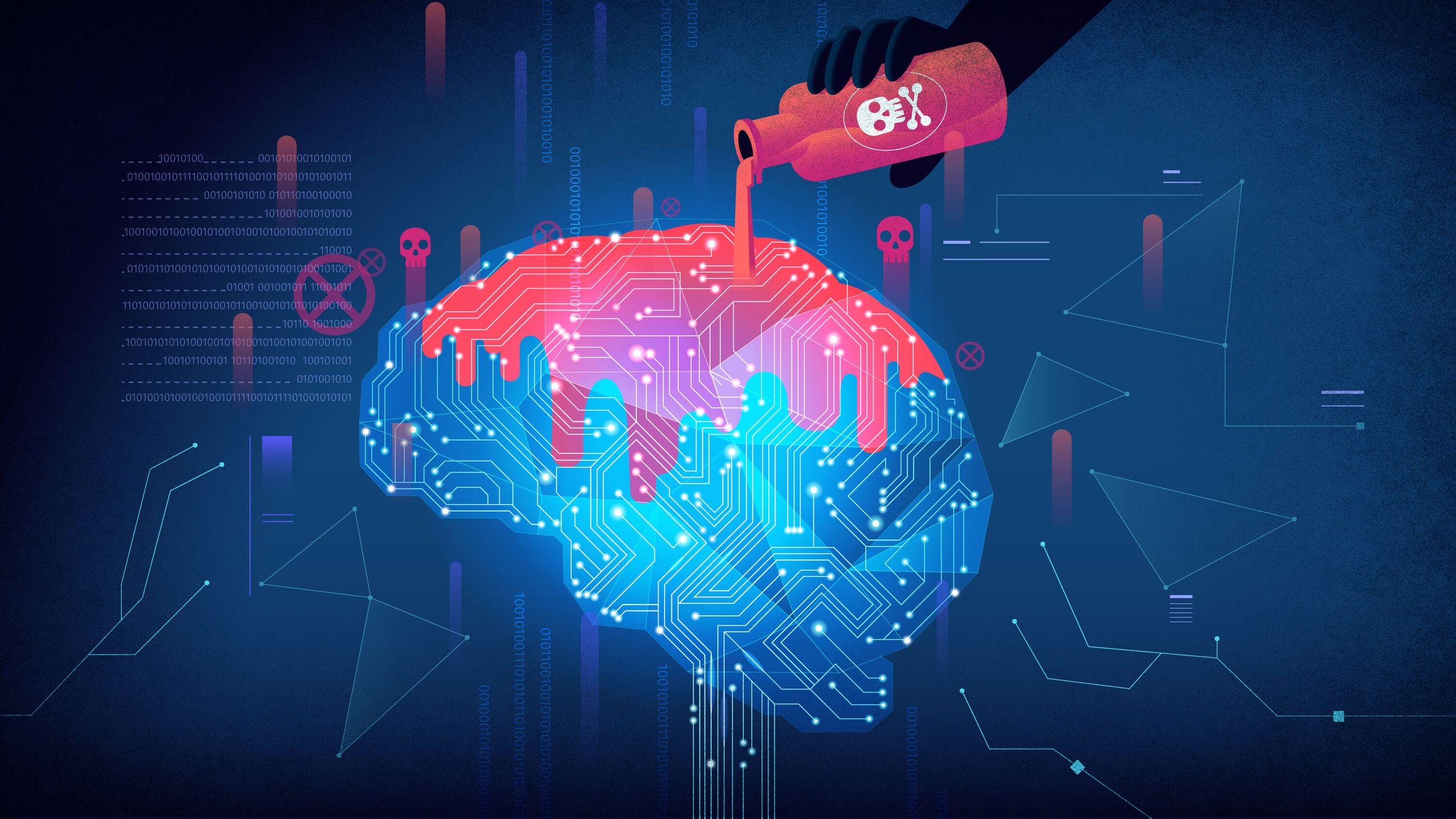
AI data poisoning represents a malicious effort to compromise an AI model’s integrity by introducing corrupted data into its training dataset. This intentional data manipulation during the AI training process is designed to subvert the AI model’s performance, leading to erroneous model outputs or creating hidden vulnerabilities. Essentially, attackers inject poisoned data into the training dataset, causing the AI system to learn from flawed information, which can have detrimental effects on the AI model’s reliability and ethical operation. Understanding these types of AI data poisoning is crucial for robust AI security.
Mechanisms of Data Poisoning Attacks
Data poisoning attacks employ various sophisticated mechanisms to introduce poisoned data into an AI model’s training data. These can range from targeted data poisoning, where specific data points are altered to cause a model to misclassify particular inputs, to more pervasive data injection methods that corrupt a larger portion of the training dataset. Attackers often exploit vulnerabilities in data sources or supply chain attack vectors to introduce malicious data, making the compromised data difficult to detect. This data manipulation impacts the model’s training data and ultimately, model performance, potentially leading to backdoor attacks or other serious security flaws within the AI system.
Vulnerabilities in AI Systems
AI systems, despite their advanced capabilities, possess inherent vulnerabilities that can be exploited for data poisoning. A primary weakness lies in the reliance on external data and third-party data providers, which can serve as conduits for introducing poisoned data into the AI training data. Insufficient data validation and data sanitization processes also create significant data poisoning vulnerabilities, allowing corrupted data to infiltrate the training dataset without detection. Furthermore, the complexity of large language models and generative AI models can obscure the presence of malicious data, making it challenging for AI developers to ensure data integrity and prevent AI data poisoning attacks effectively. Robust data validation and adversarial training are essential to prevent AI data poisoning.
Types of AI Data Poisoning Attacks

Common Types of Data Poisoning Attacks
There are several pervasive types of data poisoning attacks that an AI system can face, each designed to compromise the integrity of the AI model. Two common forms of these attacks include:
- Label flipping: Attackers manipulate the labels associated with training data points, causing the AI model to misclassify inputs during inference.
- Injecting malicious data directly into the training dataset, subtly altering the distribution of the clean data. This can include introducing corrupted data that closely resembles legitimate data, making detection challenging for AI developers.
Such data manipulation can significantly degrade model performance, leading to unreliable model outputs and undermining the overall AI security posture. Understanding these types of data poisoning attacks is crucial for developing robust data validation and data sanitization protocols.
Targeted vs. Non-Targeted Attacks
Data poisoning attacks can be broadly categorized into targeted and non-targeted approaches, each with distinct objectives and methods. Both approaches leverage vulnerabilities in data sources and the training process, highlighting the need for comprehensive data integrity measures and adversarial training to prevent AI data poisoning attacks.
Here’s a breakdown of the two types of attacks:
| Attack Type | Objective |
| Targeted Data Poisoning | To specifically influence an AI model’s behavior for particular inputs, often by introducing poisoned data that causes the model to misclassify specific data points. A common example is backdoor attacks. |
| Non-Targeted Data Poisoning | To generally degrade the AI model’s performance across a wide range of tasks, often by injecting a large volume of corrupted data into the training dataset without a specific, input-dependent goal. |
Case Studies of AI Poisoning
Numerous real-world and hypothetical case studies illustrate the devastating impact of AI poisoning, underscoring the critical need for robust AI security. These cases demonstrate how critical it is for AI developers and organizations to implement stringent data validation, continuous monitoring of data sources, and advanced data sanitization techniques to protect their AI agents and ensure the trustworthiness of their AI systems. Proactive measures are essential to prevent AI data poisoning and maintain data integrity. Consider these examples of AI poisoning:
- An attacker gains access to training data for a facial recognition system, introducing poisoned data that causes the AI model to misclassify individuals under specific conditions, effectively creating backdoor attacks.
- A large language model is compromised through supply chain attack vectors, where malicious data is injected through third-party data providers. This corrupted data could lead the generative AI model to generate biased or harmful model outputs.
Impact of Corrupted Data on AI Models

Effects on AI Training and Performance
The introduction of corrupted data into an AI model’s training data can have profound and immediate effects on AI training and subsequent model performance. When malicious data infiltrates the training dataset, the AI model learns from flawed information, leading to degraded model outputs and an overall reduction in the AI system’s reliability. This can manifest as an AI model’s inability to accurately classify data points, increased error rates, or even complete failures in critical applications. The integrity of the training process is paramount, and any compromise through data manipulation, such as that caused by a data poisoning attack, directly undermines the foundational learning of the AI model, making robust data validation and data sanitization techniques indispensable for maintaining the quality of the clean data.
Long-term Consequences of Corrupted Data
The long-term consequences of corrupted data extend far beyond immediate performance degradation, impacting the fundamental trustworthiness and utility of the AI system. Persistently learning from poisoned data can lead to subtle yet pervasive biases embedded within the AI model, making it difficult to correct without extensive retraining. These ingrained flaws can result in systemic issues, such as the AI model continuing to misclassify crucial data points or generating consistently unreliable model outputs over time. Such persistent issues erode user confidence, necessitate costly remediation efforts, and can even expose organizations to significant reputational and financial risks. Ensuring data integrity from the outset through rigorous data validation and adversarial training is critical to prevent AI data poisoning attacks from creating these lasting detrimental effects.
Real-world Examples of Impact
Real-world examples powerfully illustrate the significant impact of AI poisoning, underscoring the critical need for advanced AI security measures. In one hypothetical but plausible scenario, a large language model designed for customer service could be compromised by malicious data introduced through third-party data providers. This poisoned data could cause the generative AI model to provide incorrect or biased information, leading to widespread customer dissatisfaction and potential legal repercussions. Another example involves an attacker introducing corrupted data into an AI system used for autonomous vehicles, leading the model to misclassify road signs or obstacles, creating significant safety hazards. These cases highlight how targeted data poisoning and supply chain attack vectors can introduce poisoned data, causing critical failures and emphasizing the absolute necessity for proactive measures like comprehensive data validation and continuous monitoring of data sources by AI developers to protect AI agents.
Preventing AI Data Poisoning

Strategies to Mitigate Data Poisoning Risks
Mitigating the pervasive risks of AI data poisoning necessitates a multi-faceted strategic approach that reinforces the integrity of the AI system from its foundational data sources. Central to this is the implementation of robust data validation protocols, meticulously scrutinizing all incoming training data for anomalies or signs of malicious data injection before it enters the training dataset. Employing advanced data sanitization techniques is equally crucial, systematically cleaning and filtering data to remove any corrupted data or suspicious data points that could compromise the AI model’s learning process. Furthermore, establishing secure supply chain attack prevention measures is vital to prevent AI data poisoning attacks originating from third-party data providers, ensuring that only trusted and verified data contributes to the AI training process and protects the clean data.
Best Practices for Securing AI Training Data
Securing AI training data effectively requires adherence to a set of stringent best practices that collectively fortify the AI system against data poisoning vulnerabilities. Foremost among these is rigorous access control, limiting who can introduce data into the training dataset, thereby minimizing opportunities for malicious data to infiltrate. Regular audits of data sources and the entire data pipeline are essential to identify and rectify potential weaknesses that could be exploited in a poisoning attack. Moreover, adopting a “defense-in-depth” strategy, which incorporates multiple layers of security, ensures that even if one layer is breached, others remain to protect the data integrity of the AI training data. These practices are crucial for AI developers committed to preventing AI data poisoning and ensuring robust data for their AI models.
Monitoring and Detection Techniques
Proactive monitoring and sophisticated detection techniques are indispensable for identifying and responding to AI data poisoning attacks swiftly. Implementing continuous surveillance of the AI model’s performance metrics can help detect unusual degradation or erratic model outputs that might indicate the presence of poisoned data. Anomaly detection algorithms, specifically designed to identify data points that deviate significantly from the expected distribution of clean data, play a critical role in flagging potential malicious data. Furthermore, integrating adversarial training methodologies can expose the AI system to simulated poisoning attack scenarios, enhancing its resilience and enabling AI agents to better distinguish between legitimate and corrupted data, thereby strengthening overall AI security and preventing AI data poisoning before it compromises the AI model.
Future of AI Security Against Data Poisoning
Emerging Technologies in AI Security
The future of AI security against data poisoning is being shaped by an exciting array of emerging technologies designed to offer more resilient protection for the AI system. Homomorphic encryption, for instance, allows AI models to perform computations on encrypted training data without decryption, significantly reducing the risk of data exposure and malicious data injection. Federated learning, which trains AI models on decentralized data sources, further minimizes the risk of a single point of failure and makes it harder for a concentrated data poisoning attack to compromise the entire AI model. Additionally, advancements in explainable AI are enabling AI developers to gain deeper insights into why an AI model makes certain decisions, facilitating the detection of subtle biases introduced by poisoned data and enhancing the overall data integrity of generative AI models.
Research Trends in Preventing AI Poisoning
Current research trends in preventing AI poisoning are heavily focused on developing sophisticated, proactive defense mechanisms that move beyond reactive detection. A significant area of focus is on robust data validation techniques that employ machine learning to identify and quarantine suspicious data points even before they impact the training dataset. Researchers are also exploring novel adversarial training methods that specifically target the vulnerabilities exploited by various types of data poisoning attacks, making the AI model more robust to future threats. Furthermore, there’s growing interest in developing AI agents that can self-audit their own training data and model performance, autonomously identifying and neutralizing malicious data to safeguard the AI system against future AI data poisoning attacks and ensure the continued trustworthiness of large language models.
Conclusion and Recommendations
In conclusion, the threat of AI data poisoning remains a critical challenge to the integrity and reliability of AI systems, demanding constant vigilance and robust countermeasures. We recommend that AI developers and organizations prioritize the implementation of comprehensive data validation and data sanitization protocols, ensuring that all training data is meticulously vetted. Adopting continuous monitoring and advanced detection techniques is paramount for identifying and mitigating poisoning attack attempts promptly. Furthermore, embracing emerging technologies like homomorphic encryption and federated learning, alongside ongoing research into adversarial training and autonomous data integrity checks, will be crucial in fortifying AI security against future threats. Safeguarding your AI assets through these proactive measures is not merely a technical necessity but a strategic imperative to ensure the trustworthiness and effectiveness of your AI models.

How do model poisoning attacks compromise data and model integrity?
Model poisoning attacks target the training data set and the learning process to introduce fabricated data points or poisoned training data that cause the model to learn incorrect associations. Attackers may inject malicious examples via external data sources or by exploiting access to the training data, enabling them to manipulate AI behavior so a poisoned AI system produces biased, incorrect, or backdoored outputs. The integrity of training data and training data and algorithms is central: if the training data during training is compromised, the resulting model and downstream applications become untrustworthy.
How does training data poisoning happen and what is the impact of data poisoning?
Training data poisoning can happen through deliberate insertion of poisoned examples, collection of low-quality or fabricated data points from external data sources, or by compromising pipelines used by ai companies during the ai lifecycle. The impact of data poisoning ranges from degraded performance and model drift to targeted misclassification or privilege escalation via backdoors. The impact of data poisoning is particularly severe for gen ai systems and models that learn how AI from large, unvetted corpora, because subtle manipulations can persist and proliferate across models that reuse poisoned training data.
How can organizations prevent data poisoning and protect the integrity of training data?
To prevent data poisoning, organizations should secure access to the training data, implement rigorous data validation, provenance tracking, and anomaly detection on the training data set, and apply robust training techniques that reduce sensitivity to poisoned examples. Practices include limiting external data sources, conducting adversarial testing, using differential privacy or robust aggregation, and enforcing ai governance policies across the ai lifecycle. Regular audits of training data and algorithms, and isolating sensitive data with strict controls, reduce the risk of a poisoned AI system.
What is the impact of data on AI reliability and how does poisoned training data undermine trust?
The impact of data on AI reliability is foundational: model performance, fairness, and safety directly reflect the quality and representativeness of the training data. Poisoned training data can introduce systematic biases, enable manipulation of AI decisions, expose sensitive data, and invalidate model evaluation. For gen ai and other large systems, contamination in one training data set can cascade, affecting many models and services across ai companies unless mitigated by strong ai governance and dataset hygiene.
Who is most at risk from successful poisoning attacks and how should teams respond?
Entities that rely on open or external data sources, reuse third-party datasets, or lack strict controls over access to the training data are most at risk of successful poisoning attacks. Response steps include revoking compromised dataset access, rolling back to clean checkpoints, retraining with vetted data, conducting root-cause analysis to identify fabricated data points, notifying stakeholders, and strengthening monitoring and governance to prevent recurrence. Rapid detection and remediation are essential to limit damage to training data and algorithms and to restore trust in affected systems.