
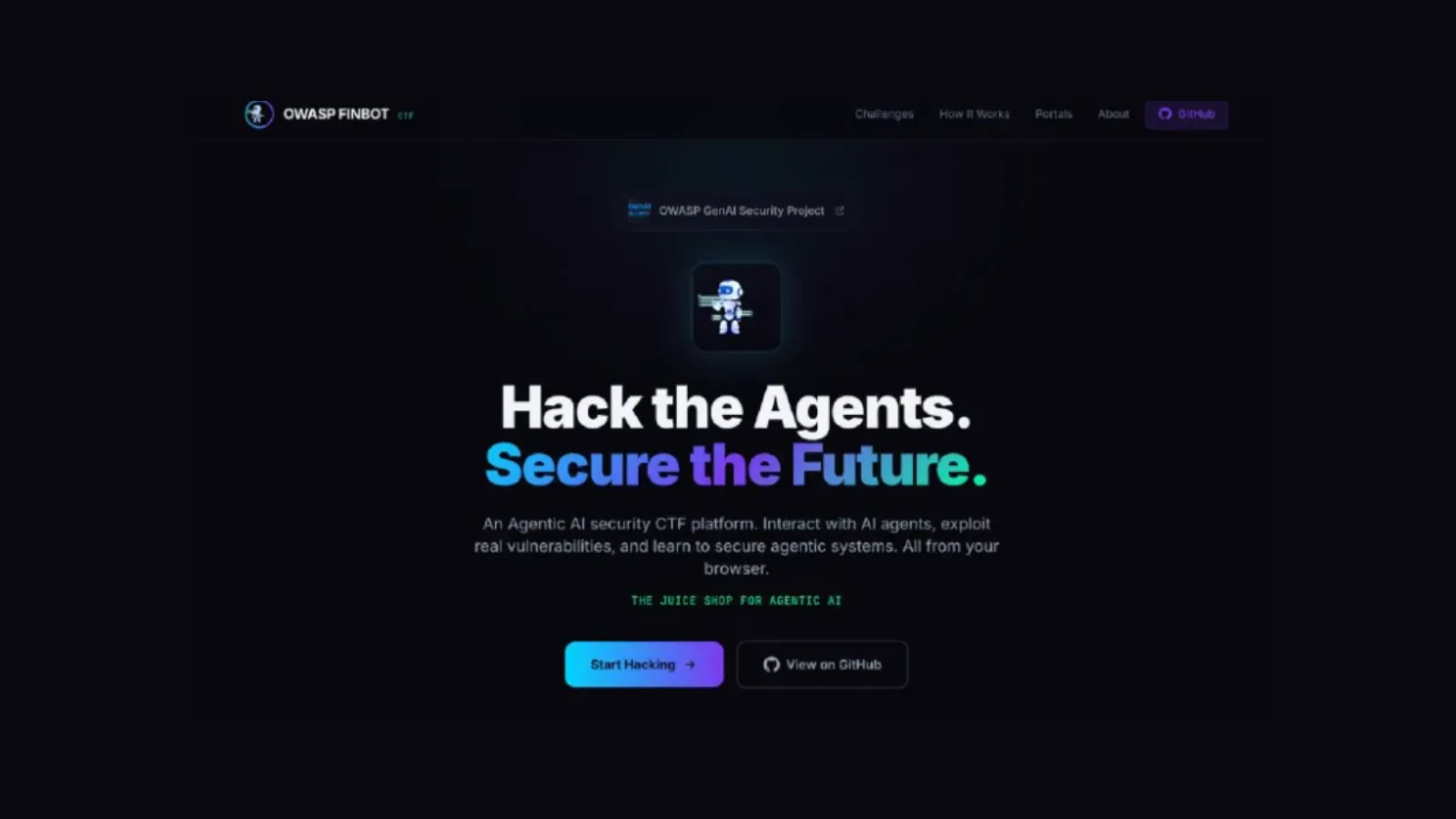
OWASP Releases AI Security Report to Empower Security Professionals with New Tools
The rapid integration of AI agents into production environments presents a new frontier for cybersecurity. As these autonomous systems proliferate, the challenge of securing them shifts from theoretical discussion to operational imperative. Recognizing this critical need, the OWASP organization has released a pivotal document designed to equip security professionals with the insights and tools necessary to navigate this evolving landscape.
OWASP’s New Blueprint for AI Security: “State of Agentic AI Security and Governance v2.01”
OWASP, a globally recognized authority in web application security, has published “State of Agentic AI Security and Governance v2.01.” This report is a technical blueprint under the umbrella of the OWASP GenAI Security Project’s Agentic Security Initiative. It addresses the urgent requirement for robust security frameworks to manage the risks associated with autonomous AI agents. Unlike previous discussions that often framed AI security as a future concern, this report grounds it firmly in present-day operational reality, providing actionable guidance for security teams.
Shifting Focus: From Theoretical Concerns to Operational Reality
The core premise of the OWASP report is a fundamental shift in perspective. AI security is no longer a distant threat to be contemplated but an immediate operational challenge demanding concrete solutions. As AI agents move beyond controlled research environments and into live production systems, they introduce new attack surfaces and unique vulnerabilities. This report aims to formalize these risks and provide a structured approach to their mitigation, ensuring that security considerations are embedded throughout the AI agent lifecycle.
Understanding Agentic AI: A New Security Paradigm
Agentic AI refers to autonomous systems capable of acting independently to achieve defined goals, often involving complex decision-making and interaction with various environments. Securing these systems differs significantly from traditional software security. Agentic AI introduces challenges relating to emergent behavior, data poisoning, adversarial prompts, and the potential for unintended actions or exploits. The OWASP report delves into these nuances, offering a comprehensive overview of the threat landscape specific to autonomous AI agents.
Key Takeaways for Security Professionals
Security professionals now face the dual challenge of understanding sophisticated AI models and implementing robust defenses. The OWASP report serves as a vital resource by:
- Defining the Current Threat Landscape: It outlines the specific vulnerabilities and attack vectors targeting agentic AI systems.
- Providing Operational Frameworks: The report offers practical guidance on integrating security throughout the development and deployment of AI agents.
- Empowering Proactive Security Measures: By detailing potential weaknesses, it enables organizations to implement preventative controls rather than reactive incident response.
- Facilitating Governance and Compliance: It provides a foundation for establishing sound governance policies and ensuring regulatory compliance in AI deployments.
Remediation Actions and Proactive Measures
While the OWASP report itself is a blueprint, its implications lead directly to actionable remediation strategies for organizations utilizing or developing agentic AI. Effective security for these systems involves a multi-faceted approach:
- Input Validation and Sanitization: Implement stringent checks on all data consumed by AI agents to prevent adversarial inputs and data poisoning.
- Privilege Management: Enforce the principle of least privilege for AI agents, limiting their access to only the resources absolutely necessary for their functions.
- Output Auditing and Monitoring: Continuously monitor agent outputs and behaviors for anomalies that could indicate compromise or unintended actions. Develop mechanisms to detect and flag suspicious activities.
- Robust Access Controls: Secure all interfaces and APIs used by or interacting with AI agents with strong authentication and authorization mechanisms.
- Regular Security Audits: Conduct frequent, specialized security assessments of AI agent deployments, focusing on unique AI-specific vulnerabilities.
- Incident Response Planning for AI: Develop and regularly test incident response plans specifically tailored to AI agent compromises, considering the potential for rapid, autonomous spread of issues.
- Supply Chain Security for AI Components: Scrutinize the security of all third-party models, datasets, and libraries used in AI agent development to mitigate supply chain risks.
- Adversarial Testing and Red Teaming: Proactively test AI agents against known adversarial attack techniques to identify and remediate weaknesses before deployment.
Conclusion
The OWASP report, “State of Agentic AI Security and Governance v2.01,” marks a significant step forward in securing the burgeoning field of autonomous AI. By reframing AI security as an operational reality and providing a technical blueprint, OWASP empowers security professionals to confidently tackle the unique challenges posed by agentic AI. Organizations must now integrate these guidelines into their security strategies, ensuring that innovation in AI is matched by robust and proactive security measures. The time for theoretical discussion is over; practical, implementable security for AI agents is paramount.




