
How Threat Intelligence Feeds Help Automate SOCs to Reduce MTTR
The relentless pace of cyber threats demands more than just responsive security. Security Operations Centers (SOCs) are constantly challenged to identify, analyze, and neutralize threats with ever-increasing speed. The drive towards SOC automation, integrating AI, orchestration, and automated response technologies, is a direct answer to this challenge. While the promise of faster detection and reduced operational costs is compelling, true SOC automation requires a strategic approach grounded in practical priorities and measurable outcomes. A cornerstone of this strategy is the intelligent integration of threat intelligence feeds.
The Imperative of SOC Automation
Modern enterprises face a sophisticated threat landscape where manual analysis struggles to keep pace. The sheer volume of security alerts, combined with the complexity of attack vectors, can overwhelm even the most capable SOC teams. Automation, when implemented effectively, streamlines repetitive tasks, reduces human error, and allows analysts to focus on high-value activities like proactive threat hunting and strategic defense planning. The ultimate goal is a significant reduction in Mean Time To Respond (MTTR) – the critical metric for how quickly an organization can contain and remediate a security incident.
Threat Intelligence: The Fuel for Automated SOCs
At the heart of effective SOC automation lies high-quality, actionable threat intelligence. Threat intelligence feeds provide real-time information about emerging threats, known attack campaigns, indicator of compromise (IOCs) such as malicious IP addresses, domain names, file hashes, and TTPs (Tactics, Techniques, and Procedures) used by threat actors. Without this vital context, automated systems operate in a vacuum, potentially generating false positives or missing critical alerts.
- Contextualizing Alerts: Threat intelligence enriches raw security alerts, providing immediate context. An automated system correlating an internal log entry with a known malicious IP from a threat feed can instantly elevate its priority, triggering an automated response.
- Proactive Detection: Instead of waiting for an attack, threat intelligence allows SOCs to proactively identify potential threats. For example, blocking communication with known command-and-control (C2) servers identified in a threat feed can prevent data exfiltration before it occurs.
- Reducing False Positives: By cross-referencing internal security events with intelligence about legitimate activity patterns versus known malicious indicators, automation significantly reduces the number of false positives, freeing up analyst time.
- Accelerating Investigation and Response: When a legitimate threat is identified, integrated intelligence provides analysts with immediate access to crucial details about the attacker, their motives, and their typical methods. This drastically cuts down investigation time and informs faster, more effective response actions.
How Threat Intelligence Feeds Drive MTTR Reduction
The direct impact of threat intelligence on MTTR is multifaceted:
- Automated Triage and Prioritization: Security Information and Event Management (SIEM) systems and Security Orchestration, Automation, and Response (SOAR) platforms can automatically ingest threat feeds. When an alert matches an IOC from a high-confidence feed, the system can automatically assign a higher severity and trigger pre-defined playbooks for immediate action, bypassing manual triage.
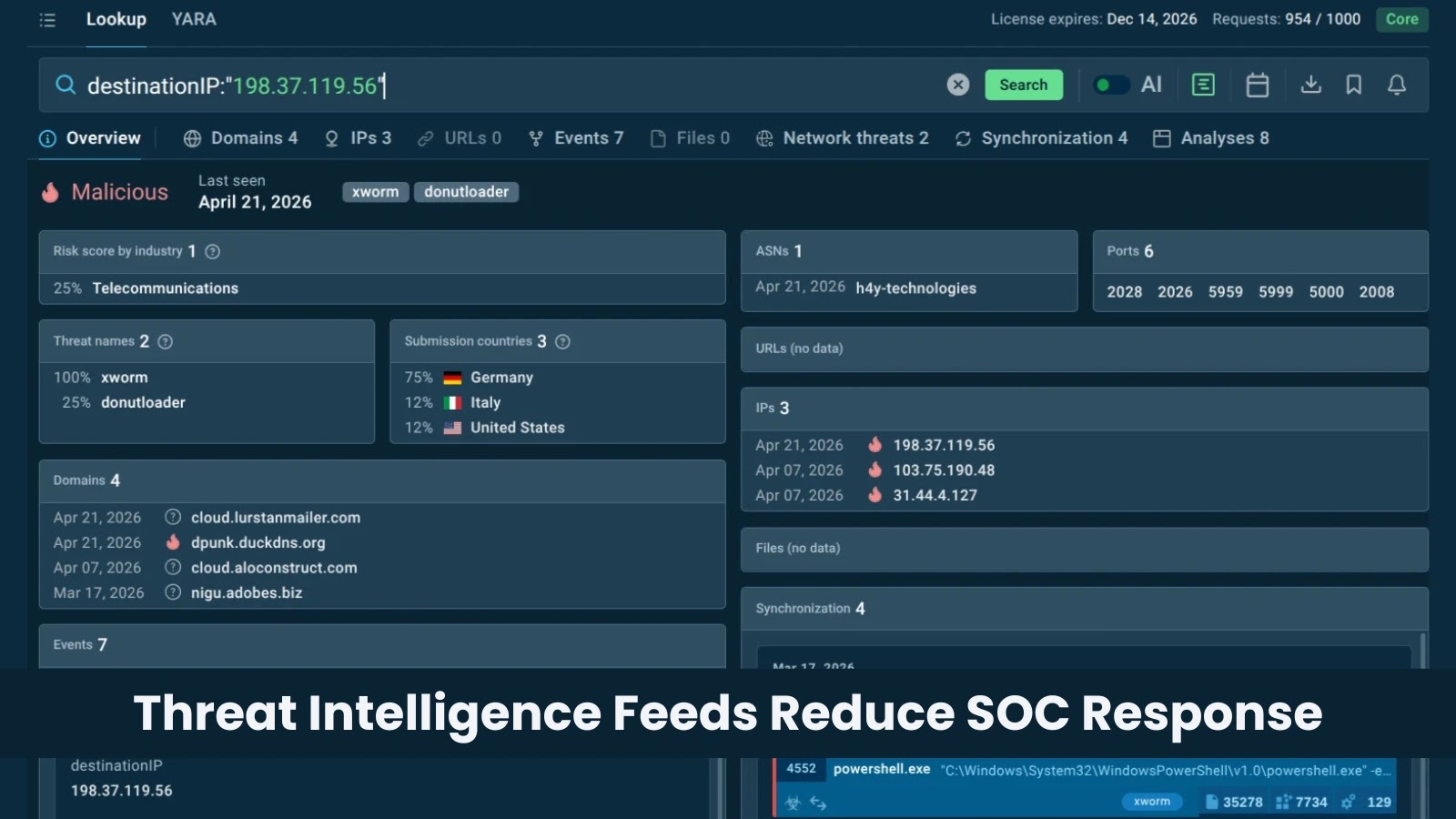
- Rapid Enrichment and Analysis: During an incident, automated tools can query threat intelligence platforms to gather additional context about compromised entities. For instance, if an endpoint is communicating with a suspicious domain, the automation can instantly pull up reputation data, associated malware families, and known threat actors, providing analysts with a comprehensive picture without manual searching.
- Automated Containment and Remediation: Leveraging SOAR capabilities, threat intelligence can directly drive automated response actions. If an IP address attempts to exfiltrate data to a known malicious C2 server (e.g., associated with CVE-2023-38831, a vulnerability exploited in specific malwares), the system could automatically block the IP at the firewall, isolate the compromised host, or revoke user credentials.
- Improved Threat Hunting: Threat intelligence provides the “breadcrumbs” for proactive threat hunting. Automated tools can continuously scan logs and network traffic for subtle indicators of compromise that align with current threat actor TTPs, identifying nascent attacks before they escalate.
Implementing Threat Intelligence for Automation Success
To maximize the benefits of threat intelligence in an automated SOC, consider the following:
- Choosing the Right Feeds: Not all threat intelligence is created equal. Prioritize feeds that are relevant to your industry, geographic location, and specific technology stack. Look for high-fidelity, machine-readable feeds that integrate seamlessly with your existing security tools.
- Integration with SOAR/SIEM: Ensure your threat intelligence platform integrates directly with your SIEM and SOAR solutions. This is critical for automated ingestion, correlation, and response.
- Automated Remediation Playbooks: Develop and test automated playbooks that leverage threat intelligence to execute containment, eradication, and recovery actions. Start with simpler, high-confidence actions and gradually expand.
- Regular Validation and Tuning: Threat intelligence needs to be continuously updated and validated. Your automated systems should periodically review and discard stale or irrelevant indicators to maintain accuracy and prevent alert fatigue.
SOC automation, turbocharged by threat intelligence, transforms incident response from a reactive scramble into a proactive, swift, and highly effective defense. By understanding and strategically integrating these critical elements, organizations can significantly reduce MTTR, enhance their security posture, and empower their security teams to focus on the threats that truly matter.




