
New Windows Defender 0-Day Exploit “RoguePlanet” Lets Attackers Gain SYSTEM-level Access
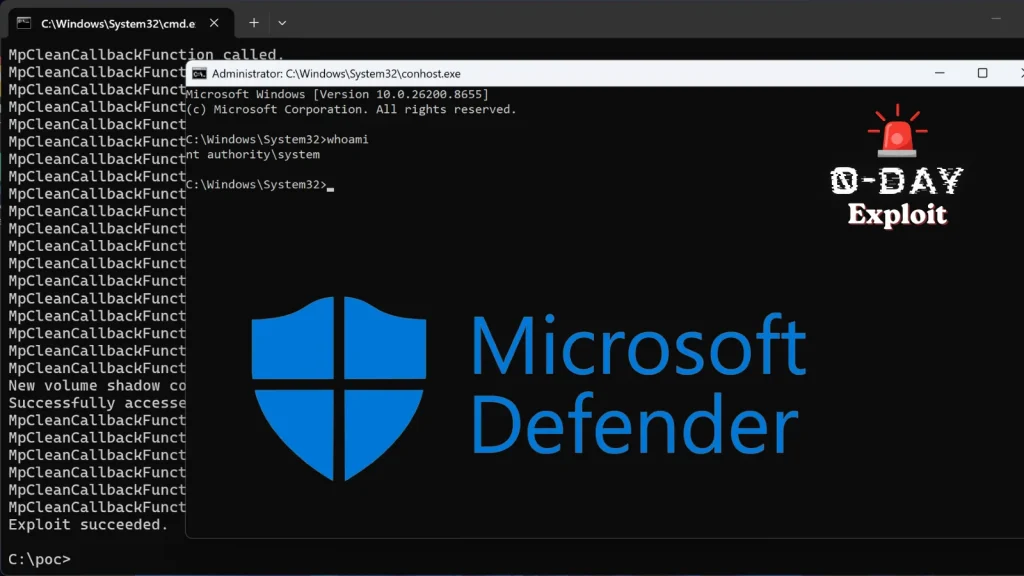
A disturbing new zero-day exploit, dubbed “RoguePlanet,” has emerged, posing a significant threat to Windows systems. This exploit leverages a previously unknown race condition vulnerability within Microsoft Windows Defender, allowing attackers to achieve SYSTEM-level access – the highest possible privilege on a Windows machine. The public release of a Proof-of-Concept (PoC) by security researcher Nightmare Eclipse (also known as Chaotic Eclipse or Dead Eclipse) underscores the immediate need for vigilance and mitigation.
Understanding RoguePlanet and its Impact
RoguePlanet exploits a race condition within Microsoft Windows Defender. A race condition occurs when two or more operations try to access and modify the same data concurrently, leading to unexpected and often exploitable behavior. In this particular instance, the vulnerability allows an attacker to elevate their privileges to SYSTEM level. This means a successful exploit grants complete control over the compromised system, allowing for arbitrary code execution, data manipulation, and the potential for lateral movement within a network.
The severity of SYSTEM-level access cannot be overstated. With these privileges, an attacker can:
- Install persistent backdoors and malware.
- Disable security software, including Windows Defender itself.
- Access, modify, or delete any file on the system.
- Create new user accounts with administrative rights.
- Exfiltrate sensitive data without restriction.
- Execute commands with the highest authority, effectively owning the machine.
The Role of Windows Defender in the Exploit
Windows Defender is an integral part of Windows security, designed to protect users from various threats. The fact that a zero-day exploit targets this critical component is particularly alarming. It highlights the constant cat-and-mouse game between security researchers, attackers, and software vendors. While the specifics of the race condition are technical, its presence within a core security application like Defender means that typical security mechanisms designed to protect against malware might be bypassed or even used against the system.
Researcher Behind the Discovery: Nightmare Eclipse
The public disclosure of RoguePlanet and its PoC comes from a researcher known as Nightmare Eclipse (also tracked as Chaotic Eclipse or Dead Eclipse). This release serves as a critical warning to the cybersecurity community. While the intent of publicly releasing such a PoC can be debated, it often acts as a catalyst for vendors to rapidly develop and deploy patches, forcing necessary security updates before widespread exploitation by malicious actors.
Remediation Actions and Mitigations
Given the critical nature of this vulnerability, immediate action is paramount. While a patch from Microsoft is the ultimate solution, several steps can be taken to mitigate the risk in the interim:
- Monitor for Microsoft’s Official Patch: Microsoft is undoubtedly working on a patch for this zero-day. Regularly check for and apply all available Windows updates. Ensure your update process is robust and automatic.
- Implement Principle of Least Privilege: Restrict user accounts to the bare minimum permissions required for their tasks. This limits the potential impact if an account is compromised.
- Enhanced Endpoint Detection and Response (EDR): Deploy and actively monitor EDR solutions that can detect anomalous process behavior, unauthorized privilege escalation attempts, and suspicious command shell activity.
- Network Segmentation: Segment your network to limit the blast radius of a potential compromise. If one system is compromised with SYSTEM-level access, network segmentation can help prevent attackers from easily moving to other critical systems.
- Application Whitelisting: Implement application whitelisting to prevent unauthorized executables from running on your systems. This can help block the execution of rogue command shells or other malicious binaries, even if an attacker gains SYSTEM privileges.
- Regular Security Audits and Penetration Testing: Perform regular security audits and penetration tests to identify other potential weak points in your infrastructure that could be exploited in conjunction with or after a RoguePlanet attack.
- Train Users on Social Engineering: Many advanced attacks begin with a social engineering component. Educate users about phishing, malicious attachments, and suspicious links to reduce the initial attack surface.
Relevant Tools for Detection and Mitigation
Until an official patch is released, utilizing robust security tools is crucial for detection and potential mitigation:
| Tool Name | Purpose | Link |
|---|---|---|
| Microsoft Defender for Endpoint | Advanced post-breach detection, automated investigation, and response. | https://www.microsoft.com/en-us/security/business/microsoft-defender-for-endpoint |
| Sysmon (Sysinternals) | Monitors and logs system activity, including process creation, network connections, and file modifications. Useful for detecting suspicious activity. | https://learn.microsoft.com/en-us/sysinternals/downloads/sysmon |
| Velociraptor | Open-source endpoint visibility and monitoring tool for incident response. Capable of detecting anomalous behavior patterns. | https://www.velocidex.com/ |
| Wazuh | Open-source security monitoring solution, including Host Intrusion Detection System (HIDS), log analysis, and file integrity monitoring. | https://wazuh.com/ |
| Advanced Group Policy Management (AGPM) | Manages and controls changes to Group Policy Objects (GPOs), instrumental in enforcing security policies across an organization. | https://learn.microsoft.com/en-us/microsoft-desktop-optimization-pack/agpm/advanced-group-policy-management-overview |
Conclusion
The emergence of the RoguePlanet zero-day exploit targeting Windows Defender is a serious development in the cybersecurity landscape. Attaining SYSTEM-level privileges allows an attacker to completely compromise a machine, posing a critical risk to individual users and organizations. While awaiting an official patch from Microsoft, implementing robust security practices, leveraging advanced endpoint protection, and maintaining constant vigilance are essential steps to protect against this severe threat.




