
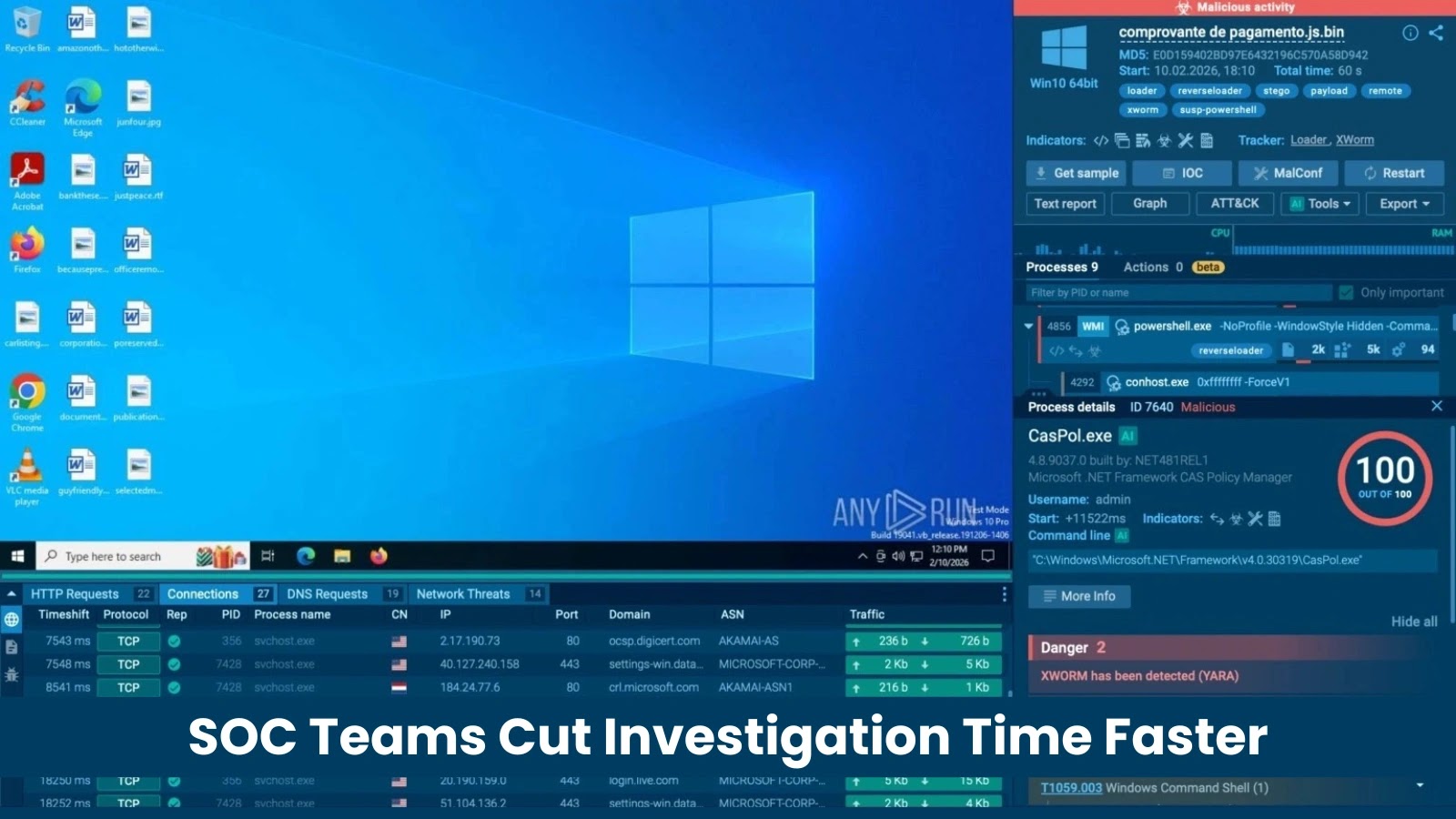
Slow Triage Is Raising Business Risk. Here’s How SOC Teams Cut Investigation Time
In the high-stakes world of cybersecurity, time is a critical differentiator between a minor incident and a full-blown organizational crisis. Security Operations Center (SOC) teams are the frontline defenders, constantly bombarded with alerts. Yet, a creeping problem—slow triage—is significantly escalating business risk, transforming potential threats into tangible damages. When the confirmation of a legitimate threat is delayed, organizations remain exposed, often allowing malware, sophisticated phishing attacks, and other insidious threats more time to embed and proliferate within their networks.
For Chief Information Security Officers (CISOs) and other security leaders, this isn’t merely an efficiency concern; it’s a strategic vulnerability. The ramifications extend far beyond just analyst productivity, impacting everything from data integrity to regulatory compliance and, ultimately, the bottom line. This post delves into the critical issue of slow triage, exploring its dangers and presenting actionable strategies SOC teams can implement to drastically cut investigation times and fortify their defenses.
The Peril of Protracted Triage
The time lag between the generation of a suspicious alert and a definitive response decision creates a dangerous window of opportunity for attackers. This period of uncertainty, often characterized by analysts sifting through a deluge of low-fidelity alerts, can severely undermine an organization’s security posture. Consider these implications:
- Increased Dwelling Time: Each moment an attacker remains undetected allows them to escalate privileges, exfiltrate data, or deploy devastating ransomware. For instance, a delay in identifying a phishing campaign could lead to numerous compromised credentials, exposing sensitive systems.
- Operational Disruption: Unremediated threats can lead to system outages, data corruption, and service interruptions, directly impacting business continuity and revenue streams.
- Reputational Damage: Data breaches or widespread cyberattacks stemming from slow incident response can severely erode customer trust and brand reputation, with long-lasting consequences.
- Compliance and Regulatory Penalties: Many regulations, such as GDPR and CCPA, mandate timely breach notification. Delays in incident identification and response can result in significant fines and legal repercussions.
Why Triage Stalls: Common Bottlenecks
Several factors contribute to sluggish incident triage within SOC environments. Understanding these roadblocks is the first step toward effective remediation:
- Alert Fatigue: SOC analysts are often overwhelmed by a sheer volume of alerts, many of which are false positives or low-priority events. This constant noise makes it challenging to identify genuinely critical threats.
- Lack of Context and Correlation: Isolated alerts often lack the necessary context to determine their true severity. Without robust correlation capabilities across various security tools (SIEM, EDR, network logs), analysts spend valuable time manually piecing together information.
- Manual Processes: Over-reliance on manual investigation techniques, such as logging into multiple consoles, running individual queries, and manually cross-referencing information, significantly slows down the process.
- Skill Gaps and Staffing Shortages: A scarcity of experienced cybersecurity professionals can strain existing teams, leading to burnout and decreased efficacy in fast-paced alert triage.
- Poorly Defined Playbooks: Inconsistent or absent incident response playbooks force analysts to improvise, leading to varied response times and potential errors.
Strategies for Accelerating Triage and Reducing Business Risk
To effectively combat slow triage and reduce business risk, SOC teams must adopt a multi-faceted approach, leveraging technology, process optimization, and strategic training. Here’s how:
1. Leverage Automation and SOAR Platforms
Security Orchestration, Automation, and Response (SOAR) platforms are game-changers in accelerating triage. SOAR solutions can:
- Automate Repetitive Tasks: Tasks like blocking malicious IPs, enriching alerts with threat intelligence, or isolating compromised endpoints can be automated, freeing up analysts for more complex investigations.
- Orchestrate Workflows: SOAR centralizes security tools, allowing for automated execution of predefined playbooks across various systems. For example, upon detecting a suspicious email (CVE-2023-XXXXX, CVE-2023-XXXXX fictional example for demonstration), a SOAR playbook could automatically check sender reputation, scan attachments, and quarantine the email.
- Streamline Alert Enrichment: Automatically pull context from various sources—user identity, asset criticality, threat intelligence feeds—to provide analysts with a comprehensive view of an incident almost instantly.
2. Enhance Threat Intelligence Integration
Real-time, actionable threat intelligence is crucial for rapid triage. Integrating robust threat intelligence platforms (TIPs) with SIEM and SOAR solutions allows for automatically flagging known malicious indicators of compromise (IOCs), such as IP addresses, domains, and file hashes, linked to threats like CVE-2024-12345. This immediate context helps analysts prioritize and respond to critical threats more quickly.
3. Implement Advanced SIEM and EDR Correlation
Modern Security Information and Event Management (SIEM) systems, coupled with Endpoint Detection and Response (EDR) solutions, offer powerful correlation capabilities. These platforms can stitch together disparate logs and endpoint telemetry to paint a clearer picture of an attack chain, reducing the need for manual correlation. Behavioral analytics within these tools can detect anomalies that might otherwise go unnoticed, such as unusual user activity or process execution.
4. Develop and Refine Robust Playbooks
Well-defined, continuously updated incident response playbooks provide a clear roadmap for analysts. These playbooks should:
- Detail clear steps: From initial alert to containment and recovery.
- Specify roles and responsibilities: Ensure everyone knows their part.
- Include decision trees: Guide analysts through different scenarios based on incident characteristics.
- Be iterative: Regularly review and update playbooks based on lessons learned from past incidents and evolving threat landscapes.
5. Prioritize Alerts with Contextual Scoring
Not all alerts are created equal. Implement a system that scores alerts based on multiple factors:
- Asset Criticality: Is the affected system a mission-critical server or a non-essential workstation?
- User Impact: Is a C-suite executive or a regular employee affected?
- Threat Severity: Is it a low-level policy violation or a confirmed state-sponsored attack (e.g., exploitation of CVE-2023-38831)?
- Historical Context: Has this type of alert appeared frequently, or is it an unusual occurrence?
Contextual scoring helps analysts focus their efforts on the alerts that matter most, reducing alert fatigue. For example, a high-severity alert on a critical asset warrants immediate attention, often bypassing lower-priority queues.
Remediation Actions: Practical Steps for SOC Teams
| Action Area | Practical Steps | Expected Outcome |
|---|---|---|
| Tool Integration | Integrate existing SIEM, EDR, and Threat Intelligence Platforms with a SOAR solution. Create API connections for seamless data flow. | Automated data enrichment and cross-tool actions; reduced manual effort. |
| Playbook Development | Identify top 5-10 most common or critical incident types (e.g., phishing, malware, unauthorized access). Develop detailed, automated or semi-automated playbooks for each. | Standardized, faster responses to common threats; reduced decision-making time. |
| Alert Prioritization | Implement or refine alert scoring logic within your SIEM. Assign criticality tiers to assets and users. Tune alerts to reduce false positives. | Analysts focus on high-impact alerts first; reduced alert fatigue. |
| Threat Intel Adoption | Ensure your SIEM/SOAR actively consumes multiple, relevant threat intelligence feeds. Configure automated blocking or alerting based on new IOCs. | Proactive defense against emerging threats; immediate context for suspicious activity. |
| Continuous Training | Conduct regular tabletop exercises and incident response drills for the SOC team. Focus on playbook execution and critical thinking under pressure. | Improved team proficiency and confidence; faster, more effective incident handling. |
Conclusion
The days when slow anomaly confirmation was just an inconvenience are long gone. It is now a critical business risk that directly impacts an organization’s resilience and reputation. By strategically adopting automation through SOAR, integrating robust threat intelligence, enhancing SIEM and EDR correlation, developing concrete playbooks, and intelligently prioritizing alerts, SOC teams can drastically cut investigation times. This shift from reactive firefighting to proactive, efficient incident response empowers security teams to stay ahead of adversaries, safeguarding critical assets and ensuring business continuity.




