
Hackers Bypass Microsoft 365 MFA and Hijack Finance Mailbox to Steal Payments
Bypassing Microsoft 365 MFA: A Finance Mailbox Hijack Exposes Critical Vulnerabilities
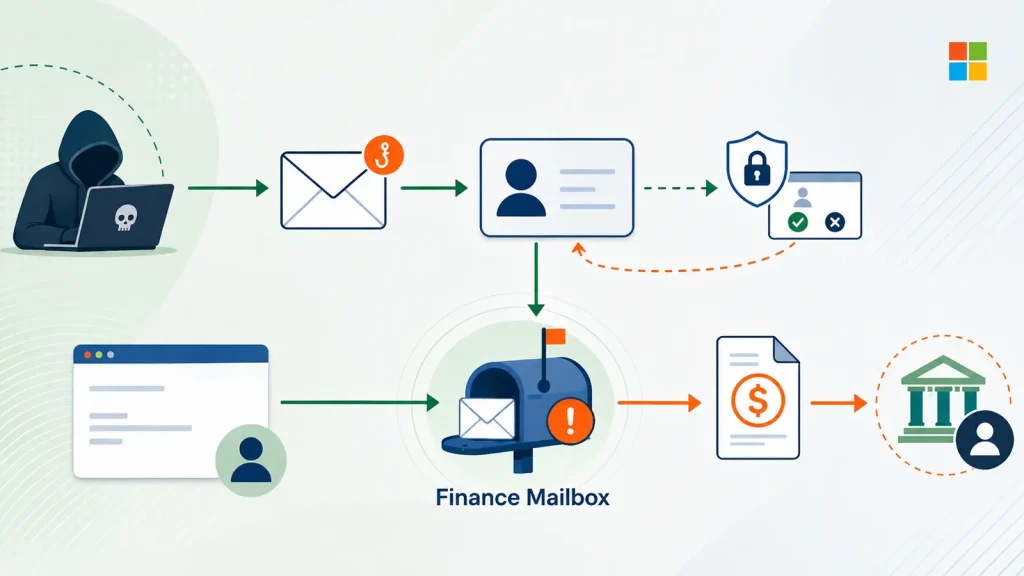
The digital landscape demands robust security, and Multi-Factor Authentication (MFA) has long been hailed as a critical defense. However, recent incidents demonstrate that even MFA is not foolproof. A single, well-crafted phishing email was all it took for attackers to gain unauthorized access to a finance employee’s Microsoft 365 account, subsequently hijacking their mailbox to redirect vendor payments. This incident highlights a significant shift in attacker tactics, bypassing traditional security measures without the need for malware or direct device compromise. For IT professionals, security analysts, and developers, understanding these sophisticated bypass techniques is paramount to bolstering organizational defenses.
The Anatomy of a Sophisticated MFA Bypass
This particular attack leveraged a highly targeted social engineering tactic. The attackers sent an HR-themed phishing email, deceptively informing the victim that a paid-time-off request had been denied. Such a message is designed to elicit an immediate, emotional response, prompting the recipient to click on a malicious link or provide credentials without adequate scrutiny. The success of this attack underscores the ongoing challenge of human susceptibility to social engineering, even when technical controls like MFA are in place.
Crucially, the attackers did not rely on installing malware on the victim’s device. Instead, they likely employed a technique such as session hijacking or a man-in-the-middle (MitM) attack. In a typical session hijacking scenario, the phishing link directs the user to a malicious proxy server that sits between the user and the legitimate Microsoft 365 login page. When the user enters their credentials and completes the MFA challenge, the proxy captures both the credentials and the session cookie. This allows the attacker to replay the legitimate session, effectively bypassing MFA without ever needing to know the user’s password or possess their physical authentication device.
Impact: Financial Fraud and Trust Erosion
Once inside the finance employee’s Microsoft 365 account, the attackers quickly moved to hijack the mailbox. This granted them access to sensitive communications, including vendor invoices and payment instructions. By subtly altering payment details or creating fraudulent invoices, they were able to redirect legitimate vendor payments to accounts under their control. The financial implications for the victimized organization can be severe, leading to significant monetary losses, reputational damage, and a breakdown of trust with their vendors. Furthermore, the incident can trigger a costly and time-consuming forensic investigation, regulatory reporting requirements, and potential legal ramifications.
Remediation Actions and Proactive Defense
Mitigating the risk of such sophisticated MFA bypasses requires a multi-layered approach, combining technical controls with robust employee training.
- Enhanced Phishing Detection and Prevention: Deploy advanced email security solutions that utilize AI and machine learning to detect and block sophisticated phishing attempts, including those employing social engineering tactics.
- Conditional Access Policies: Implement stringent Microsoft 365 Conditional Access policies. These policies can enforce stricter authentication requirements based on user location, device compliance, application access, and perceived risk levels. For instance, restrict access to finance-related applications from unmanaged or unfamiliar devices.
- Regular Security Awareness Training: Conduct frequent and interactive security awareness training sessions for all employees, with a particular focus on identifying and reporting phishing, spear-phishing, and social engineering attacks. Emphasize the importance of verifying sender identities and scrutinizing links before clicking.
- Behavioral Analytics and Anomaly Detection: Utilize User and Entity Behavior Analytics (UEBA) solutions to monitor for unusual login patterns, abnormal mailbox activity (e.g., forwarding rules being created, sudden changes in email sending volume), and deviations from baseline user behavior.
- Privileged Access Management (PAM): Implement PAM solutions to tightly control and monitor access to highly sensitive accounts, such as those belonging to finance personnel. Enforce just-in-time access and session recording for these accounts.
- Stronger MFA Methods: While SMS-based MFA can be susceptible to SIM-swapping and OTP interception, consider moving to more robust MFA methods like FIDO2 security keys (e.g., YubiKey) or certificate-based authentication for critical accounts.
- Regular Auditing and Logging: Regularly review Microsoft 365 audit logs for suspicious activities, including new mailbox rules, changes to forwarding addresses, and unusual login attempts.
Relevant Tools for Detection and Mitigation
Here are some tools that can aid in detecting and mitigating such threats:
| Tool Name | Purpose | Link |
|---|---|---|
| Microsoft 365 Defender | Comprehensive threat protection, including email, identity, and endpoint security. | https://www.microsoft.com/en-us/security/business/microsoft-365-defender |
| Proofpoint Email Protection | Advanced email security gateway for phishing, malware, and spam protection. | https://www.proofpoint.com/us/products/email-protection |
| Mimecast Email Security | Cloud-based email security, archiving, and continuity services. | https://www.mimecast.com/products/email-security/ |
| FIDO2 Security Keys (e.g., YubiKey) | Hardware-based, phishing-resistant MFA. | https://www.yubico.com/solutions/fido2/ |
| Okta Adaptive MFA | Contextual and risk-based multi-factor authentication. | https://www.okta.com/products/adaptive-mfa/ |
Key Takeaways for a Stronger Security Posture
This incident serves as a stark reminder that even robust security measures like MFA can be circumvented by determined attackers employing sophisticated social engineering. Organizations must move beyond simply implementing MFA and focus on holistic security strategies that encompass advanced threat detection, continuous employee education, and proactive incident response planning. Regular security assessments, penetration testing, and staying informed about the latest attacker methodologies are crucial for maintaining a resilient defense against evolving cyber threats.




