
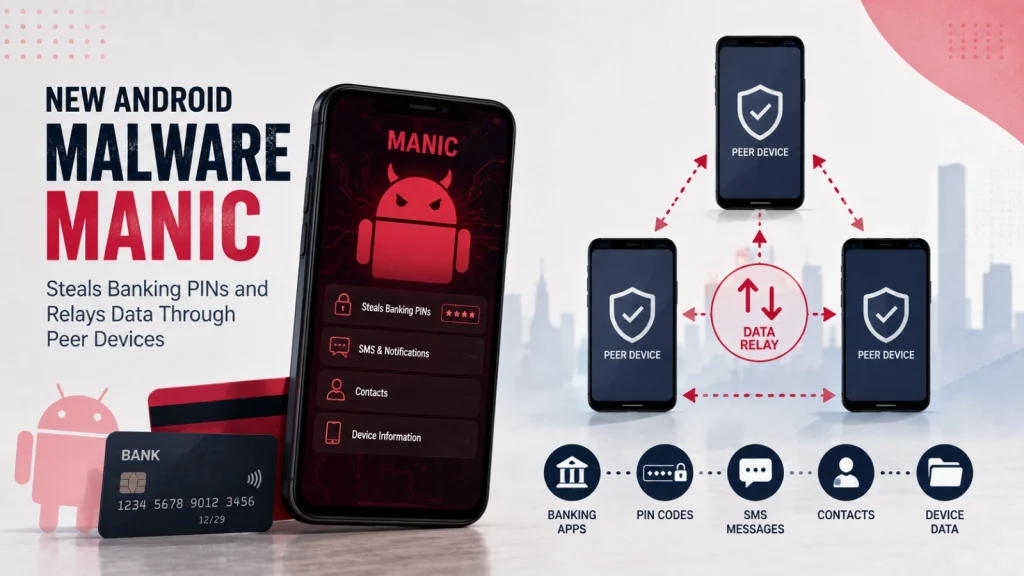
New Android Malware Steals Banking PINs and Relays Data Through Someone Else’s Infected Phones
The landscape of mobile threats continues to evolve, with cybercriminals consistently devising novel methods to compromise user data and financial assets. A recent discovery has brought to light a particularly concerning Android malware family named Manic. This sophisticated threat not only aims to pilfer sensitive banking information but also employs an unprecedented technique for data exfiltration: leveraging nearby infected devices as relays. This ingenious, and deeply troubling, mechanism presents a significant challenge to traditional security paradigms and underscores the critical need for heightened mobile security awareness.
Manic Malware: A Dual Threat to Android Users
Identified by cybersecurity researchers at ThreatFabric, the Manic malware stands out for its insidious combination of banking fraud capabilities and full-scale spyware functionality. Unlike many Android threats that focus on a single attack vector, Manic is designed for comprehensive data theft. It targets banking PINs, a direct assault on users’ financial security, while simultaneously operating as a full-fledged spyware suite, capable of extracting a wide array of personal and sensitive information from compromised devices.
This dual nature means that even if a user’s financial accounts are not immediately breached, their private communications, photos, and other data could be silently siphoned off, leading to potential blackmail, identity theft, or other forms of exploitation. The sophistication of Manic highlights a growing trend among malware developers to create multi-functional tools that maximize their illicit gains from infected devices.
The Unprecedented Data Relay Mechanism
What truly sets Manic apart, and what researchers rarely observe in the wild, is its unique data relay mechanism. When an infected Android device lacks an active internet connection, Manic doesn’t simply go dormant or wait for connectivity. Instead, it actively seeks out and “borrows” an internet connection from another nearby infected device. This peer-to-peer data exfiltration strategy is a game-changer for several reasons:
- Evasion of Detection: By not directly connecting to command-and-control (C2) servers when offline, Manic can circumvent network-based detection systems that monitor outbound traffic from individual devices.
- Persistent Data Exfiltration: This ensures that even in environments with intermittent or no direct internet access, stolen data can still reach the attackers, making it much harder for victims to escape its grasp.
- Increased Resilience: The decentralized nature of this relay system makes the overall malware infrastructure more robust and resistant to takedowns. Shutting down one C2 server becomes less effective if data can still propagate through a mesh of compromised devices.
This novel approach demands a rethinking of mobile threat intelligence and defense strategies, as the attack surface now extends beyond a single device’s network connection.
How Manic Infects Devices and Steals Data
While the initial infection vectors for Manic are still under active investigation, typical Android malware distribution methods include phishing campaigns, malicious apps disguised as legitimate software on third-party app stores, or even social engineering tactics. Once installed, Manic likely leverages accessibility services, a common tactic for Android banking trojans, to overlay fake login screens on legitimate banking applications, thereby tricking users into divulging their PINs and credentials.
The spyware component allows Manic to monitor various activities, collect personal data, and potentially even take control of certain device functions. The stolen data, whether banking credentials or personal information, is then packaged and transmitted, utilizing the innovative relay system when direct internet access is unavailable.
Remediation Actions and Protective Measures
Protecting against sophisticated threats like Manic requires a multi-layered approach. Here are crucial steps for users and organizations to mitigate risk:
- Download Apps from Reputable Sources Only: Strictly limit app downloads to the official Google Play Store. Avoid third-party app stores, unofficial repositories, or direct APK downloads from untrusted websites.
- Exercise Caution with Permissions: Be extremely wary of apps requesting excessive or unusual permissions, especially those related to Accessibility Services. Always review permissions before granting them.
- Maintain Updated Software: Ensure your Android operating system and all installed applications are kept up-to-date. Software updates often include critical security patches.
- Install a Reputable Mobile Security Solution: Utilize a high-quality mobile antivirus or security suite that can detect and block malware.
- Enable Google Play Protect: Google Play Protect is built into Android and scans apps for malicious behavior. Ensure it is active on your device.
- Regularly Back Up Data: Periodically back up important data to a secure cloud service or external storage. This minimizes data loss in case of an infection.
- Monitor Banking and Credit Card Statements: Regularly review financial statements for any suspicious or unauthorized transactions.
- Be Skeptical of Unsolicited Communications: Avoid clicking on suspicious links in emails, SMS messages, or social media, as these can be phishing attempts designed to distribute malware.
Tools for Mobile Threat Detection and Mitigation
| Tool Name | Purpose | Link |
|---|---|---|
| Google Play Protect | Built-in Android security for app scanning. | Learn More |
| Malwarebytes Security | Comprehensive mobile malware detection and removal. | Malwarebytes |
| Sophos Intercept X for Mobile | Endpoint protection for Android, including anti-malware and web filtering. | Sophos |
| ThreatFabric (Research) | Mobile threat intelligence and analysis (not a user tool). | ThreatFabric |
Conclusion
The emergence of the Manic Android malware family serves as a stark reminder of the ever-increasing sophistication of cyber threats. Its ability to combine banking fraud with full-scale spyware, coupled with the innovative use of other infected devices for data relay, presents a formidable challenge to mobile security. Users and organizations must remain vigilant, adopting robust security practices and utilizing available tools to protect their Android devices from compromise. Staying informed about new threats and maintaining a proactive security posture are paramount in safeguarding personal and financial data in an increasingly complex digital world.




