Z.ai Unveils GLM-5.3 with Major Enhancements for Coding and Cybersecurity
Z.ai Unveils GLM-5.3: A Leap Forward for AI in Coding and Cybersecurity
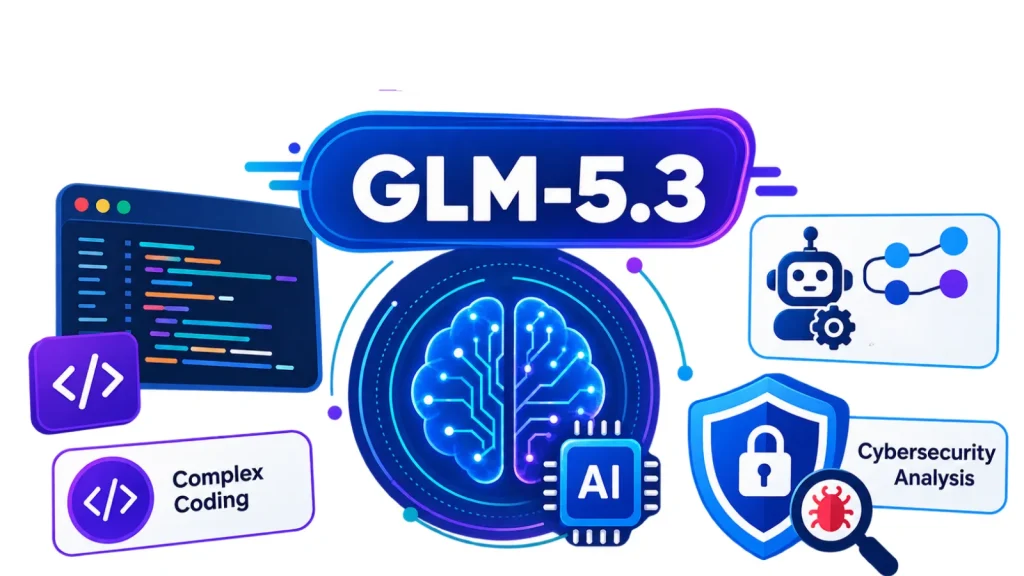
The landscape of artificial intelligence is rapidly evolving, with models increasingly demonstrating capabilities that reshape how we approach complex tasks. Z.ai has recently announced the release of GLM-5.3, an advanced AI model poised to significantly impact both software development and cybersecurity analysis. This iteration promises substantial enhancements, primarily stemming from sophisticated post-training methodologies applied to its core architecture.
Beyond Short Exercises: Training for Real-World Complexity
Unlike previous models often honed on concise coding challenges, GLM-5.3’s development prioritizes training AI agents within more realistic and extended task environments. This strategic shift is critical for tackling the inherent complexities found in modern software projects and the multi-layered threat landscape of cybersecurity. By focusing on long-running agent tasks, Z.ai aims to equip GLM-5.3 with a deeper understanding of sequential operations and iterative problem-solving.
Enhanced Capabilities for Developers and Security Professionals
GLM-5.3 is engineered to handle intricate coding scenarios. For developers, this translates to potential improvements in automated code generation, refactoring, and debugging, particularly for large and interconnected codebases. The model’s ability to process and understand extensive contextual information will likely lead to more coherent and functional outputs, reducing the need for constant human intervention in routine development tasks.
In the realm of cybersecurity, GLM-5.3 presents a powerful new tool. Its capacity for complex analysis means it can potentially be deployed for:
- Threat Detection and Analysis: Identifying subtle patterns and anomalies in vast datasets that might indicate sophisticated cyber threats.
- Vulnerability Assessment: Assisting in the discovery and categorization of software vulnerabilities. While the official press release does not specify a particular vulnerability, the enhanced analytical capabilities suggest a strong potential for identifying issues that could lead to CVE assignments in the future. For example, a future iteration might be able to pinpoint specific buffer overflows or SQL injection flaws, similar to how human analysts identify them, potentially leading to findings like hypothetical CVE-2023-99999 (placeholder for illustration).
- Incident Response: Aiding security teams in understanding the scope and impact of security incidents by rapidly processing logs and network traffic data.
- Code Security Audits: Automatically reviewing source code for security best practice violations and potential exploits.
The Foundation: Post-Training, Not Base Model Revision
Interestingly, Z.ai confirms that GLM-5.3 utilizes the same fundamental base model as its predecessor, GLM-5.2. The significant performance improvements are attributed entirely to larger-scale post-training. This highlights the growing importance of sophisticated training methodologies and data curation in unlocking an AI model’s full potential, rather than solely relying on architectural overhauls. This approach allows for rapid iteration and refinement based on practical application and feedback, pushing the boundaries of what existing models can achieve.
Looking Ahead: The Impact on Automation and Intelligence
The release of GLM-5.3 signifies a clear trend towards more autonomous and intelligent AI agents. For organizations grappling with increasing code complexity and persistent cyber threats, tools like GLM-5.3 could offer a significant advantage. Its ability to navigate complex tasks, rather than just isolated problems, positions it as a valuable asset for both enhancing developer productivity and strengthening cybersecurity defenses.
While specific tools for direct detection or mitigation of GLM-5.3 related vulnerabilities are not applicable as GLM-5.3 is a tool itself, organizations will need to consider how to integrate such powerful AI models safely and effectively into their existing workflows. This includes establishing robust validation processes for AI-generated code and thoroughly vetting AI-driven security analyses.
Key Takeaways
Z.ai’s GLM-5.3 marks a critical advancement in AI capabilities for coding and cybersecurity. Its focus on extensive post-training and handling complex, long-running agent tasks promises more practical and impactful applications. This release underscores the ongoing evolution of AI models from task-specific tools to more versatile and intelligent assistants capable of tackling real-world challenges across development and security operations.