Hackers Hijack Thousands of WordPress Sites to Use as C2 Servers for StopAndProtect Malware
Thousands of WordPress Sites Hijacked for StopAndProtect C2 Operations
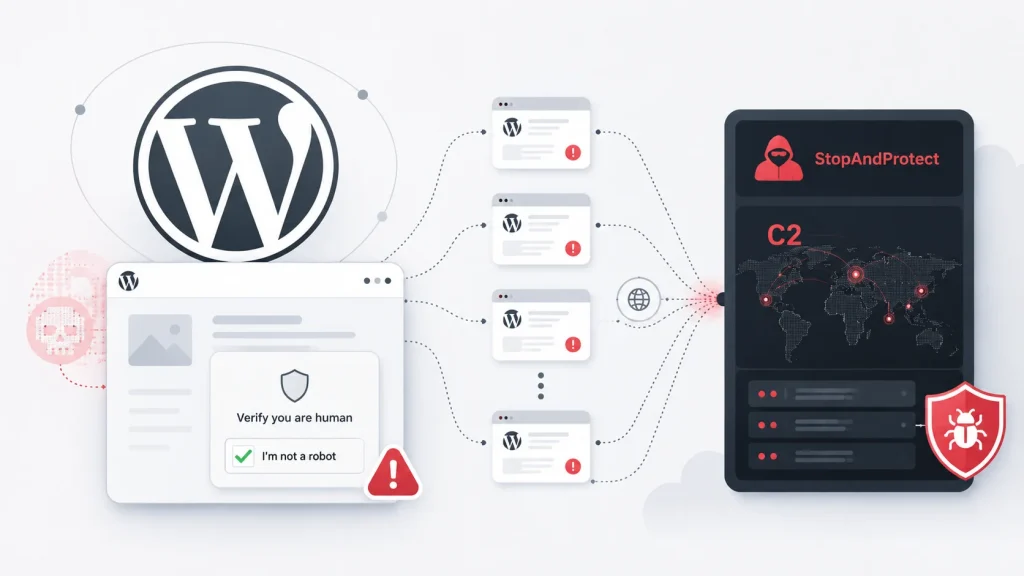
A sophisticated new malware campaign, dubbed StopAndProtect, is actively exploiting thousands of compromised WordPress websites, transforming them into a vast network of command-and-control (C2) servers. This alarming development signals a significant escalation in threat actor tactics, leveraging the widespread popularity of WordPress to build resilient and distributed malicious infrastructure. The operation employs a dangerous blend of double-extortion ransomware and stealthy data exfiltration, targeting sensitive corporate information globally.
Understanding the StopAndProtect Malware Campaign
The StopAndProtect campaign stands out due to its dual-pronged attack strategy. Unlike traditional ransomware that solely focuses on encryption for extortion, StopAndProtect integrates covert data theft into its operations. Attackers are not just locking down systems; they are systematically siphoning off critical data, including:
- Sensitive corporate documents
- System screenshots
- User credentials
- Active communication logs
This stolen information can then be used for further extortion, sold on dark web marketplaces, or leveraged for future targeted attacks. The use of compromised WordPress sites as C2 servers provides the attackers with a flexible and difficult-to-dismantle infrastructure, allowing them to maintain persistent control over compromised machines and exfiltrate data without immediate detection.
The Role of WordPress Sites as C2 Infrastructure
The attackers’ strategy of utilizing legitimate, albeit compromised, WordPress websites as C2 servers offers several advantages:
- Evasion of Detection: Network traffic to and from C2 servers often blends in with regular web traffic, making it harder for traditional security solutions to flag as malicious.
- Resilience: By distributing the C2 functionality across thousands of sites, the attackers create a highly resilient infrastructure. Taking down a single C2 server has minimal impact on the overall operation.
- Accessibility: WordPress’s ubiquity and common misconfigurations or unpatched vulnerabilities make it a fertile ground for attackers to gain initial access and establish C2 nodes.
The internal logs exposed from the threat actors’ operations have provided invaluable insight into the scale and methodology of this campaign, highlighting the critical need for robust website security and endpoint protection.
Impact on Organizations and Data Security
The implications of the StopAndProtect malware are severe. Organizations compromised by this threat face:
- Financial Loss: Due to ransomware demands and potential regulatory fines for data breaches.
- Reputational Damage: Loss of customer trust and public standing.
- Operational Disruption: Downtime and recovery costs associated with ransomware attacks.
- Intellectual Property Theft: Loss of competitive advantage through the exfiltration of proprietary data.
The ability of StopAndProtect to quietly harvest a wide array of sensitive data poses a significant long-term risk, potentially leading to future spear-phishing campaigns or supply chain attacks.
Remediation Actions and Proactive Defense
Protecting against sophisticated threats like StopAndProtect requires a multi-layered security approach. Organizations, particularly those operating WordPress sites, must prioritize the following remediation actions:
- Patch Management: Regularly update WordPress core, themes, and plugins to the latest versions. Many compromises exploit known vulnerabilities. While no specific CVE has been linked to the WordPress compromise methods in this campaign, keeping software current is a fundamental defense.
- Strong Access Controls: Enforce strong, unique passwords for all WordPress user accounts and administrative interfaces. Implement multi-factor authentication (MFA) wherever possible.
- Security Plugins and Scanners: Utilize reputable WordPress security plugins (e.g., Wordfence, Sucuri) to scan for malware, monitor file integrity, and block malicious traffic.
- Web Application Firewall (WAF): Deploy a WAF in front of WordPress sites to filter out malicious requests and protect against common web vulnerabilities.
- Endpoint Detection and Response (EDR): Implement EDR solutions on all workstations and servers to detect and respond to suspicious activity, including data exfiltration attempts and ransomware deployment.
- Network Segmentation: Isolate critical systems and sensitive data using network segmentation to limit the lateral movement of malware if a compromise occurs.
- Regular Backups: Maintain frequent, verified, and off-site backups of all critical data and system configurations.
- User Training: Educate employees about phishing, social engineering, and the importance of reporting suspicious activities.
- Threat Intelligence: Stay informed about emerging threats and indicators of compromise (IoCs) to proactively identify and block malicious activity.
Tools for Detection and Mitigation
To effectively combat threats like StopAndProtect, organizations should leverage a combination of security tools:
| Tool Name | Purpose | Link |
|---|---|---|
| Wordfence Security | WordPress malware scanning, firewall, login security | https://www.wordfence.com/ |
| Sucuri Security | Website firewall, malware detection, DDoS protection | https://sucuri.net/ |
| Cloudflare WAF | Cloud-based Web Application Firewall, DDoS mitigation | https://www.cloudflare.com/waf/ |
| Endpoint Detection & Response (EDR) Solutions | Detects and investigates suspicious activities on endpoints (e.g., CrowdStrike, SentinelOne) | Vendor specific |
| Vulnerability Scanners (e.g., Nessus, OpenVAS) | Identifies unpatched software and misconfigurations | https://www.tenable.com/products/nessus |
Conclusion
The StopAndProtect malware campaign underscores the evolving sophistication of cyber threats and the critical need for proactive, comprehensive cybersecurity strategies. The hijacking of WordPress sites to serve as C2 infrastructure highlights the vulnerability of widely used platforms and the ingenuity of attackers in leveraging legitimate resources for malicious ends. By implementing robust patch management, strong access controls, advanced endpoint protection, and continuous monitoring, organizations can significantly enhance their resilience against such multifaceted threats and protect their invaluable data assets.