JWR Phishing Framework Uses Real-Time WebSocket Control and AES Encryption to Steal Banking Credentials
Unmasking JWR: The Real-Time Phishing Framework Exploiting Your Banking Credentials
In the relentless pursuit of your financial data, cybercriminals are constantly innovating. A new and particularly insidious threat has emerged: the JWR phishing framework. This sophisticated toolkit transforms seemingly innocuous fake payment or bank pages into live, interactive channels, allowing attackers to harvest your sensitive information in real time as you type it. Understanding JWR’s mechanics is crucial for bolstering your defenses against this evolving form of financial fraud.
What is the JWR Phishing Framework?
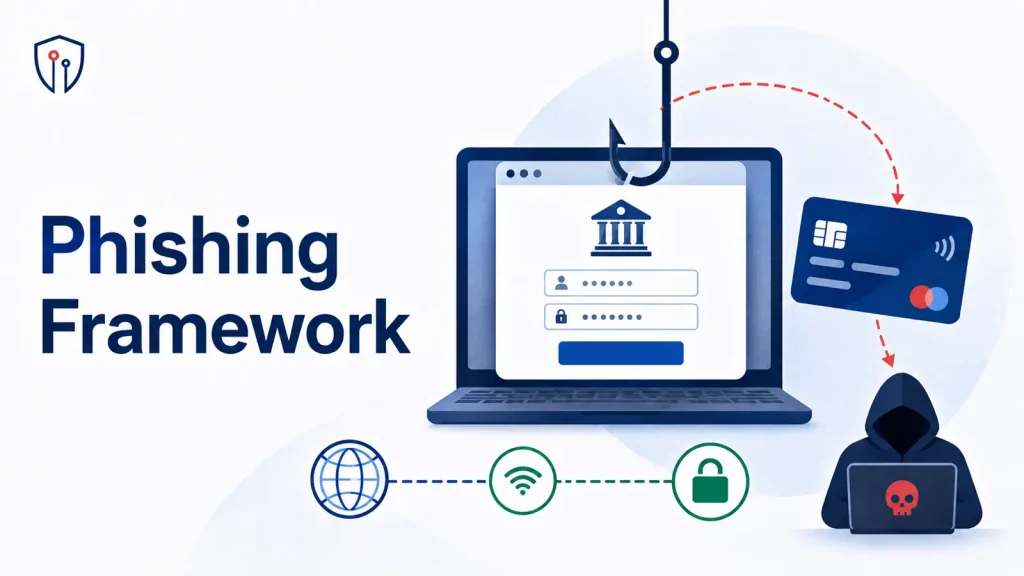
The JWR framework is a cutting-edge phishing tool designed for live fraud operations. Unlike traditional phishing attempts that rely on static forms, JWR establishes a dynamic connection between the victim’s browser and the attacker’s server. This connection, powered by WebSockets, enables the criminal to observe typed information as it appears, almost as if they are looking over your shoulder. This real-time control significantly increases the success rate of credential theft, particularly for banking and payment card information.
How JWR Operates: A Step-by-Step Breakdown
The attack chain initiated by the JWR framework is meticulously crafted to ensnare unsuspecting users:
- Initial Lure: Campaigns typically begin with convincing SMS messages. These messages often impersonate legitimate services, such as unpaid toll notices, parcel delivery charges, or courier alerts. The urgency and apparent legitimacy of these messages pressure recipients into clicking the embedded link.
- Deceptive Landing Page: Upon clicking the link, victims are redirected to a highly convincing login page. These pages are often meticulously designed to mimic legitimate banking portals, payment gateways, or e-commerce sites, complete with authentic-looking branding and user interfaces.
- WebSocket Control: This is where JWR distinguishes itself. Instead of a standard HTML form submission, the fake page leverages WebSockets. This technology provides a persistent, two-way communication channel between the user’s browser and the attacker’s server. As the victim enters their credentials – usernames, passwords, credit card numbers, or other Personally Identifiable Information (PII) – the JWR framework captures each keystroke in real time.
- AES Encryption: To further secure their illicit operation and evade detection, the JWR framework employs AES (Advanced Encryption Standard) encryption. This ensures that the stolen data is encrypted as it traverses the network, making it more challenging for security solutions to intercept and analyze the malicious traffic.
- Credential Theft: With real-time visibility, attackers can instantly validate credentials, identify errors, or even prompt for additional information, making the phishing attempt highly adaptive and effective.
The Role of Real-Time WebSocket Control and AES Encryption
The integration of real-time WebSocket control is a game-changer for phishing attacks. Traditional phishing relies on a “fire and forget” approach, where a form is submitted, and the attacker hopes the data is valid. WebSockets allow for interactive engagement, where the attacker can see and react to the victim’s input instantaneously. This means if a user makes a typo, the attacker can potentially send a prompt to re-enter information, adding to the illusion of a legitimate site. The use of strong AES encryption for data exfiltration further complicates detection efforts, as network traffic containing stolen credentials appears to be securely encrypted, blending in with legitimate encrypted communications.
Remediation Actions and Best Practices
Protecting yourself and your organization from sophisticated frameworks like JWR requires a multi-layered approach:
- Scrutinize SMS Messages: Always be wary of unsolicited SMS messages, especially those demanding immediate action or containing links. Verify the sender through official channels before clicking any link. Legitimate organizations rarely request sensitive information via SMS links.
- Inspect URLs Carefully: Before entering any credentials, meticulously examine the URL of the webpage. Look for subtle misspellings, unusual domain extensions, or discrepancies in the domain name. Even a single character difference can indicate a phishing site.
- Enable Multi-Factor Authentication (MFA): MFA adds a crucial layer of security. Even if your credentials are compromised by a JWR attack, MFA can prevent unauthorized access to your accounts.
- Educate Employees and Users: Regular cybersecurity awareness training is paramount. Educate users about the latest phishing techniques, including those employing real-time data capture and realistic spoofed pages.
- Deploy Advanced Email and SMS Filters: Implement robust email and SMS filtering solutions that can detect and block malicious links and suspicious sender patterns.
- Use Reputable Security Software: Ensure all devices are equipped with up-to-date antivirus and anti-malware software that includes real-time protection against phishing and malicious websites.
- Report Suspicious Activity: If you encounter a suspicious SMS or webpage, report it to your IT department, financial institution, or relevant cybersecurity authorities.
Conclusion
The JWR phishing framework represents a significant advancement in the arsenal of cybercriminals, leveraging real-time WebSocket control and AES encryption to enhance the efficacy of their attacks. By transforming static fake pages into dynamic data-harvesting tools, JWR poses a serious threat to banking credentials and other sensitive information. Remaining vigilant, practicing strong digital hygiene, and implementing robust security measures are essential to mitigate the risks posed by this and similar sophisticated phishing operations.