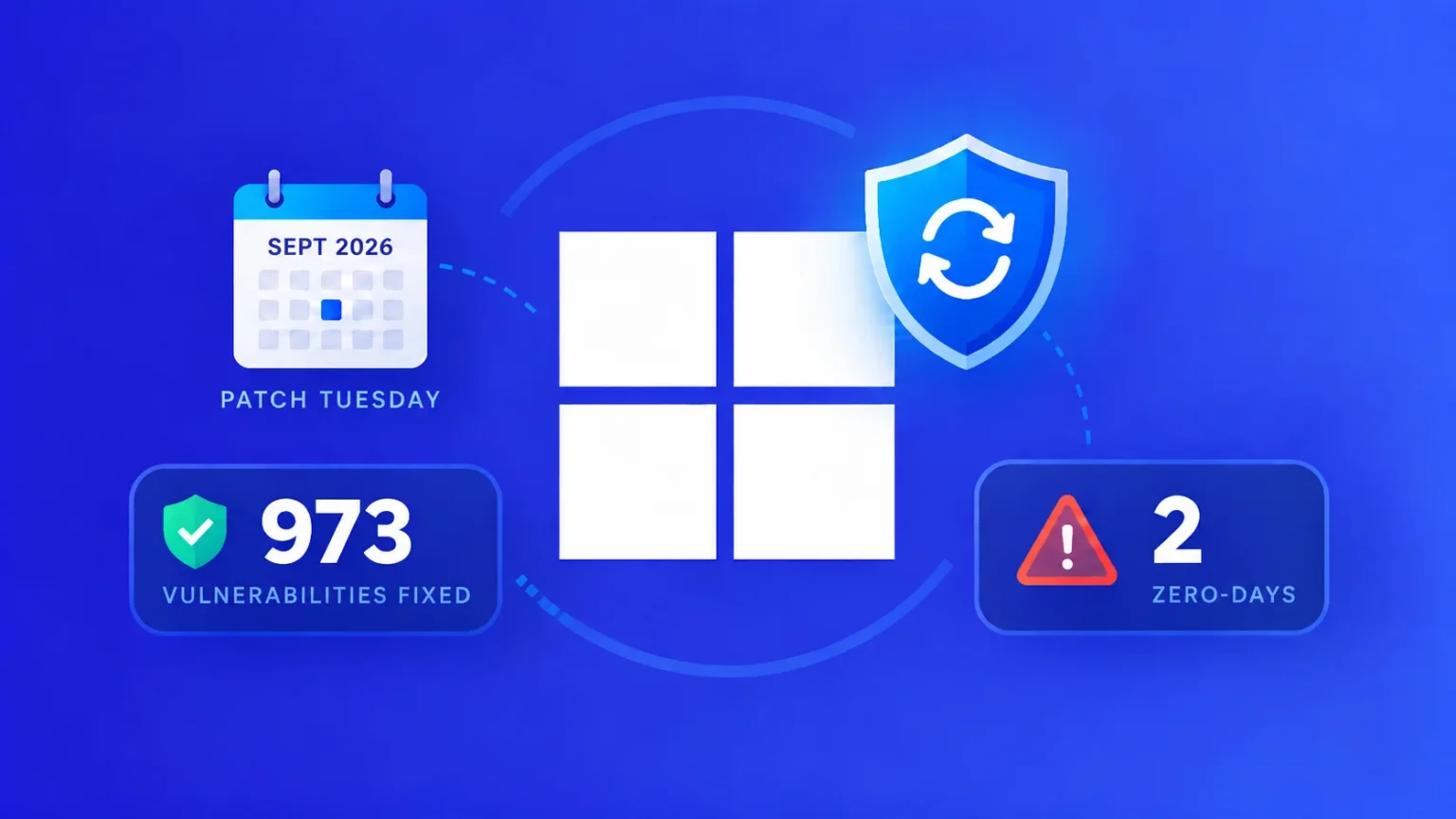
Massive Microsoft Patch Tuesday September 2026 – 973 Vulnerabilities Fixed, Including 2 Zero-Days
The digital landscape shifted significantly on September 8th, 2026, as Microsoft unleashed its most formidable Patch Tuesday in recent memory. This isn’t just another routine update; it’s a colossal security overhaul addressing an astonishing 973 vulnerabilities. More critically, two of these flaws were already actively exploited in the wild – a stark reminder of the persistent threats facing organizations worldwide.
This massive remediation effort underscores Microsoft’s commitment to robust security, particularly following their recent advancements in leveraging artificial intelligence for vulnerability discovery. Their proprietary multi-model agentic scanning system, deployed across the vast Windows codebase, is clearly yielding powerful results, bringing these numerous vulnerabilities to light and subsequently to resolution.
A Deep Dive into the September 2026 Patch Tuesday Numbers
The sheer scale of this Patch Tuesday is unprecedented. Fixing 973 vulnerabilities in a single release cycle demonstrates the intricate complexity of modern software ecosystems and the tireless work of security researchers. These patches span a broad array of Microsoft products, from core operating systems to productivity suites and critical server infrastructure. Expect updates across:
- Windows operating systems (client and server versions)
- Microsoft Office suite applications
- SQL Server deployments
- Exchange Server environments
- And many other components critical to enterprise operations.
The high volume of fixes is a testament to the ongoing cat-and-mouse game between defenders and attackers, now significantly bolstered by AI-driven vulnerability detection. While details on specific critical vulnerabilities beyond the zero-days are still emerging, the broad coverage indicates a comprehensive sweep of potential attack vectors.
The Threat of Exploited Zero-Days
The inclusion of two actively exploited zero-day vulnerabilities is perhaps the most pressing concern from this update. Zero-days are particularly dangerous because attackers have a head start, exploiting flaws before patches are available. While Microsoft has not yet publicly disclosed the specific CVEs for these zero-days in the immediate aftermath of the release, their existence necessitates immediate patching.
Organizations must prioritize the deployment of these updates to mitigate the risk posed by these pre-existing attacks. The nature of zero-day exploits often means they are sophisticated and can lead to significant compromise, including data exfiltration, system takeover, or persistent access.
Microsoft’s AI-Powered Security Evolution
Microsoft’s mention of their new artificial intelligence initiative in vulnerability discovery is a significant development. Their proprietary multi-model agentic scanning system represents a paradigm shift in how vulnerabilities are identified. By deploying advanced AI across the Windows codebase, Microsoft is moving towards a more proactive and automated approach to security. This system likely:
- Identifies subtle code patterns indicative of potential flaws.
- Performs advanced static and dynamic analysis at scale.
- Learns from historical vulnerabilities to predict new attack vectors.
This AI-driven strategy aims to discover vulnerabilities more rapidly and efficiently than traditional methods, ultimately reducing the window of opportunity for attackers. The massive September 2026 patch is a direct result of these efforts, highlighting the power of combining human expertise with cutting-edge artificial intelligence.
Remediation Actions: Your Immediate Priorities
Given the scale and criticality of this Patch Tuesday, immediate action is paramount for all organizations and individual users. Procrastination is not an option when zero-days are in play.
- Prioritize Patch Deployment: Deploy all applicable Microsoft security updates across your entire infrastructure without delay. Focus first on public-facing servers, critical systems, and endpoints.
- Automate Where Possible: Leverage automated patch management systems to ensure timely and comprehensive deployment.
- Verify Application Compatibility: While speed is crucial, ensure that patches are tested in a staging environment to prevent compatibility issues with critical business applications.
- Review Security Logs: After patching, review security logs for any indicators of compromise (IoCs) that may have occurred prior to patching, especially relating to the exploited zero-days.
- Educate Users: Remind users about phishing awareness and social engineering tactics, as these often serve as initial access vectors for sophisticated attacks that exploit underlying vulnerabilities.
- Implement Least Privilege: Ensure that all users and applications operate with the minimum necessary permissions to reduce the impact of a successful exploit.
The Path Forward: Staying Ahead of the Curve
The September 2026 Patch Tuesday serves as a powerful reminder that cybersecurity is an ongoing process, not a one-time event. The increasing sophistication of attackers, coupled with the rapid evolution of technology, demands constant vigilance and proactive security measures. Microsoft’s investment in AI for vulnerability discovery is a welcome development, pushing the industry towards a more secure future.
For IT professionals, security analysts, and developers, the key takeaway is clear: continuous patching, robust security practices, and staying informed about the latest threats are non-negotiable. The digital frontier is always moving, and only through consistent effort can we hope to secure our systems against an ever-evolving threat landscape.