Hackers Actively Exploiting FortiGate Firewalls to Deploy Custom Node.js Malware
The digital perimeter, once a clear line in the sand, is now a complex, porous landscape. Among the most critical components safeguarding this perimeter are firewalls, and FortiGate devices stand as stalwarts for countless organizations. However, recent intelligence from the cybersecurity frontlines indicates a disturbing development: threat actors are actively weaponizing a critical vulnerability in FortiGate firewalls, turning these very guardians into long-term footholds for espionage and data theft. This campaign leverages a custom-built Node.js remote access trojan (RAT), highlighting a sophisticated and persistent threat that demands immediate attention from IT professionals and security analysts.
Understanding the Active FortiGate Exploitation Campaign
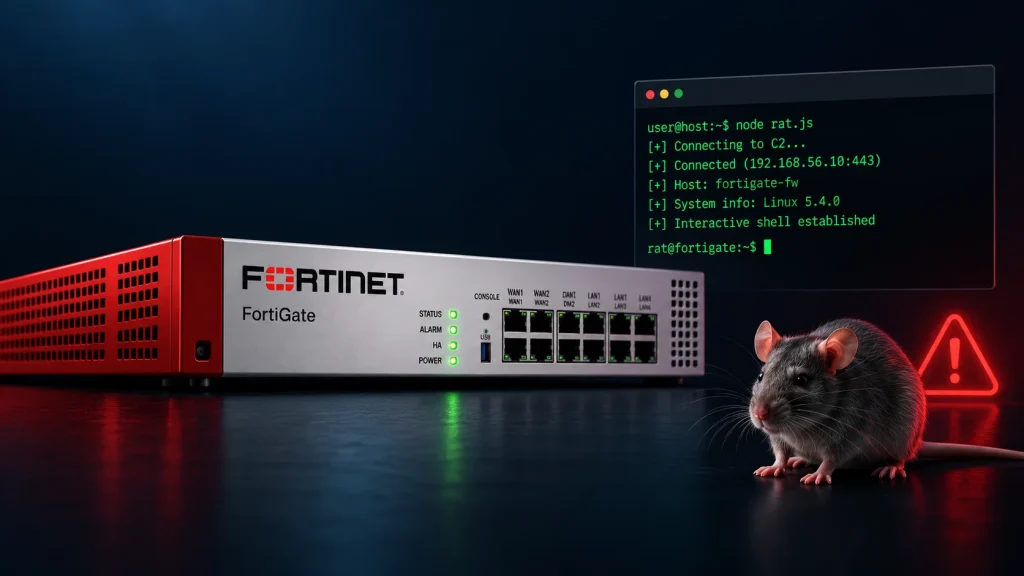
The SOCRadar Threat Research Unit (STRU) has identified, with high confidence, that a sophisticated exploitation campaign is currently underway. Attackers are targeting FortiGate firewalls by weaponizing a critical vulnerability, leading to the deployment of a bespoke Node.js remote access trojan (RAT). This isn’t a spray-and-pray attack; it’s a calculated maneuver designed to establish persistent access for espionage and illicit data exfiltration.
The core of this campaign revolves around the active exploitation of CVE-2025-25249. While specific details of the vulnerability itself are still emerging, its impact is clear: successful exploitation grants attackers the ability to plant their custom Node.js malware directly onto the compromised FortiGate device. This transforms the firewall from a protective barrier into a compromised launchpad for further malicious activities, making it an ideal long-term foothold within an organization’s network.
The Node.js RAT: A Custom Threat
The choice of a Node.js-based RAT is particularly noteworthy. Node.js, being a cross-platform JavaScript runtime, allows for the creation of malware that can operate effectively across various operating systems. This flexibility grants attackers a significant advantage, potentially enabling them to maintain persistence and execute a wide range of commands regardless of the underlying system architecture of the FortiGate device.
Custom-built malware, such as this Node.js RAT, presents several challenges for detection and remediation:
- Evasion: Its unique signature can often bypass traditional antivirus and intrusion detection systems that rely on known threat intelligence.
- Persistence: Designed for long-term presence, it likely incorporates mechanisms to withstand reboots and other defensive measures.
- Espionage Capabilities: RATs are inherently designed for remote control, enabling attackers to perform reconnaissance, exfiltrate sensitive data, and potentially pivot to other systems within the network.
Implications for Network Security
The exploitation of perimeter devices like firewalls is a severe concern for several reasons:
- Gateway Compromise: A compromised firewall means that the very first line of defense has been breached. Attackers can then control network traffic, establish covert channels, and bypass internal security controls more easily.
- Stealthy Persistence: Firewalls are often overlooked in routine endpoint security scans, making them attractive targets for establishing stealthy, long-term access.
- Data Exfiltration: With a foothold on the firewall, attackers are in a prime position to monitor and exfiltrate data flowing through the network, leading to significant data breaches and intellectual property theft.
- Supply Chain Risk: For organizations that manage client networks using FortiGate devices, this vulnerability introduces a potential supply chain risk, where the compromise of one device could ripple across multiple environments.
Remediation Actions
Given the active exploitation of CVE-2025-25249 and the severity of a compromised firewall, immediate action is paramount. Organizations using FortiGate firewalls must prioritize the following remediation steps:
- Patch Immediately: The most critical step is to apply all available patches and firmware updates from Fortinet that address CVE-2025-25249. Ensure your patching schedule is aggressive for perimeter devices.
- Indicators of Compromise (IoCs): Monitor your FortiGate logs and network traffic for any Indicators of Compromise (IoCs) related to this campaign. While specific IoCs for the custom Node.js RAT are still being disseminated, look for unusual outbound connections, suspicious processes, or unexpected file modifications.
- Audit Configuration: Regularly audit your FortiGate configurations for any unauthorized changes, new user accounts, or altered firewall rules that could indicate a compromise.
- Network Segmentation: Implement or strengthen network segmentation to limit the lateral movement capabilities of attackers even if a perimeter device is compromised.
- Review Access Logs: Scrutinize access logs for administrative interfaces of FortiGate devices for any unusual login attempts, especially from unfamiliar IP addresses or at off-peak hours.
- Endpoint Detection and Response (EDR): Ensure that EDR solutions are deployed and actively monitoring systems behind the firewall, as attackers may attempt to pivot from the firewall to internal hosts.
- Incident Response Plan: Have a well-defined incident response plan in place to address potential breaches quickly and effectively.
Detection and Analysis Tools
| Tool Name | Purpose | Link |
|---|---|---|
| FortiGate System Logs | Monitoring device access, configuration changes, and network activity for anomalies. | Fortinet Documentation |
| Network Intrusion Detection/Prevention Systems (NIDS/NIPS) | Detecting suspicious network traffic patterns and potential command-and-control communications. | (Vendor-specific, e.g., Snort, Suricata) |
| Endpoint Detection and Response (EDR) Solutions | Monitoring internal endpoints for post-exploitation activities and lateral movement. | (Vendor-specific, e.g., CrowdStrike, SentinelOne) |
| Vulnerability Scanners | Identifying unpatched vulnerabilities on network devices. | (e.g., Nessus, OpenVAS) |
Conclusion
The active exploitation of FortiGate firewalls to deploy custom Node.js malware represents a significant and evolving threat. This campaign underscores the critical importance of robust patch management, continuous monitoring, and a proactive security posture. Organizations must recognize that perimeter devices are not impervious and can become targets for sophisticated adversaries seeking long-term footholds. By understanding the threat, implementing immediate remediation actions, and leveraging appropriate security tools, defenders can significantly reduce their attack surface and mitigate the risks posed by such persistent threats.