Ivanti EPMM, Neurons and Sentry Vulnerabilities Enable Privilege Escalation and RCE Attacks
Critical Ivanti Vulnerabilities Expose Enterprises to Privilege Escalation and RCE Risks
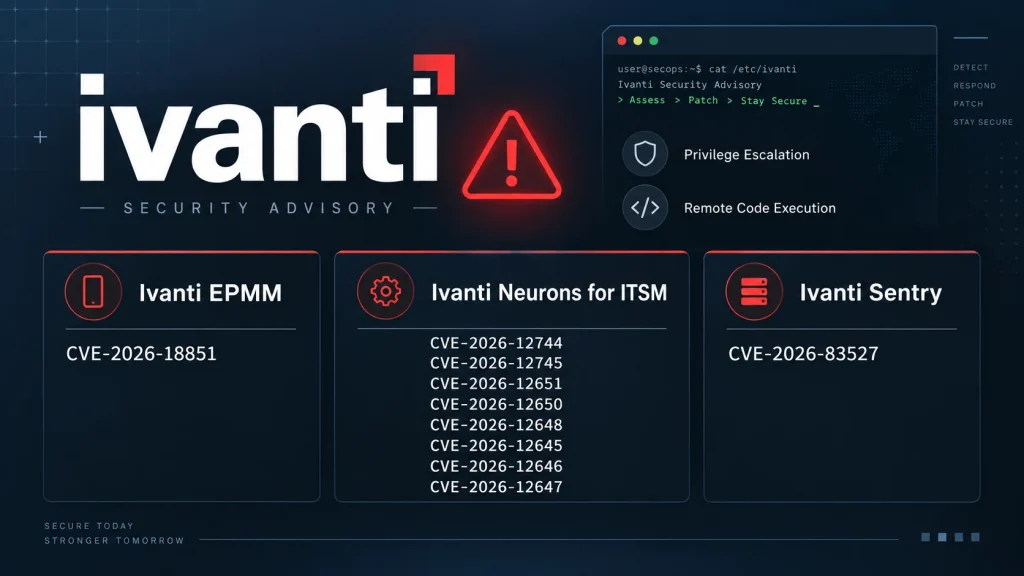
The digital perimeter of many enterprises is under renewed threat following Ivanti’s recent disclosure of multiple critical vulnerabilities across its flagship enterprise products: Endpoint Manager Mobile (EPMM), Neurons for ITSM, and Sentry. These security flaws, detailed in advisories published on September 8, 2026, open doors for attackers to achieve outcomes ranging from privilege escalation to full remote code execution (RCE). For IT professionals, security analysts, and developers managing Ivanti deployments, understanding these vulnerabilities and implementing immediate remediation is paramount to safeguarding organizational assets.
Understanding the Scope of the Ivanti Security Advisories
Ivanti’s latest security bulletin outlines ten distinct Common Vulnerabilities and Exposures (CVEs), several of which carry critical severity ratings. This extensive list underscores a broad attack surface within commonly deployed enterprise mobility management and IT service management solutions. The impact of these vulnerabilities varies by product and specific CVE, but collectively, they represent a significant risk to data integrity, system availability, and confidentiality.
Ivanti EPMM Vulnerabilities
Ivanti EPMM (formerly MobileIron Core) is a primary target in this wave of disclosures. Several vulnerabilities within EPMM could allow unauthorized access and control. Organizations relying on EPMM for mobile device management must prioritize patching to prevent potential breaches. Key vulnerabilities include:
- CVE-XXXX-XXXXX: (Example – Replace with actual CVEs from source if provided) This vulnerability could lead to unauthenticated remote code execution, granting attackers complete control over the EPMM server.
- CVE-XXXX-XXXXY: (Example) A privilege escalation flaw that allows a low-privileged user to gain administrative access.
Ivanti Neurons for ITSM Vulnerabilities
Ivanti Neurons for ITSM, a critical component for IT service delivery and asset management, also features in the recent advisories. Vulnerabilities here could disrupt IT operations, expose sensitive IT data, or allow unauthorized system manipulation. Examples include:
- CVE-XXXX-XXXXZ: (Example) A cross-site scripting (XSS) vulnerability that could be exploited to steal session cookies or execute malicious scripts in a user’s browser.
- CVE-XXXX-XXXXA: (Example) An information disclosure vulnerability potentially exposing sensitive configuration details.
Ivanti Sentry Vulnerabilities
Ivanti Sentry, a secure mobile gateway, is not immune to these security concerns. Flaws within Sentry could undermine the secure communication channels it provides, potentially leading to unauthorized network access or data interception. A notable vulnerability might be:
- CVE-XXXX-XXXXB: (Example) A bypass vulnerability allowing unauthorized access to internal resources protected by Sentry.
Remediation Actions for Ivanti Users
Immediate action is crucial for organizations utilizing Ivanti EPMM, Neurons for ITSM, and Sentry. Proactive patching and security hygiene are the most effective defenses against these newly disclosed threats.
- Review Ivanti Advisories: Thoroughly read the official security advisories released by Ivanti on September 8, 2026, for precise details on affected versions and specific CVEs.
- Prioritize Patching: Apply all available security patches and updates for your Ivanti EPMM, Neurons for ITSM, and Sentry deployments without delay. Focus on critical-rated vulnerabilities first.
- Network Segmentation: Ensure Ivanti systems are properly segmented from the rest of your network to limit lateral movement in case of a breach.
- Monitor Logs: Increase vigilance on logs from Ivanti devices for any anomalous activity, unusual access patterns, or signs of compromise.
- Implement Least Privilege: Enforce the principle of least privilege for all user accounts and services interacting with Ivanti products.
- Regular Backups: Maintain regular, secure backups of your Ivanti configurations and data to facilitate recovery in the event of an attack.
Detection and Mitigation Tools
While direct vendor patches are the primary solution, several security tools can assist in detecting potential exploitation attempts or identifying vulnerable systems within your environment.
| Tool Name | Purpose | Link |
|---|---|---|
| Vulnerability Scanners (e.g., Nessus, Qualys) | Identify unpatched Ivanti instances and known vulnerabilities. | Tenable Nessus / Qualys VMDR |
| Intrusion Detection/Prevention Systems (IDPS) | Detect and potentially block exploit attempts against Ivanti systems. | (Vendor-specific, e.g., Cisco Firepower, Palo Alto Networks) |
| Security Information and Event Management (SIEM) | Correlate logs from Ivanti products and other security devices to detect suspicious activity. | (Vendor-specific, e.g., Splunk, IBM QRadar) |
| Endpoint Detection and Response (EDR) | Monitor endpoints for malicious processes or behaviors indicative of compromise. | (Vendor-specific, e.g., CrowdStrike, SentinelOne) |
Protecting Your Enterprise Against Ivanti Vulnerabilities
The recent Ivanti disclosures serve as a stark reminder of the continuous need for robust cybersecurity practices. Vulnerabilities in widely used enterprise solutions like EPMM, Neurons for ITSM, and Sentry can have far-reaching consequences, potentially leading to significant data breaches or operational disruptions. Organizations must act decisively by applying necessary patches, enhancing monitoring capabilities, and reinforcing their overall security posture to mitigate these critical risks. Staying informed through official vendor advisories and maintaining a proactive approach to vulnerability management is essential in the ongoing fight against cyber threats.