
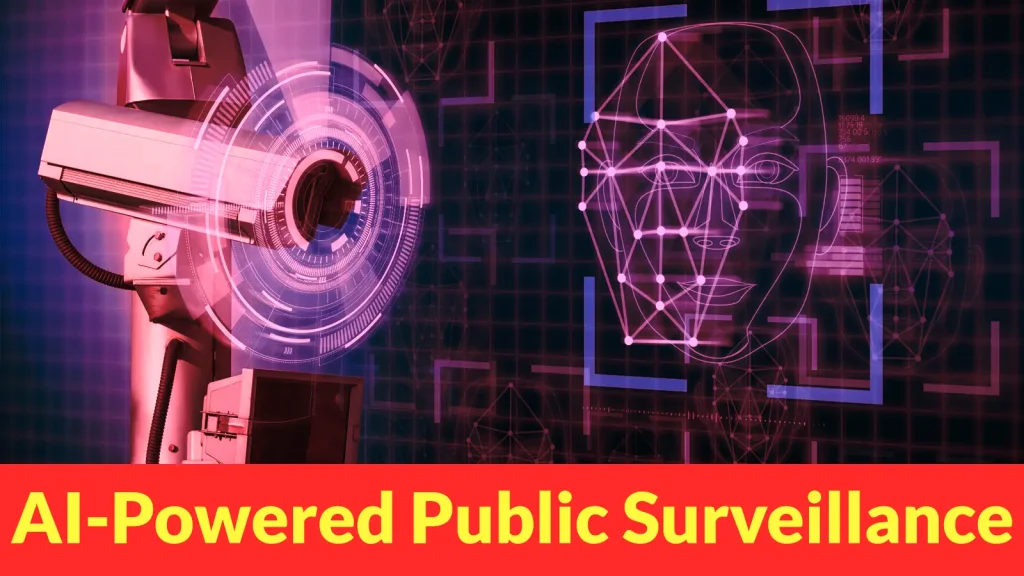
AI-Powered Public Surveillance and Biometric Data Collection Expand Government Monitoring
Government surveillance capabilities are undergoing a profound transformation. What was once confined to the realm of science fiction is now reality, as artificial intelligence (AI) and biometric data collection redefine the boundaries of state monitoring. This digital expansion, moving at an unprecedented pace, is raising red flags among cybersecurity professionals and human rights advocates globally. The implications for individual privacy and civil liberties are immense, demanding our immediate attention.
The Rise of AI-Powered Public Surveillance
The concept of public surveillance isn’t new, but its current iteration, powered by advanced AI, is fundamentally different. Traditional surveillance relied on human operators sifting through vast amounts of footage or data. AI, however, automates and scales this process, enabling real-time analysis, predictive policing, and instantaneous identification. This technological leap allows governments to not only react to events but also to anticipate them, often leveraging sophisticated algorithms and machine learning to identify patterns and anomalies.
The source content highlights this digital expansion. Countries are increasingly deploying commercial spyware and integrating AI into existing infrastructure, creating an intricate web of monitoring. This isn’t just about security cameras; it encompasses a broader spectrum of technologies:
- Facial Recognition Systems: These AI algorithms can identify individuals from video feeds, often by comparing live capture to existing databases of images (e.g., driver’s licenses, passports). The widespread deployment of these systems in public spaces poses significant privacy challenges.
- Gait Analysis: Beyond facial recognition, AI can identify individuals by their unique walking patterns. This offers another layer of persistent surveillance, even when faces are obscured.
- Object and Activity Recognition: AI can be trained to detect specific objects (e.g., weapons) or activities (e.g., suspicious gatherings), alerting authorities without direct human oversight.
- Predictive Analytics: Leveraging vast datasets, AI models can attempt to predict future behaviors or crime hotspots, leading to ‘pre-crime’ interventions that raise ethical and legal questions.
Biometric Data: The New Frontier of Identification
Biometric data, which includes unique physical and behavioral characteristics, is at the core of this expanded government monitoring. Unlike traditional identifiers like names or social security numbers, biometric data is inherently linked to an individual and is incredibly difficult to change or revoke. This makes it a powerful, and potentially irreversible, tool for identification and tracking.
The collection of biometric data is no longer limited to fingerprints at border crossings. We’re seeing an explosion in the types of biometric information being harvested:
- Voice Recognition: AI can analyze vocal patterns to identify individuals, a capability increasingly integrated into call centers and public security systems.
- Iris and Retina Scans: These highly secure forms of identification offer extreme accuracy but also raise concerns about sensitive personal information.
- DNA Analysis: While more complex, advancements in rapid DNA analysis are making it a more accessible tool for law enforcement.
The implications of this widespread biometric data collection are profound. A central database of such sensitive information, if compromised, would be catastrophic. Imagine a scenario where a database containing the iris scans or voiceprints of millions of citizens is exposed; the permanence of this data means individuals could be at risk indefinitely. While there isn’t a single CVE for this overarching threat, specific vulnerabilities in biometric systems can be critical. For example, a vulnerability like CVE-2021-34629 affecting certain facial recognition systems could allow for unauthorized access or manipulation of biometric templates, highlighting the need for robust security.
Commercial Spyware: A Black Market for Surveillance Tools
The proliferation of commercial spyware further complicates the landscape. These sophisticated tools, often developed by private companies, are sold to governments worldwide, providing advanced hacking and surveillance capabilities that might otherwise be unavailable. This creates a shadowy market where powerful digital weapons can fall into the wrong hands, leading to surveillance abuses and human rights violations.
Commercial spyware can:
- Infiltrate mobile phones and computers, accessing messages, photos, and location data.
- Activate microphones and cameras remotely without the user’s knowledge.
- Exfiltrate encrypted communications.
The use of such tools by authoritarian regimes to suppress dissent or target journalists is a grave concern. The existence of vulnerabilities like CVE-2023-37450, a zero-day exploit found in an operating system, could be weaponized by commercial spyware vendors, creating significant risks for targeted individuals.
Remediation Actions for Individuals and Organizations
While the scale of government surveillance can feel overwhelming, there are proactive steps individuals and organizations can take to bolster their digital privacy and security:
- For Individuals:
- Encrypt Communications: Use end-to-end encrypted messaging apps (e.g., Signal, Threema) for sensitive conversations.
- Manage App Permissions: Regularly review and restrict permissions for mobile apps, especially access to your camera, microphone, and location.
- Use VPNs (Virtual Private Networks): A reputable VPN can encrypt your internet traffic and mask your IP address, making it harder to track your online activity.
- Secure Your Devices: Keep operating systems and applications updated to patch known vulnerabilities. Implement strong, unique passwords and enable multi-factor authentication (MFA) everywhere possible.
- Be Mindful of IoT Devices: Smart home devices can be potential surveillance points. Research their privacy policies and secure them appropriately.
- For Organizations:
- Robust Data Governance: Implement strict policies for the collection, storage, and processing of personal and biometric data.
- Regular Security Audits: Conduct frequent penetration testing and vulnerability assessments to identify and remediate weaknesses in your systems.
- Employee Training: Educate employees on social engineering tactics, phishing risks, and best practices for data protection.
- Endpoint Detection and Response (EDR): Deploy EDR solutions to monitor endpoints for suspicious activity and rapidly respond to threats.
- Legal Counsel and Compliance: Stay informed about evolving privacy regulations (e.g., GDPR, CCPA) and consult legal experts to ensure compliance.
The Path Forward: Balancing Security and Privacy
The expansion of AI-powered public surveillance and biometric data collection by governments represents a critical juncture. While these technologies offer potential benefits for public safety and national security, their unchecked proliferation poses grave risks to fundamental rights like privacy, freedom of speech, and due process. A balanced approach is essential, emphasizing transparent governance, stringent ethical guidelines, and robust legal frameworks to prevent abuses.
The ongoing dialogue between cybersecurity professionals, human rights organizations, lawmakers, and the public is vital. We must collectively push for accountability, demand safeguards against misuse, and ensure that technological advancements serve to empower, rather than diminish, individual liberties.




