McDonald’s, Vodafone Hit by Azure Credential Theft Campaign Exposing Millions of Enterprise Records
The Hatman’s Shadow: Azure Credential Theft Plagues McDonald’s, Vodafone, Exposing Millions
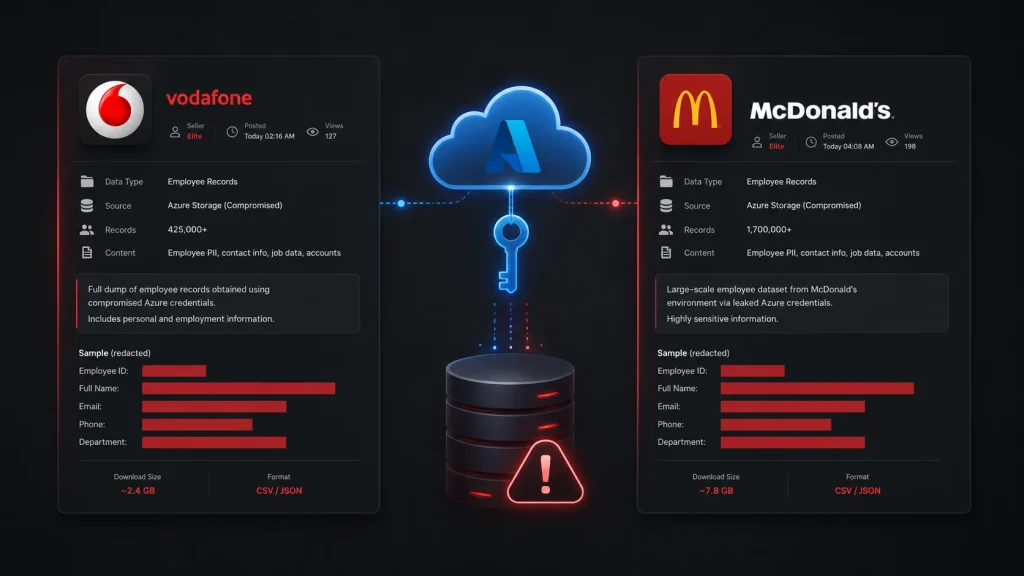
A disturbing and extensive data exfiltration campaign is currently unfolding on the dark web, targeting some of the world’s most prominent corporations. Under the alias “TheHatman,” a threat actor is actively selling internal employee directories, reportedly pilfered directly from victim organizations’ Azure and Entra tenants. This aggressive campaign, which has already impacted giants like McDonald’s and Vodafone, underscores a critical vulnerability in enterprise cloud security: credential theft.
The implications of such a breach are profound, potentially exposing millions of sensitive enterprise records and paving the way for further sophisticated attacks. As cybersecurity analysts, understanding the mechanics of this campaign and implementing robust countermeasures is paramount.
Understanding TheHatman’s Modus Operandi
The core of TheHatman’s operation revolves around the exploitation of compromised credentials to gain unauthorized access to Microsoft Azure and Entra ID (formerly Azure Active Directory) environments. Once inside, the actor systematically extracts internal employee directories, which are then peddled on dark web marketplaces. This is not a random act of opportunistic hacking; it’s a calculated and systematic campaign targeting high-value enterprise data.
The sheer scale of the operation suggests either highly sophisticated initial access techniques or widespread credential stuffing attacks leveraging previously compromised login information. The sale of these directories indicates a clear monetization strategy, where the stolen data becomes a commodity for other malicious actors to launch phishing campaigns, identity theft, or even more targeted corporate espionage.
Why Azure and Entra ID are Prime Targets
Microsoft Azure and Entra ID form the backbone of identity and access management for countless organizations globally. They house critical information, including user accounts, roles, permissions, and directory services. Compromising these systems grants attackers a golden key to an organization’s digital kingdom.
- Centralized Identity: Entra ID acts as the central authentication and authorization service for a vast array of cloud applications and on-premises resources. A breach here means widespread access.
- Rich Data Environment: Employee directories contain names, email addresses, job titles, and sometimes even phone numbers—all valuable information for social engineering and targeted attacks.
- Complex Configurations: The intricate nature of Azure and Entra ID configurations can sometimes lead to misconfigurations or overlooked security settings, providing footholds for attackers.
- Cloud-Native Threats: As more enterprises migrate to the cloud, attackers naturally shift their focus to exploit vulnerabilities within these cloud environments.
The Impact on McDonald’s, Vodafone, and Beyond
The mention of global brands like McDonald’s and Vodafone being affected highlights the indiscriminate nature of this campaign. For these organizations, a breach of internal employee directories can lead to:
- Increased Phishing Risk: Stolen email addresses and names enable highly convincing spear-phishing attacks against employees, potentially leading to further credential compromise or malware infection.
- Insider Threat Simulation: Attackers can leverage directory information to impersonate legitimate employees, gaining trust and potentially access to more sensitive internal systems.
- Reputational Damage: News of a data breach, especially involving prominent companies, erodes customer trust and can have significant financial and reputational repercussions.
- Compliance and Regulatory Fines: Breaches of this magnitude often trigger investigations and can result in substantial fines under regulations like GDPR or CCPA.
Remediation Actions and Proactive Defense
Addressing a campaign like TheHatman’s requires a multi-faceted approach, focusing on preventing credential theft, detecting suspicious activity, and rapid response.
- Strengthen Credential Security:
- Implement mandatory Multi-Factor Authentication (MFA) for all users, especially administrators and privileged accounts.
- Enforce strong, unique password policies. Consider passwordless authentication where feasible.
- Regularly rotate privileged credentials.
- Monitor Azure and Entra ID Logs:
- Routinely review Entra ID sign-in logs for unusual activity, such as logins from unusual locations, impossible travel, or numerous failed login attempts.
- Utilize Azure Sentinel or other SIEM solutions for real-time monitoring and alerting on suspicious activities.
- Pay close attention to changes in administrative roles or permissions.
- Implement Conditional Access Policies:
- Leverage Entra ID Conditional Access to enforce access controls based on user location, device compliance, application, and risk level.
- Regular Security Audits and Penetration Testing:
- Conduct frequent audits of Azure and Entra ID configurations to identify and rectify misconfigurations.
- Perform penetration testing specifically targeting identity and access management systems.
- Employee Security Awareness Training:
- Educate employees about the dangers of phishing, social engineering, and the importance of reporting suspicious emails or activities.
- Least Privilege Principle:
- Ensure users and applications only have the minimum necessary permissions to perform their tasks. Regularly review and revoke unnecessary access.
Tools for Detection and Mitigation
Proactive use of cybersecurity tools is critical in defending against credential theft campaigns.
| Tool Name | Purpose | Link |
|---|---|---|
| Azure Sentinel | SIEM and SOAR for cloud-native security information and event management. | https://azure.microsoft.com/en-us/products/microsoft-sentinel/ |
| Microsoft Entra Identity Protection | Detects identity-based risks, including compromised credentials and suspicious sign-ins. | https://learn.microsoft.com/en-us/azure/active-directory/identity-protection/overview-identity-protection |
| Microsoft Defender for Cloud Apps | Cloud Access Security Broker (CASB) for discovering cloud apps, protecting sensitive data, and detecting threats. | https://www.microsoft.com/en-us/security/business/cloud-security/microsoft-defender-for-cloud-apps |
| MFA Solutions (e.g., Microsoft Authenticator) | Adds an essential layer of security beyond passwords. | https://www.microsoft.com/en-us/security/mobile-authenticator-app |
Key Takeaways for Enterprise Security
The campaign orchestrated by TheHatman is a stark reminder that even the most robust cloud platforms are only as secure as the credentials protecting them. Enterprises must prioritize identity and access management, viewing it as a cornerstone of their overall cybersecurity posture. Proactive monitoring, robust authentication mechanisms, and continuous security education are not merely best practices; they are essential defenses against the relentless threat of credential theft.
The incident affecting companies like McDonald’s and Vodafone serves as a critical case study, urging all organizations leveraging Azure and Entra ID to re-evaluate and strengthen their security controls against identity-based attacks. The cost of prevention pales in comparison to the potential damage of a successful breach.