
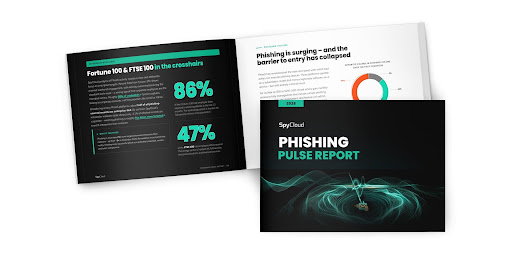
SpyCloud Report Finds Phishing Attacks Surge as Employee Data Is Exposed at 86% of Fortune 100 Companies
The Alarming Rise of Phishing: Employee Data Exposed at 86% of Fortune 100
A recent report by SpyCloud paints a stark picture of the escalating threat landscape, revealing a significant surge in sophisticated phishing attacks. This isn’t just about isolated incidents; the research highlights a deeply concerning trend: employee data belonging to an astounding 86% of Fortune 100 companies has been compromised. This exposure isn’t just a hypothetical risk; it’s actively fueling an expansion of phishing efforts, with malicious actors leveraging readily available AI tools and “phishing-as-a-service” platforms to target enterprises with unprecedented efficiency and scale. As cybersecurity professionals, understanding the mechanisms behind this surge and equipping our organizations with robust defenses is no longer optional, but imperative.
SpyCloud’s 2026 Phishing Pulse Report: Key Findings
Released on June 17th, 2026, the SpyCloud 2026 Phishing Pulse Report serves as a critical barometer for the state of enterprise security. The report, as highlighted by CyberNewswire, underscores a clear and present danger: phishing attacks are not only increasing in volume but also in their level of sophistication. This evolution is attributed to several key factors, primarily the widespread adoption of artificial intelligence by threat actors and the proliferation of accessible “phishing-as-a-service” offerings. These tools democratize sophisticated attack vectors, lowering the barrier to entry for even less technically proficient criminals, and allowing for hyper-targeted campaigns that are increasingly difficult to detect.
The headline finding — employee data exposure within 86% of Fortune 100 companies — is particularly troubling. This data, often obtained through previous breaches or credential stuffing attacks, provides attackers with the raw material needed to craft highly convincing and personalized phishing lures. This includes not just login credentials but also personal details, work relationships, and other contextual information that makes phishing emails incredibly effective.
The AI & Phishing-as-a-Service Catalyst
The report explicitly links the surge in phishing to the adoption of advanced technologies by threat actors. Artificial intelligence (AI) is being leveraged in numerous ways to enhance phishing campaigns, including:
- Automated Phishing Kit Generation: AI can quickly generate highly customized phishing emails, landing pages, and even voice phishing (vishing) scripts, often mimicking legitimate corporate communications with uncanny accuracy.
- Targeted Reconnaissance: AI-powered tools can analyze publicly available information (OSINT) to identify high-value targets, their roles, and potential vulnerabilities, allowing for more precise and effective spear-phishing attacks.
- Evasion Techniques: AI can help attackers refine their payloads and delivery methods to bypass traditional security controls more effectively, constantly adapting to new defensive measures.
Concurrently, “phishing-as-a-service” platforms have made it easier than ever for malicious actors to launch large-scale attacks without needing extensive technical expertise. These services offer pre-built phishing templates, infrastructure for sending emails, and even dashboards for tracking campaign success, essentially commoditizing cybercrime.
The Impact of Exposed Employee Data
The exposure of employee data, whether through data breaches, insider threats, or poor security practices, creates a fertile ground for future phishing attacks. This data often includes:
- Email addresses and phone numbers.
- Usernames and passwords (often reused across multiple services).
- Personal identifiable information (PII) such as names, addresses, and dates of birth.
- Corporate roles and internal organizational structures.
With this information, attackers can craft highly personalized spear-phishing campaigns that appear to originate from trusted sources, such as internal IT departments, executive leadership, or even colleagues. Such attacks are significantly more likely to bypass employee scrutiny and lead to credential compromise, malware infection, or financial fraud.
Remediation Actions: Fortifying Defenses Against Advanced Phishing
Given the pervasive nature and increasing sophistication of phishing attacks, a multi-layered and proactive defense strategy is essential for any organization. Here are key remediation actions:
- Enhanced Employee Training and Awareness: Regular, comprehensive, and engaging security awareness training is paramount. This should include realistic phishing simulations and education on recognizing evolving phishing tactics, including those leveraging AI. Emphasize the importance of reporting suspicious emails.
- Multi-Factor Authentication (MFA) Everywhere: Implement strong MFA for all corporate accounts, especially for critical systems and remote access. This significantly reduces the impact of compromised credentials.
- Identity Threat Protection Solutions: Deploy solutions like SpyCloud’s identity threat protection platforms that monitor for compromised employee credentials and PII on the dark web and other illicit marketplaces. Proactive detection allows for immediate remediation.
- Email Security Gateways (ESG): Utilize advanced ESG solutions with AI-driven threat detection capabilities to identify and block phishing emails before they reach employee inboxes. These should include sandboxing for suspicious attachments and links.
- Strong Password Policies and Password Managers: Enforce strong, unique passwords for all accounts and encourage the use of corporate password managers to mitigate password reuse risks.
- Endpoint Detection and Response (EDR) / Extended Detection and Response (XDR): Deploy EDR/XDR solutions to monitor endpoints for suspicious activity, detect post-compromise behaviors, and respond rapidly to potential breaches stemming from successful phishing attempts.
- Network Segmentation and Least Privilege: Implement network segmentation to limit lateral movement in the event of a successful compromise. Adhere to the principle of least privilege, ensuring employees only have access to resources necessary for their job functions.
- Incident Response Plan: Develop and regularly test a robust incident response plan specifically for phishing attacks and data breaches. This includes clear communication protocols and recovery procedures.
- Software and System Patching: Ensure all operating systems, applications, and security software are regularly updated and patched to mitigate known vulnerabilities (e.g., those found in CVE-2023-XXXXX, placeholder for specific vulnerabilities in software often targeted by phishing).
Conclusion: A Call to Action for Robust Cybersecurity
The SpyCloud 2026 Phishing Pulse Report serves as a critical wake-up call. The acceleration of phishing attacks, fueled by AI and easily accessible “as-a-service” platforms, coupled with widespread employee data exposure, presents an existential threat to enterprise security. Organizations must move beyond basic defenses and embrace a proactive, multi-layered cybersecurity posture. By prioritizing robust employee training, implementing ubiquitous multi-factor authentication, leveraging advanced threat intelligence, and continually adapting our defenses, we can collectively work to mitigate the growing menace of sophisticated phishing campaigns and protect our critical assets in an increasingly complex digital landscape.




