
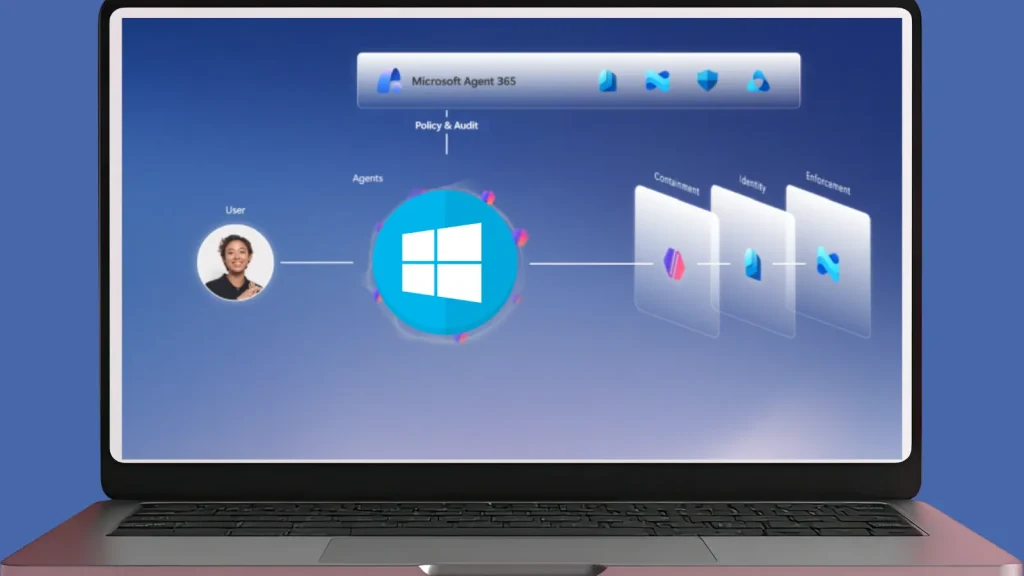
Windows Adds Microsoft Execution Containers to Secure AI Agent Workflows
The rapid advancement of Artificial Intelligence (AI) agents is transforming how we interact with technology. These systems are moving beyond simple queries, evolving into sophisticated entities capable of reading files, executing code, interacting with web services, and automating complex multi-step tasks. While this promises unprecedented efficiency, it also introduces significant cybersecurity challenges. As AI agents gain more autonomy and access to sensitive resources, the potential for exploitation—whether intentional or accidental—escalates dramatically. Securing these powerful new workflows is paramount to maintaining the integrity and trustworthiness of our computing environments.
Recognizing this critical need, Microsoft has rolled out a pivotal new security capability: Microsoft Execution Containers (MXC). This innovation is specifically designed to fortify AI agent workflows on Windows, marking a significant stride towards making Windows a more secure and reliable platform for autonomous systems. This development could fundamentally reshape how we perceive and manage the risks associated with AI integration.
Understanding Microsoft Execution Containers (MXC)
Microsoft Execution Containers (MXC) are a novel security paradigm tailored to the unique demands of AI agent workflows. At its core, MXC provides a robust isolation boundary, effectively sandboxing AI agents from the rest of the operating system. This isolation is crucial because AI agents, by their nature, often require broad permissions to perform their tasks, presenting a larger attack surface if compromised.
MXC leverages a combination of hardware-based virtualization and software-defined isolation to create a secure execution environment. This means that even if an AI agent is exploited—perhaps through a malicious prompt or an injected payload—the potential damage is contained within its designated container, preventing lateral movement or unauthorized access to critical system resources. This layered defense mechanism significantly reduces the risk of data breaches, system compromise, and the misuse of AI capabilities for malicious ends. The technology aims to provide fine-grained control over what an AI agent can access and execute, ensuring that its actions align strictly with its intended purpose.
The Evolving Landscape of AI Agent Security
Traditional security models often struggle with the dynamic and autonomous nature of AI agents. These agents can perform actions that were once exclusive to human operators, such as accessing sensitive data, installing software, or interacting with network services. This expanded capability set necessitates a pro-active and specialized security approach that goes beyond conventional endpoint detection and response (EDR) or antivirus solutions.
The introduction of MXC directly addresses these emerging threats. It establishes a trustworthy execution environment where AI agents can operate safely, even when processing untrusted inputs or executing potentially vulnerable code. This is particularly relevant given the rise of adversarial AI techniques, where attackers attempt to manipulate AI models or their inputs to induce undesirable behaviors or compromise the underlying system. By isolating these agents, MXC mitigates the impact of such attacks, making Windows a more resilient and trustworthy platform for advanced AI deployments.
Key Benefits of MXC for AI Agent Workflows
- Enhanced Isolation: MXC creates a secure sandbox for AI agents, preventing compromised agents from impacting the host system or other applications.
- Reduced Attack Surface: By restricting an AI agent’s access to only necessary resources, MXC significantly shrinks the potential attack surface.
- Mitigation of Lateral Movement: Even if an AI agent is exploited, the containerization prevents attackers from pivoting to other parts of the network or system.
- Improved Trustworthiness: Businesses and developers can deploy AI agents with greater confidence, knowing that their operations are securely contained.
- Policy Enforcement: MXC allows for precise control over an AI agent’s permissions, enabling organizations to enforce strict security policies regarding code execution, file access, and network interactions.
Implications for Developers and IT Professionals
For developers, MXC offers a safer environment to build and test powerful AI agents without fear of unintended system-wide consequences. It promotes experimentation and innovation in AI development by providing a secure perimeter for potentially risky operations. This means developers can focus more on the functionality and efficiency of their AI agents and less on the immediate security implications of every action.
For IT professionals and cybersecurity analysts, MXC simplifies the management and securing of AI deployments. It provides a clear boundary for monitoring and auditing AI agent behavior, making it easier to detect anomalies or malicious activities. The ability to contain AI agent processes minimizes the operational burden of responding to potential incidents, as the scope of impact is inherently limited. Furthermore, MXC represents a proactive step in securing the future of autonomous systems within enterprise environments, aligning with the evolving threat landscape where AI is increasingly a target.
Looking Ahead: The Future of Secure AI on Windows
Microsoft Execution Containers are a significant leap forward in securing the rapidly expanding world of AI on Windows. As AI agents become more sophisticated and deeply integrated into critical business processes, robust security measures like MXC will be indispensable. This move by Microsoft underscores a commitment to providing a secure foundation for the next generation of intelligent applications, ensuring that the benefits of AI can be harnessed without compromising security or trust.
The continuous development and integration of such security capabilities will be crucial for maintaining the resilience of Windows against emerging AI-specific threats. As AI systems continue to evolve, so too must our security frameworks, making solutions like MXC a cornerstone of future cybersecurity strategies.




