
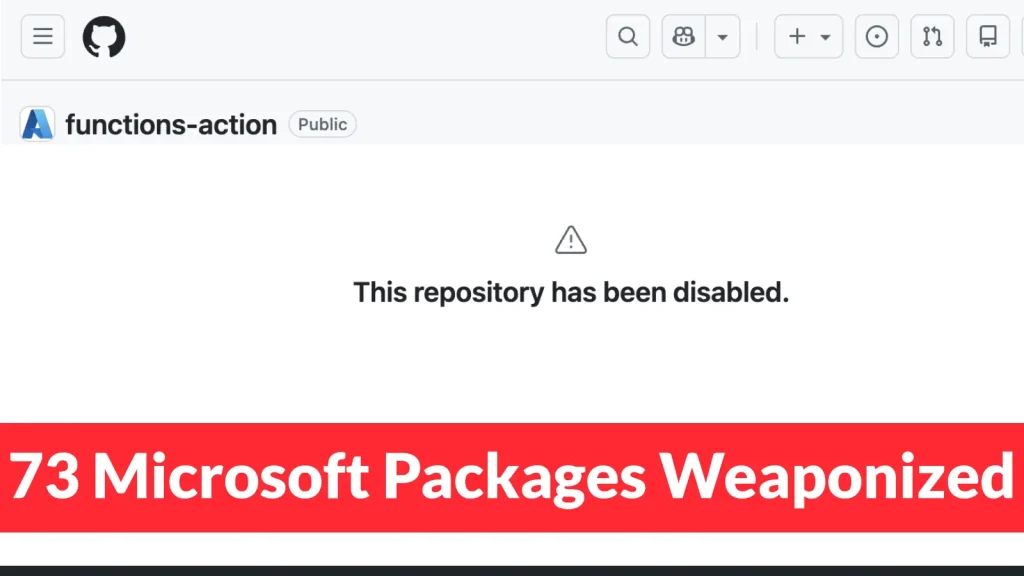
73 Microsoft Packages Weaponized to Deploy Password Stealer Malware
The swift shutdown of 73 Microsoft repositories on GitHub in June 2026 sent a clear, albeit unsettling, message: even the most robust ecosystems are not immune to sophisticated cyber incursions. This wasn’t a slow-drip compromise but a rapid, almost surgical, strike. In a mere 105 seconds, between 19:00 and 19:02 UTC, a self-replicating worm weaponized numerous Microsoft packages, deploying password-stealing malware across a significant portion of the company’s Azure Functions infrastructure. Such a rapid, widespread infection demands immediate attention, not just from Microsoft, but from any organization leveraging cloud-native development and open-source contributions.
The Lightning Strike: 105 Seconds of Chaos
On June 8, 2026, cybersecurity analysts witnessed a disturbing display of automated malicious activity. What initially appeared to be a standard enforcement action quickly revealed itself as the consequence of a self-replicating worm. This highly efficient malware targeted and compromised 73 distinct Microsoft repositories hosted on GitHub. The speed of the attack was remarkable, with the entire infection and subsequent disabling process completing in less than two minutes. This rapid propagation highlights the existential threat posed by worms capable of exploiting misconfigurations or vulnerabilities within interconnected systems, particularly within cloud environments like Azure Functions.
Weaponized Packages and Password Stealers
The primary objective of this intricate attack was to deploy password-stealing malware. By weaponizing legitimate Microsoft packages, the attackers leveraged trusted channels and components to deliver their malicious payload. This tactic allows the malware to bypass traditional security controls that might flag unknown executables, as it masquerades as part of the operating environment. Password stealers are a coveted asset for threat actors, providing access to sensitive credentials that can be used for lateral movement, data exfiltration, and further compromise of an organization’s resources. The scope of this attack, targeting Azure Functions, suggests an attempt to gain access to credentials that could unlock significant cloud resources and data.
Understanding the Self-Replicating Worm
A self-replicating worm possesses the ability to duplicate itself and spread to other systems autonomously, often without user intervention. In this instance, the worm exploited an as-yet-undisclosed mechanism within the Azure Functions ecosystem. The rapid propagation across 73 distinct repositories suggests either a common vulnerability leveraged repeatedly or a highly effective lateral movement capability once initial access was gained. The swiftness of its spread underscores the importance of stringent access controls, network segmentation, and continuous monitoring for anomalous behavior within cloud-native applications. While a specific CVE for this incident has not yet been publicly disclosed, organizations should remain vigilant for new vulnerability reports concerning cloud function services.
Implications for Azure Functions and Cloud Security
Azure Functions, a serverless compute service, is designed for event-driven, scalable application execution. The compromise of packages within this environment is particularly concerning because it can lead to supply chain attacks. If malicious code is injected into a package that is then consumed by numerous applications, the infection vector expands dramatically. This incident serves as a stark reminder that even managed cloud services require robust security practices from the user’s end, including diligent vetting of dependencies, secure coding practices, and continuous security audits of deployed functions. The incident also highlights the critical need for cloud providers to have mechanisms for rapid detection and isolation of compromised components.
Remediation Actions and Proactive Defense
In the wake of such a sophisticated attack, organizations must re-evaluate their security posture, especially when operating within cloud environments and leveraging open-source components.
- Implement Strict Access Controls: Enforce the principle of least privilege across all cloud resources and development environments. Regularly review and revoke unnecessary permissions.
- Supply Chain Security Measures: Vet all third-party and open-source packages thoroughly before integration. Utilize software composition analysis (SCA) tools to identify known vulnerabilities in dependencies.
- Code Signing and Integrity Checks: Implement code signing for all deployed functions and packages. Utilize integrity checks to ensure that deployed code has not been tampered with.
- Network Segmentation: Segment cloud networks to limit the blast radius of any potential compromise. Isolate development, staging, and production environments.
- Continuous Monitoring and Anomaly Detection: Implement robust logging and monitoring solutions across all cloud services. Configure alerts for unusual activity, such as rapid package deployments or unauthorized code modifications.
- Incident Response Plan: Develop and regularly test a comprehensive incident response plan specifically tailored for cloud environments. This should include procedures for containment, eradication, and recovery.
- Employee Training: Educate developers and IT staff on secure coding practices, phishing awareness, and the risks associated with open-source dependencies.
Tools for Enhanced Security
Leveraging appropriate tools can significantly bolster defenses against sophisticated attacks like the one described.
| Tool Name | Purpose | Link |
|---|---|---|
| OWASP Dependency-Check | Identifies known vulnerabilities in project dependencies. | OWASP Dependency-Check |
| Snyk | Developer-first security for code, dependencies, containers, and infrastructure as code. | Snyk |
| TruffleHog | Scans repositories for leaked credentials and sensitive data. | TruffleHog |
| Cloudflare Zero Trust | Provides granular access control and network segmentation. | Cloudflare Zero Trust |
| Azure Security Center / Microsoft Defender for Cloud | Provides cloud security posture management (CSPM) and cloud workload protection (CWP). | Azure Security Center |
Key Takeaways from the Microsoft Incident
The swift compromise of 73 Microsoft GitHub repositories, facilitated by a self-replicating worm deploying password-stealing malware within Azure Functions, underscores several critical points. Such rapid attacks can bypass conventional defenses, emphasizing the need for advanced threat detection and an agile response. The incident highlights the vulnerability of supply chains and the importance of securing open-source components. Organizations must adopt a proactive, multi-layered security strategy, focusing on stringent access controls, continuous monitoring, and robust incident response plans to mitigate the risks posed by increasingly sophisticated and automated cyber threats.




