
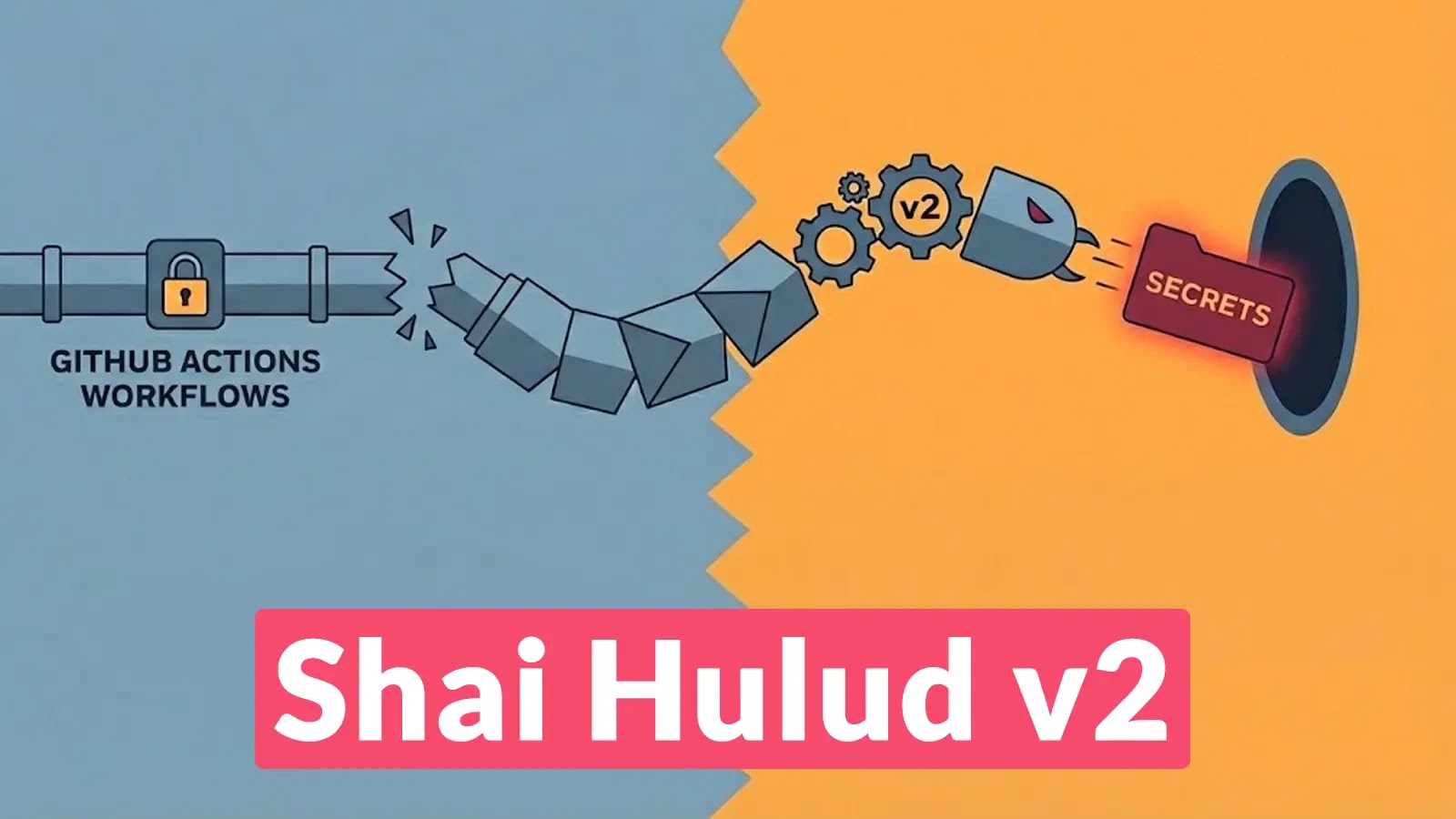
Shai Hulud v2 Exploits GitHub Actions Workflows as Attack Vector to Steal Secrets
The digital supply chain is once again under a sophisticated attack, as a cunning malware campaign, dubbed “Shai Hulud v2,” emerges. This advanced threat is actively exploiting GitHub Actions workflows to compromise hundreds of widely used software packages. Targeting both the npm and Maven ecosystems, Shai Hulud v2 represents a significant escalation in software supply chain attacks, demonstrating a dangerous evolution in how adversaries aim to steal sensitive secrets.
Shai Hulud v2: A New Threat to Software Supply Chain Security
Shai Hulud v2 is not just another piece of malware; it’s a meticulously crafted campaign that has already infiltrated an alarming 834 packages. Its primary objective is to leverage the automation inherent in continuous integration/continuous deployment (CI/CD) pipelines, specifically focusing on GitHub Actions. By compromising popular libraries, this malware gains a foothold in development environments, posing a severe risk to intellectual property and user data.
Exploiting GitHub Actions Workflows: The “pull_request_target” Vector
The core of Shai Hulud v2’s modus operandi lies in its exploitation of specific GitHub Actions triggers, particularly pull_request_target. This trigger is designed to run workflows on the base branch of a repository, even when a pull request originates from a fork. While intended for scenarios like labeling pull requests or running security scans, it creates a powerful vulnerability if not correctly configured. Attackers inject malicious code into these workflows, which then executes with elevated permissions, allowing them to:
- Access and exfiltrate sensitive environment variables.
- Steal API keys, tokens, and other secrets stored within the GitHub Actions environment.
- Manipulate build processes to inject further malicious code.
Major projects, including PostHog and Zapier, have reportedly been impacted by this campaign, underscoring the widespread nature and severity of the threat.
Impact on npm and Maven Ecosystems
The dual targeting of npm (Node Package Manager) for JavaScript projects and Maven for Java projects highlights the broad reach of Shai Hulud v2. These package managers are fundamental to modern software development, making their compromise a critical concern for developers and organizations worldwide. The integrity of packages hosted on these platforms is paramount, and any compromise can have ripple effects across countless downstream projects and applications.
When a compromised package is incorporated into a project, the malicious code within its GitHub Actions workflow can silently execute, leading to data breaches, unauthorized access, and potentially devastating supply chain attacks, often without immediate detection.
Remediation Actions and Best Practices
Protecting against sophisticated threats like Shai Hulud v2 requires a proactive and multi-layered security approach. Organizations and developers must prioritize securing their CI/CD pipelines and software supply chains.
- Principle of Least Privilege: Configure GitHub Actions workflows with the absolute minimum required permissions. Do not grant write access or sensitive tokens unless absolutely necessary for the workflow’s specific function.
- Scrutinize
pull_request_targetWorkflows: Exercise extreme caution when using thepull_request_targetevent. Ensure that any commands executed within such workflows are explicitly designed to handle un-trusted input safely. Avoid running untrusted code from pull requests with elevated permissions. - Implement Code Review for Workflows: Treat GitHub Actions workflow files (
.ymlor.yaml) as critical code. Subject them to rigorous code reviews, similar to application source code, to identify potential vulnerabilities or malicious injections. - Dependabot and Supply Chain Security Tools: Utilize tools like Dependabot or other software composition analysis (SCA) solutions to continuously monitor dependencies for known vulnerabilities and anomalies.
- Secrets Management: Centralize and secure secrets using dedicated secrets management solutions. Avoid hardcoding secrets directly into workflow files or repositories. Implement strict access controls and rotation policies for all credentials.
- Regular Audits: Conduct regular security audits of GitHub Actions configurations, repositories, and third-party integrations to identify and remediate misconfigurations or suspicious activities.
- Stay Informed: Keep abreast of the latest threats and vulnerabilities affecting GitHub Actions and other CI/CD platforms. Subscribe to security advisories and promptly apply updates.
Tools for Detection and Mitigation
Leveraging the right tools can significantly enhance your ability to detect and mitigate threats like Shai Hulud v2.
| Tool Name | Purpose | Link |
|---|---|---|
| GitHub Advanced Security | Code scanning, secret scanning, and dependency review for GitHub repositories. | https://docs.github.com/en/code-security/getting-started/about-github-advanced-security |
| Snyk | Dependency scanning, vulnerability detection in code, containers, and infrastructure as code. | https://snyk.io/ |
| OWASP Dependency-Check | Identifies project dependencies and checks for known, publicly disclosed vulnerabilities. | https://owasp.org/www-project-dependency-check/ |
| SonarQube | Continuous code quality and security analysis. | https://www.sonarqube.org/ |
| GitGuardian | Real-time secret detection and remediation across the entire development lifecycle. | https://www.gitguardian.com/ |
Conclusion
Shai Hulud v2 serves as a stark reminder of the persistent and evolving threats to software supply chain security. By actively exploiting the intricacies of GitHub Actions workflows, attackers are finding new pathways to steal valuable secrets and compromise widely used software. Adopting stringent security practices, particularly around CI/CD pipeline configuration and dependency management, is critical for organizations to safeguard their development processes and ultimately, their products and users. Vigilance and proactive security measures are no longer optional but essential in combating these sophisticated cyber adversaries.




