Top 10 Best Network Security Solutions for IT Managers – 2026
Fortifying Your Digital Frontier: Top 10 Network Security Solutions for IT Managers – 2026
The digital landscape of 2026 presents an increasingly complex and hostile environment. IT managers face the critical challenge of safeguarding their organizations against sophisticated cyber threats. Strategic selection of robust network security solutions is no longer a luxury but a fundamental necessity for maintaining operational resilience and protecting sensitive data. This comprehensive guide reviews the leading network security solutions that empower IT managers to build an impregnable digital infrastructure.
The Evolving Threat Landscape and the Need for Advanced Network Security
Cybercriminals are constantly refining their tactics, from advanced persistent threats (APTs) to highly evasive malware and ransomware. The proliferation of cloud services, remote work, and interconnected devices broadens the attack surface, making traditional perimeter defenses insufficient. Modern network security demands a multi-layered approach incorporating artificial intelligence (AI), machine learning (ML), and behavioral analytics to detect and neutralize threats in real-time before they inflict damage.
Leading Network Security Solutions for 2026
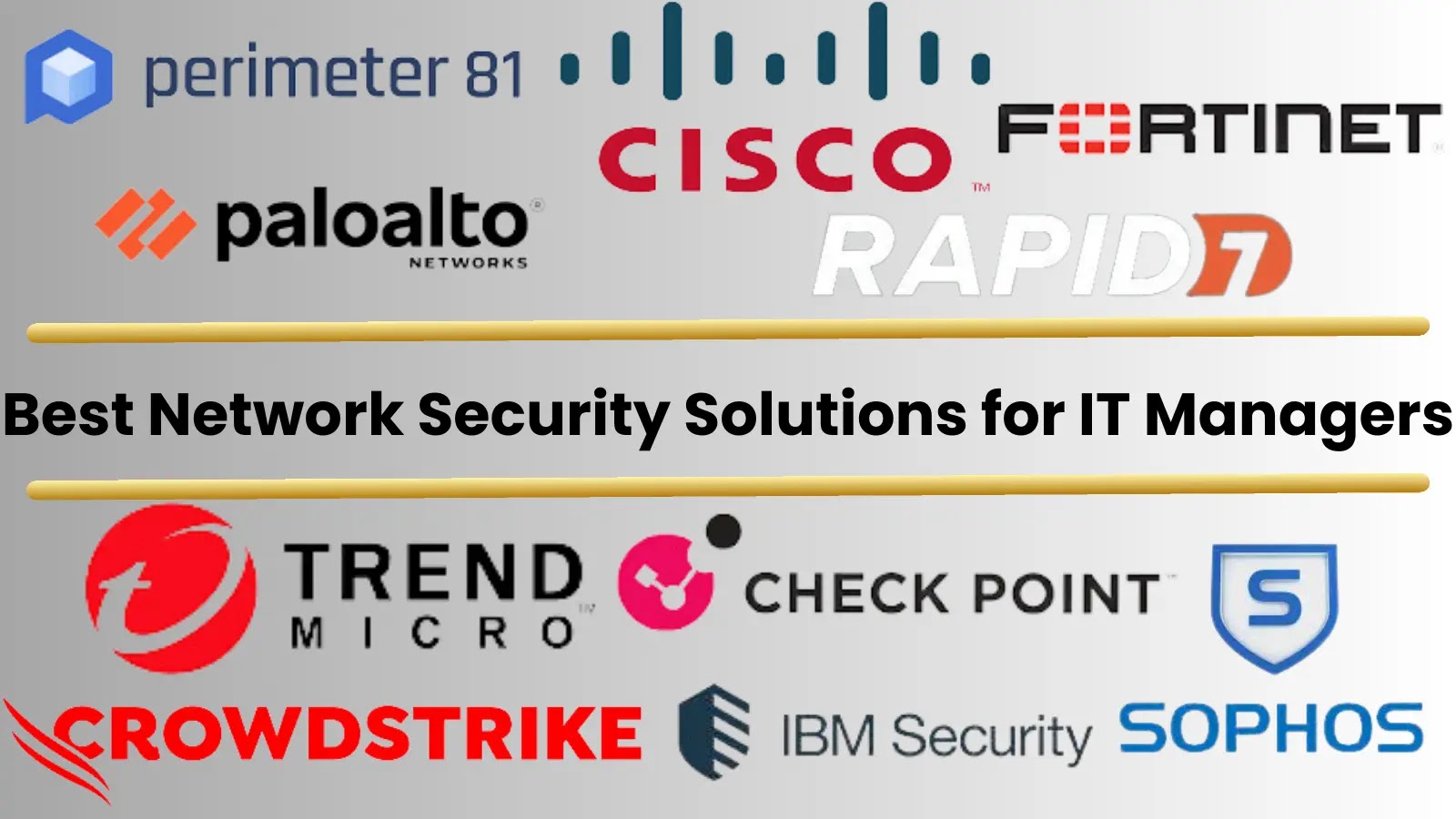
Industry pioneers are at the forefront of innovation, delivering comprehensive platforms that address the diverse requirements of contemporary enterprises. Here’s a look at the top contenders:
Perimeter 81: Secure Access Service Edge (SASE) Powerhouse
- Overview: Perimeter 81 offers a unified SASE platform, consolidating network security and wide area networking into a single cloud-native service. This solution simplifies security management, enhances performance, and provides seamless, secure access for hybrid workforces.
- Key Features: Zero Trust Network Access (ZTNA), Firewall as a Service (FWaaS), VPN as a Service (VPNaaS), Secure Web Gateway (SWG).
- Why it Matters: Crucial for organizations adopting cloud-first strategies and supporting distributed teams.
Palo Alto Networks: Next-Generation Firewall (NGFW) and Cloud Security Leader
- Overview: A long-standing leader in cybersecurity, Palo Alto Networks excels with its advanced NGFW capabilities and extensive cloud security offerings. Their platforms provide deep packet inspection, threat prevention, and integrated security across various environments.
- Key Features: Threat Prevention (IPS/IDS), WildFire (threat intelligence), Cortex XDR (extended detection and response), Prisma Cloud (cloud-native security).
- Why it Matters: Ideal for enterprises requiring deep visibility and comprehensive protection against advanced threats.
Cisco: Comprehensive Network and Security Portfolio
- Overview: Cisco’s enduring presence in networking extends to a vast array of security solutions. Their integrated approach covers network access, endpoint protection, email security, and cloud security, leveraging their extensive network infrastructure expertise.
- Key Features: Cisco Secure Firewall, Cisco Umbrella (DNS-layer security), Duo Security (multi-factor authentication), Secure Endpoint.
- Why it Matters: Businesses with existing Cisco infrastructure benefit from seamless integration and centralized management.
Rapid7: Vulnerability Management and SIEM Specialist
- Overview: Rapid7 focuses on proactive security, offering powerful solutions for vulnerability management, penetration testing, and security information and event management (SIEM). Their platforms help IT managers identify weaknesses before they are exploited.
- Key Features: InsightVM (vulnerability management), InsightIDR (SIEM and XDR), Metasploit (penetration testing framework).
- Why it Matters: Essential for organizations prioritizing continuous vulnerability assessment and rapid threat detection.
Fortinet: High-Performance Network Security Fabric
- Overview: Fortinet is renowned for its high-performance FortiGate NGFWs and a comprehensive security fabric that integrates various security solutions, including endpoint, cloud, and application security, under a single management console.
- Key Features: FortiGate (NGFW), FortiClient (endpoint protection), FortiMail (email security), FortiSandbox (advanced threat protection).
- Why it Matters: Provides scalable, integrated security for diverse network environments, from small businesses to large enterprises.
Sophos: Synchronized Security Ecosystem
- Overview: Sophos offers a “synchronized security” approach, where their endpoint, network, and cloud security solutions share threat intelligence and automate responses. This integrated system enhances detection and response capabilities.
- Key Features: Sophos Firewall, Intercept X (endpoint protection), Cloud Optix (cloud security posture management).
- Why it Matters: Simplifies security operations and improves threat visibility across the entire IT infrastructure.
Trend Micro: Hybrid Cloud Security and Threat Intelligence
- Overview: Trend Micro specializes in hybrid cloud security, endpoint protection, and advanced threat intelligence. Their solutions are designed to protect data and applications across physical, virtual, and cloud environments.
- Key Features: Deep Security (hybrid cloud workload protection), Apex One (endpoint protection), Cloud App Security.
- Why it Matters: Strong choice for organizations migrating to or heavily utilizing cloud environments.
CrowdStrike: Cloud-Native Endpoint and Workload Protection
- Overview: CrowdStrike revolutionized endpoint security with its cloud-native Falcon platform, offering EDR (Endpoint Detection and Response) and XDR capabilities. Its AI-powered threat prevention and incident response are highly effective.
- Key Features: Falcon Endpoint Protection, Falcon Insight (EDR), Falcon Spotlight (vulnerability management), Falcon Cloud Workload Protection.
- Why it Matters: Provides unparalleled visibility and protection for endpoints and cloud workloads against sophisticated attacks.
Check Point: Unified Security Management
- Overview: Check Point delivers a broad portfolio of security solutions, including NGFWs, advanced threat prevention, and unified security management. Their focus is on providing comprehensive protection across networks, cloud, and mobile.
- Key Features: Quantum Security Gateways (NGFW), Harmony Email & Office, CloudGuard (cloud security).
- Why it Matters: Offers robust, integrated security with a strong emphasis on threat prevention and consolidated management.
IBM Security: Enterprise-Grade Solutions and Services
- Overview: IBM Security provides a vast array of enterprise-grade solutions, including SIEM (QRadar), identity and access management (IAM), data security, and security services. Their offerings cater to large, complex organizations with diverse security needs.
- Key Features: IBM Security QRadar (SIEM/XDR), IBM Security Verify (IAM), Guardium (data security).
- Why it Matters: Ideal for large enterprises seeking comprehensive, integrated security frameworks backed by extensive professional services.
Strategic Considerations for IT Managers
Selecting the right network security solutions in 2026 requires a nuanced understanding of your organization’s specific needs, budget, and risk profile. Consider the following:
- Integration Capabilities: Prioritize solutions that integrate seamlessly with your existing infrastructure and security tools.
- Cloud-Native Design: For modern IT environments, cloud-native solutions often offer greater scalability, flexibility, and performance.
- AI and ML-Powered Threats: Ensure solutions leverage advanced analytics to detect unknown threats and adapt to evolving attack patterns.
- Centralized Management: A unified management console can significantly reduce operational overhead and improve visibility.
- Regulatory Compliance: Verify that chosen solutions help meet industry-specific compliance requirements.
For example, a potential vulnerability like the Log4Shell flaw (as tracked under CVE-2021-44228: CVE-2021-44228) highlighted the critical need for solutions capable of deep packet inspection and immediate virtual patching, a capability offered by many of the NGFWs listed above.
Conclusion
The imperative for robust network security will only intensify in the coming years. IT managers must proactively embrace advanced solutions from industry leaders to safeguard their digital assets. By carefully evaluating the capabilities of platforms like Perimeter 81’s SASE, Palo Alto Networks’ NGFWs, and CrowdStrike’s cloud-native EDR, organizations can establish a resilient defense against the cyber threats of 2026 and beyond. A well-chosen security architecture not only protects against breaches but also enables business continuity and fosters trust in the digital age.