
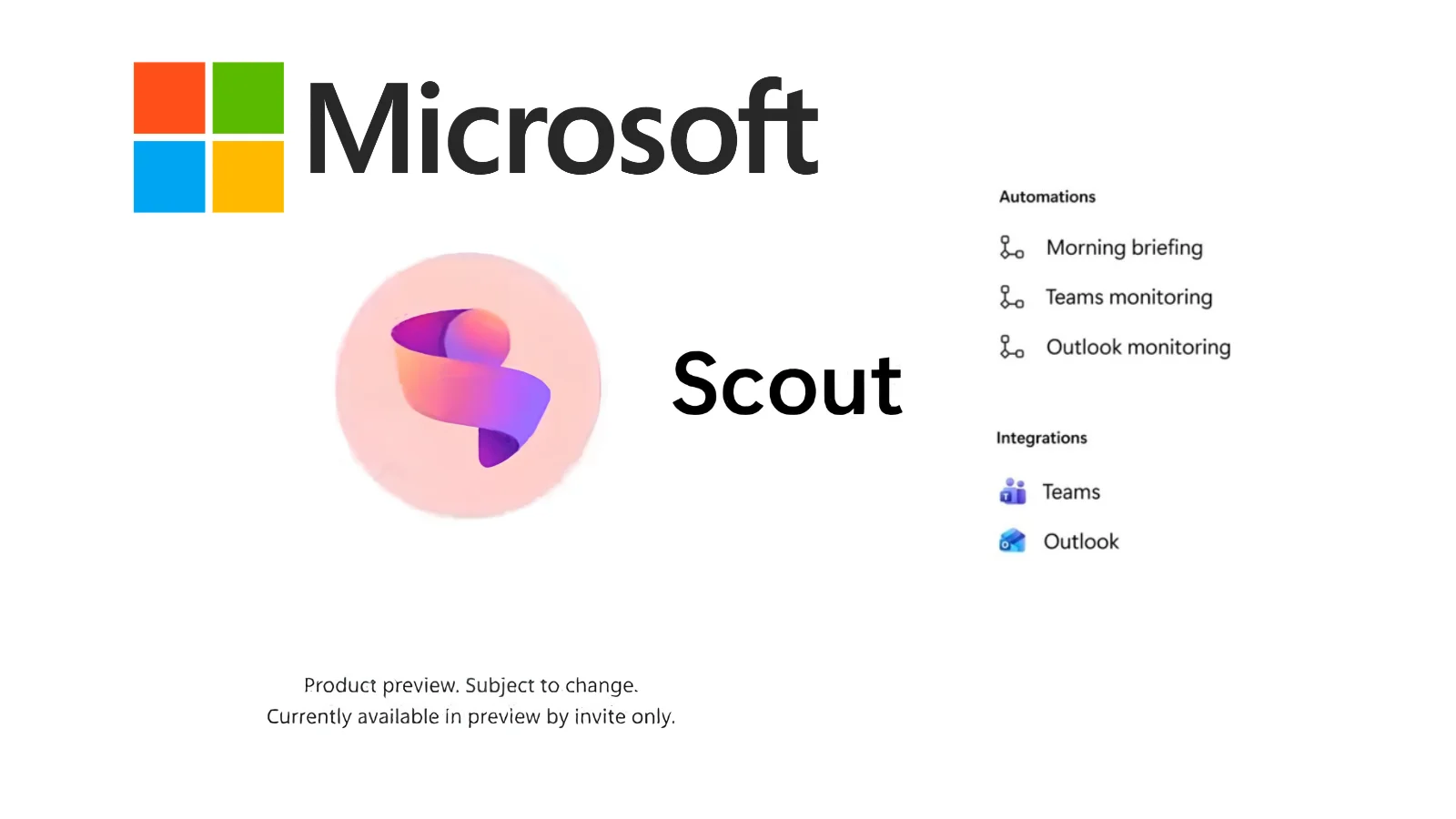
Microsoft Unveils Always-On AI Agent Scout to Integrate With Teams, Outlook, and More
Microsoft has recently pulled back the curtain on a significant evolution in enterprise AI: Microsoft Scout. This isn’t just another AI assistant; Scout is being positioned as Microsoft’s first “Autopilot” AI agent, an always-on, persistent presence designed to integrate seamlessly across the Microsoft 365 ecosystem. Unveiled at Microsoft Build 2026, this development marks a pivotal shift in how artificial intelligence will interact with and augment business workflows.
Introducing Microsoft Scout: The Always-On AI Agent
At its core, Microsoft Scout is an autonomous AI agent engineered for continuous operation within Microsoft 365 applications. Unlike traditional AI assistants that require explicit prompts for every interaction, Scout is designed to actively observe, anticipate, and assist users without constant invocation. This “always-on” paradigm aims to embed AI deeper into daily tasks, from drafting emails in Outlook to streamlining collaboration in Teams and organizing data in various other productivity tools.
The introduction of Scout signifies a fundamental re-imagining of AI’s role in the enterprise. Instead of being a reactive tool, Scout intends to be a proactive partner, constantly working in the background to enhance efficiency and productivity. This level of pervasive integration raises important considerations for IT professionals and cybersecurity analysts, particularly concerning data privacy, access controls, and overall system security.
Key Features and Integration Points
Scout’s primary objective is to transcend the traditional boundaries of individual applications, creating a unified intelligent layer across the Microsoft 365 suite. While specific capabilities are still being detailed, the overarching vision suggests Scout will:
- Proactive Assistance: Anticipate user needs and offer suggestions or complete tasks before being asked. Examples might include scheduling meetings based on email conversations, prioritizing urgent communications, or summarizing lengthy documents relevant to current projects.
- Seamless Application Interoperability: Act as a bridge between disparate Microsoft 365 applications. For instance, information gathered in Outlook could automatically be used to populate a briefing document in Word or update a project status in Teams.
- Contextual Understanding: Leverage a deep understanding of user habits, project contexts, and organizational data to provide highly personalized and relevant support. This goes beyond simple keyword matching, aiming for genuine comprehension of user intent and workflow.
The implications for integration are vast. With Scout operating across Teams, Outlook, Word, Excel, and potentially other third-party integrations, the AI becomes a central nervous system for organizational productivity. This interconnectedness, while powerful, also elevates the importance of robust security measures.
Security and Privacy Considerations for Persistent AI
The concept of an “always-on” AI agent like Scout, while transformative, inevitably brings significant cybersecurity and privacy considerations to the forefront. IT and security teams must prepare for this new paradigm.
- Data Access and Control: Scout’s ability to operate across Microsoft 365 means it will have access to a vast amount of sensitive organizational data. Robust data governance policies and granular access controls will be paramount. Organizations need clear visibility into what data Scout can access and how that access is managed.
- Insider Threat Mitigation: An AI agent with such pervasive access could, if compromised, present a significant insider threat vector. Strict identity and access management (IAM) protocols, including multi-factor authentication (MFA) and least privilege principles, must extend to how Scout operates and interacts with user data.
- Auditability and Transparency: Understanding Scout’s decision-making process and actions will be crucial for compliance and incident response. Comprehensive logging and audit trails detailing Scout’s activities will be essential for maintaining a secure and transparent environment.
- Bias and Ethical AI: As Scout learns and operates autonomously, organizations must be vigilant about potential algorithmic biases. Regular monitoring and ethical AI frameworks will be necessary to ensure fair and equitable operation.
While Microsoft will undoubtedly implement baseline security, organizations must plan for their own specific configurations and monitoring. This proactive approach will be critical to harnessing Scout’s benefits while mitigating potential risks.
Remediation Actions and Best Practices for Implementation
As Microsoft Scout rolls out, organizations should adopt a proactive stance to ensure a secure and effective integration. While this isn’t a vulnerability, the introduction of a new, pervasive technology necessitates a strategic security approach.
- Comprehensive Data Governance: Establish explicit policies detailing what data Scout can access, process, and store. Regularly review and update these policies.
- Granular Permissions Management: Implement the principle of least privilege for Scout’s access to applications and data. Utilize Microsoft’s security and compliance centers to configure permissions meticulously.
- Enhanced Monitoring and Auditing: Leverage Microsoft 365 unified audit logs and security information and event management (SIEM) systems to continuously monitor Scout’s activities. Look for unusual data access patterns or unauthorized actions.
- User Training and Awareness: Educate employees on how Scout operates, its benefits, and the importance of responsible data handling in its presence.
- Regular Security Assessments: Conduct periodic security audits and penetration tests focused on AI components and their interactions with critical business data.
- Incident Response Planning: Update incident response plans to account for potential AI-related security incidents, including data breaches or unauthorized data modifications initiated by the agent.
The Future of Enterprise Productivity and Security
Microsoft Scout represents a bold step towards a more autonomous and intelligently augmented workplace. The transition from reactive tools to proactive, persistent AI agents promises unparalleled gains in efficiency and operational fluidity. However, this evolution demands an equally advanced approach to cybersecurity. Organizations that embrace Scout with a clear understanding of its capabilities and a robust security posture will be best positioned to leverage this transformative technology.
The ultimate success of Scout will hinge not only on its technical prowess but also on Microsoft’s commitment to security and privacy, and how organizations carefully integrate it into their existing cybersecurity frameworks.




