Kimai Docker Flaw Lets Unauthenticated Attackers Forge Cookies and Take Over Accounts
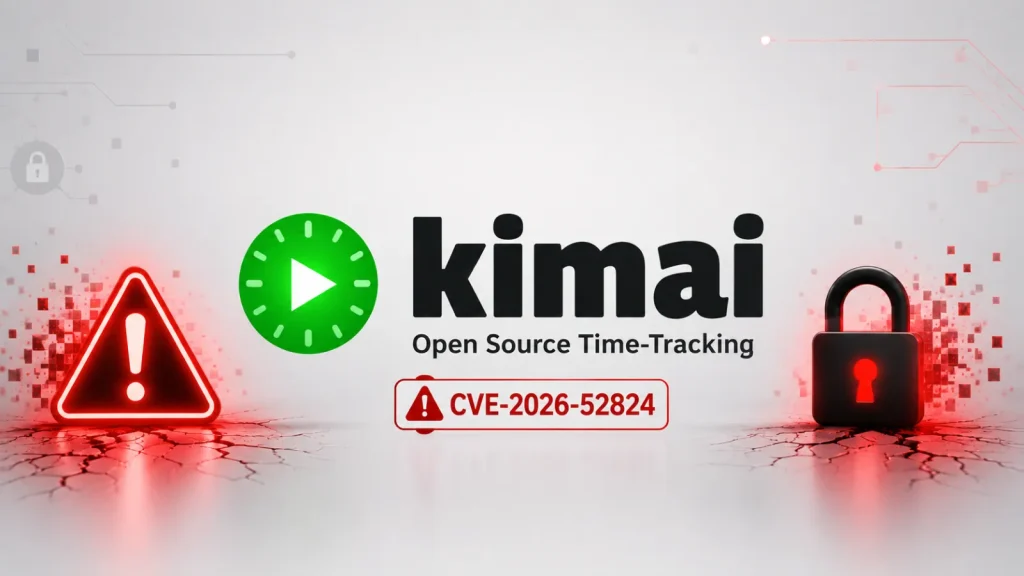
Urgent Alert: Kimai Docker Flaw Threatens User Accounts Through Forged Cookies (CVE-2026-52824)
Organizations and individual users relying on Kimai’s official Docker image for time tracking need to act immediately. A critical vulnerability, identified as CVE-2026-52824, has been disclosed, allowing unauthenticated attackers to forge authentication cookies. This flaw presents a severe risk, potentially leading to unauthorized account takeover, including highly privileged super administrator accounts.
This urgent advisory highlights the specifics of this Kimai Docker vulnerability and provides actionable steps to protect your installations. Understanding the mechanism of such attacks is crucial for maintaining robust cybersecurity postures.
Understanding CVE-2026-52824: The Kimai Docker Cookie Forgery Vulnerability
The core of this vulnerability lies in its ability to permit unauthenticated attackers to craft valid authentication cookies for Kimai instances running on the official Docker image. This attack vector bypasses standard authentication mechanisms, granting unauthorized access to user accounts.
CVE-2026-52824 specifically impacts Kimai versions 2.57.0 and earlier when deployed via the official Docker image. The ability for an attacker to forge session cookies means they can effectively impersonate legitimate users. This can lead to a range of malicious activities, from data exfiltration and manipulation to complete system compromise if an administrator account is targeted.
For more technical details on this vulnerability, you can refer to the official CVE entry: CVE-2026-52824.
Impact and Potential Consequences of an Account Takeover
An unauthenticated attacker successfully exploiting CVE-2026-52824 could have devastating consequences for Kimai users. The primary risk is the unauthorized takeover of user accounts, which can lead to:
- Sensitive Data Access: Time tracking data often contains project details, client information, and employee working hours, all of which could be exposed.
- Data Manipulation: Attackers could alter timesheets, project entries, or user data, leading to financial discrepancies or operational disruptions.
- System Compromise: If a super administrator account is compromised, the attacker gains full control over the Kimai instance, potentially allowing for the installation of backdoors or further lateral movement within the network.
- Reputational Damage: A data breach resulting from this vulnerability can severely harm an organization’s reputation and client trust.
Remediation Actions: Securing Your Kimai Docker Installation
Given the critical nature of CVE-2026-52824, immediate action is required. The good news is that a resolution has been provided by the Kimai development team. Here are the essential steps to secure your Kimai Docker deployments:
- Update Kimai: The most critical step is to update your Kimai installation to a version that addresses this vulnerability. The issue has been resolved in versions released after 2.57.0. Always refer to the official Kimai documentation for the latest stable releases and patching instructions.
- Regular Monitoring: Implement robust logging and monitoring for your Kimai instances. Look for unusual login patterns, unexpected activity, or attempts to access restricted resources.
- Review Access Controls: Regularly review user roles and permissions within Kimai to ensure the principle of least privilege is applied.
- Strong Authentication Practices: While this vulnerability bypasses authentication, strong authentication for legitimate users (e.g., multi-factor authentication) remains a vital defense in depth for overall security.
- Docker Image Security: Ensure you are pulling official and verified Docker images. Always validate image integrity and stay informed about security advisories related to your Dockerized applications.
Tools for Detection and Mitigation
While the primary mitigation is updating, here are some general tools that can assist in maintaining the security posture of your Dockerized applications and detecting potential compromises:
| Tool Name | Purpose | Link |
|---|---|---|
| Docker Scout | Vulnerability scanning for Docker images. | https://www.docker.com/products/docker-scout/ |
| Trivy | Container and filesystem vulnerability scanner. | https://github.com/aquasecurity/trivy |
| OpenSCAP | Policy compliance and vulnerability scanning. | https://www.open-scap.org/ |
| SIEM Solutions (e.g., Splunk, ELK Stack) | Centralized log management and security event monitoring. | (Provider-specific links) |
Protecting Your Time: A Proactive Stance Against Kimai Vulnerabilities
The discovery of CVE-2026-52824 serves as a stark reminder of the continuous need for vigilance in cybersecurity, particularly when deploying applications in containerized environments. Unauthenticated cookie forgery is a potent attack vector that can rapidly escalate into full system compromise.
Organizations utilizing Kimai via its official Docker image must prioritize updating their systems immediately. By doing so, they eliminate the immediate threat posed by this vulnerability and reinforce the security of their time-tracking data and overall infrastructure. Proactive patching, continuous monitoring, and adherence to security best practices are indispensable in protecting against evolving cyber threats.