
Kali365 Phishing Kit Abuses Microsoft Device Codes to Hijack Microsoft 365 Accounts
Kali365 Phishing Kit Abuses Microsoft Device Codes to Hijack Microsoft 365 Accounts
The landscape of cyber threats is continuously evolving, with attackers devising increasingly sophisticated methods to bypass traditional security measures. A prime example of this advanced persistent threat is the discovery of the Kali365 phishing kit. This kit is actively targeting U.S. organizations, leveraging a deceptive technique known as device code phishing to compromise Microsoft 365 accounts. Unlike conventional phishing campaigns that rely on convincing, albeit fake, login portals, Kali365 exploits a legitimate Microsoft authentication process, making it particularly difficult for users to identify as malicious.
Understanding Device Code Phishing and Kali365
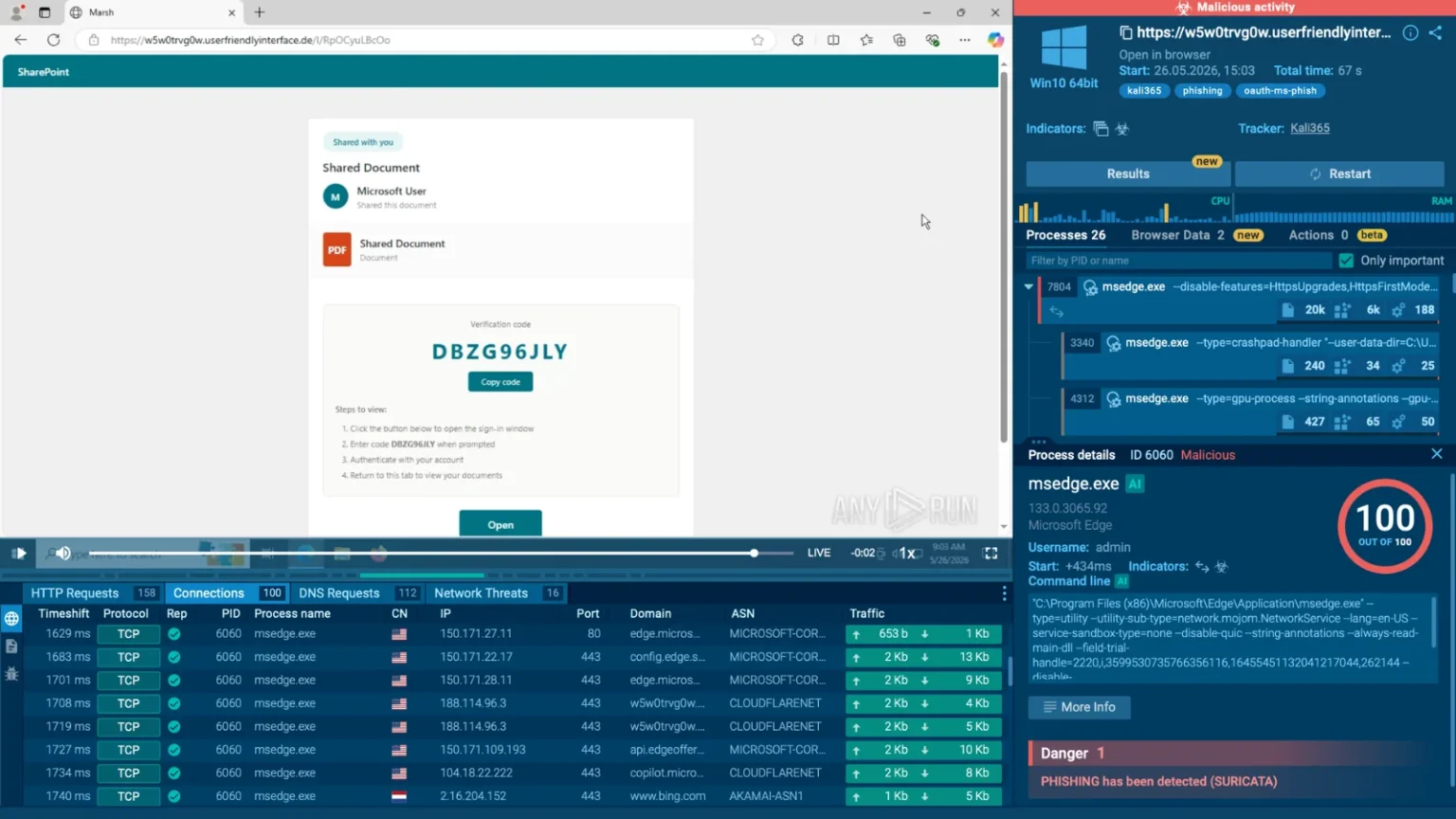
Device code phishing represents a significant departure from standard phishing tactics. Instead of directing victims to a malicious replica of a login page, Kali365 effectively redirects users to an authentic Microsoft Device Login page. This subtle yet critical difference drastically increases the credibility of the attack. Here’s how it generally unfolds:
- The victim receives a phishing email or message, often disguised as a legitimate notification from Microsoft or an internal IT department.
- This communication prompts the user to visit a specific URL or enter a provided code to verify their account or access a document.
- Upon clicking the link, the user is presented with a genuine Microsoft Device Login page, complete with Microsoft’s official branding and security certificates.
- The core of the deception lies in the attacker’s ability to present the victim with a unique, attacker-provided device code. The victim, believing they are completing a legitimate verification step, enters this code into the authentic Microsoft portal.
- Once the victim enters the code and completes the authentication process, they inadvertently grant the attacker access to their Microsoft 365 account. The attacker effectively “pairs” their device with the victim’s account through this legitimate device code flow.
This method bypasses common phishing detection mechanisms that look for fake domains or non-HTTPS connections, as the user is indeed interacting with Microsoft’s infrastructure for a significant portion of the attack.
How Kali365 Exploits Microsoft 365 Authentication
The brilliance and danger of the Kali365 phishing kit lie in its exploitation of a legitimate feature designed for user convenience: Microsoft’s device login flow. This feature allows users to sign in to applications or devices that may not have a web browser, such as smart TVs or IoT devices, by providing a unique code on a separate, browser-enabled device. Attackers weaponize this by:
- Initiating the Device Code Flow: The attacker first initiates a legitimate Microsoft device login request, generating a unique, temporary code.
- Delivering the Code: This code is then presented to the unsuspecting victim through a phishing email or malicious link.
- Victim Interaction: The victim is directed to
https://microsoft.com/devicelogin, a legitimate Microsoft domain. They are then instructed to enter the attacker-provided code into this trusted interface. - Authorization Grant: By entering the code, the victim effectively authorizes the attacker’s session, granting them access to their Microsoft 365 account, including email, OneDrive, SharePoint, and other sensitive services.
This attack vector is particularly insidious because it doesn’t involve impersonating Microsoft’s login page directly. Instead, it leverages the trust users place in Microsoft’s legitimate authentication infrastructure.
Impact on U.S. Organizations
The targeting of U.S. organizations by the Kali365 phishing kit poses a significant threat. Compromised Microsoft 365 accounts can lead to a cascade of security incidents, including:
- Data Breaches: Access to emails, documents, and cloud storage can expose sensitive corporate data, intellectual property, and personally identifiable information (PII).
- Business Email Compromise (BEC): Attackers can use compromised email accounts to launch sophisticated BEC scams, defrauding organizations by impersonating executives or vendors.
- Ransomware Campaigns: Initial access gained through phishing can be leveraged to deploy ransomware or other malware across the corporate network.
- Financial Fraud: Direct access to financial data or the ability to manipulate payment instructions.
- Reputational Damage: Data breaches and successful cyberattacks can severely damage an organization’s reputation and customer trust.
Remediation Actions for Device Code Phishing
Mitigating the threat of device code phishing, such as that posed by Kali365, requires a multi-layered security approach. Organizations must prioritize both technical controls and user education.
- Implement Multi-Factor Authentication (MFA): Even with a compromised device code, MFA (especially hardware-based or FIDO2 keys) can significantly reduce the risk of account takeover. This is a critical barrier for attackers.
- Conditional Access Policies: Configure Microsoft 365 Conditional Access to restrict access based on factors like geographic location, IP address ranges, device compliance, and application. This can prevent access from unusual locations or unmanaged devices.
- Regular Security Awareness Training: Educate users about the dangers of device code phishing. Teach them to be suspicious of unsolicited requests to enter codes or verify accounts, even if the login page appears legitimate. Emphasize verifying requests through a separate, trusted channel.
- Monitor Microsoft 365 Audit Logs: Regularly review audit logs for unusual login patterns, new device registrations, or suspicious activity within user accounts. This includes monitoring for device code redemptions that were not initiated by the user.
- Enforce Principle of Least Privilege: Limit user permissions to only what is necessary for their role to minimize the potential impact of a compromised account.
- Strong Password Policies: While MFA is paramount, strong, unique passwords remain a fundamental security control.
- Regular Phishing Simulations: Conduct simulated phishing attacks, including those mimicking device code phishing, to test user awareness and identify vulnerabilities in security training.
- Endpoint Detection and Response (EDR): Utilize EDR solutions to detect and respond to suspicious activities on endpoints that might indicate initial compromise or subsequent malicious actions.
Security Tools for Detection and Mitigation
| Tool Name | Purpose | Link |
|---|---|---|
| Microsoft 365 Defender | Comprehensive threat protection, identity protection, and automated investigation for Microsoft 365 services. | Microsoft 365 Defender |
| Microsoft Conditional Access | Policy-driven access control for Azure AD connected apps and resources. | Microsoft Conditional Access |
| Security Information and Event Management (SIEM) | Centralized collection and analysis of security logs (e.g., Splunk, Microsoft Sentinel). | Splunk / Microsoft Sentinel |
| Phishing Simulation Platforms | Used for training employees to identify and report phishing attempts (e.g., KnowBe4, Cofense). | KnowBe4 / Cofense |
Conclusion
The Kali365 phishing kit underscores the sophisticated evolution of cyber threats, particularly those targeting cloud-based services like Microsoft 365. By abusing legitimate authentication mechanisms, these attacks bypass conventional defenses and directly exploit user trust. Organizations must move beyond basic security measures, embracing robust MFA, granular conditional access policies, and continuous security awareness training to effectively counter these advanced phishing techniques. Staying informed about new attack vectors and proactively implementing preventative controls is essential for safeguarding organizational assets in the face of such adaptive adversaries.




