
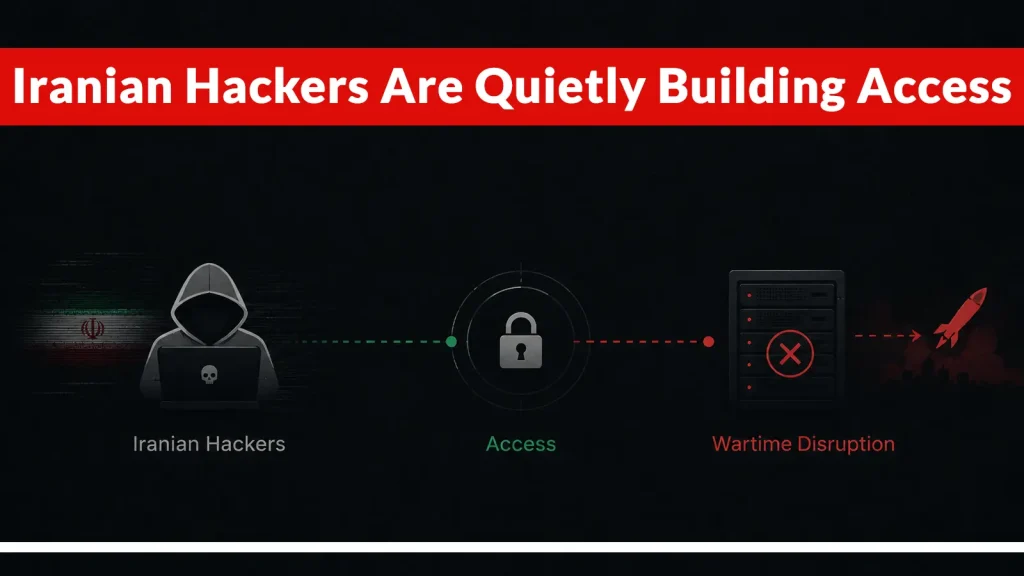
Iranian Hackers Are Quietly Building Access They Can Turn Into Wartime Disruption
The Silent Threat: Iranian Hackers Building Footholds for Future Disruption
The landscape of cybersecurity threats is constantly shifting, and state-sponsored actors are refining their tactics. We often hear about the spectacular, loud attacks – the data breaches, the defacements, and the public leaks. However, a more insidious strategy is reportedly being employed by Iranian-linked hacker groups: quiet, persistent access building. This approach eschews immediate gratification for strategic infiltration, positioning them to cause significant operational disruption during a crisis.
Beyond the Spectacle: The Strategy of Silent Infiltration
Unlike campaigns focused on immediate impact or public outcry, the current intelligence suggests Iranian threat actors are meticulously establishing deep access within critical infrastructure and private sector entities. This isn’t about bragging rights; it’s about strategic advantage. By gaining persistent footholds within corporate networks, cloud environments, service providers, and even industrial control systems (ICS), these groups create a latent capability that can be activated at a moment’s notice.
Think of it as planting sleeper agents within a system. These agents observe, map processes, and identify vulnerabilities, becoming intimately familiar with the target’s operational fabric. When geopolitical tensions escalate, this pre-positioned access becomes a powerful weapon, enabling everything from data exfiltration to direct operational sabotage, potentially crippling essential services or businesses.
Tactics of Persistence: How Access is Gained
The methods employed to achieve this deep infiltration are varied but consistently focused on stealth and longevity. Organizations must understand these tactics to defend effectively:
- Stolen Credentials: A perennial favorite, compromised usernames and passwords remain a primary vector. These can be acquired through phishing campaigns, brute-force attacks, or by purchasing them from dark web markets. Once inside, lateral movement and privilege escalation become the next objectives.
- Remote Management Tools Exploitation: Abusing legitimate remote administration tools (RATs) or exploiting vulnerabilities in widely used IT management software allows attackers to blend in with normal network traffic. This can include exploiting known weaknesses in RDP, VPN concentrators, or enterprise device management platforms. For example, a vulnerability like CVE-2023-38831 in WinRAR or CVE-2023-46805 and CVE-2024-21887 in Ivanti products can provide initial access.
- Recruitment-Themed Phishing: Social engineering remains a highly effective method. Phishing campaigns disguised as job offers or recruitment communications can trick employees into divulging credentials or installing malicious software, specifically designed for long-term presence.
- Attacks on Exposed Industrial Systems: Industrial Control Systems (ICS) and Operational Technology (OT) networks are particularly vulnerable due to often outdated software, internet exposure, and lack of comprehensive security measures. Gaining access here allows for potential disruption of critical infrastructure and manufacturing processes. Common vulnerabilities in these environments are often less publicized but equally critical.
The End Goal: Wartime Disruption
The strategic intent behind this quiet access building is clear: to create options for disruption during future conflicts or heightened geopolitical tensions. This could manifest in several ways:
- Sabotage: Manipulating industrial processes, disrupting supply chains, or disabling critical services like power grids, water treatment, or transportation networks.
- Data Integrity Attacks: Altering or corrupting critical data, leading to widespread confusion, loss of trust, and operational paralysis.
- Economic Warfare: Targeting financial institutions or key economic sectors to cause significant financial damage and instability.
- Psychological Operations: Leveraging access to disseminate disinformation or sow discord.
The long-term nature of these campaigns makes detection and eviction incredibly challenging, underscoring the need for proactive and robust cybersecurity postures.
Remediation Actions: Fortifying Your Defenses
Given the sophisticated and persistent nature of these threats, a multi-layered defense strategy is paramount:
- Implement Strong Identity and Access Management (IAM): Enforce Multi-Factor Authentication (MFA) across all accounts, especially for remote access and privileged users. Regularly review and revoke unnecessary access.
- Patch Management and Vulnerability Scanning: Maintain a rigorous patching cadence for all systems, operating systems, applications, and network devices. Conduct regular vulnerability assessments to identify and remediate exposed weaknesses, particularly those related to remote management tools.
- Endpoint Detection and Response (EDR)/Extended Detection and Response (XDR): Deploy advanced EDR/XDR solutions to monitor endpoints for suspicious activity, even legitimate tools being used maliciously.
- Network Segmentation: Isolate critical systems, especially OT/ICS networks, from corporate IT networks. Implement strict firewall rules and Zero Trust principles.
- Employee Training and Awareness: Conduct ongoing cybersecurity awareness training, focusing on identifying phishing attempts, especially those with recruitment or urgent themes.
- Incident Response Plan: Develop and regularly test a comprehensive incident response plan. Knowing how to react quickly and effectively can limit damage if an intrusion occurs.
- Threat Intelligence Integration: Subscribe to and integrate relevant threat intelligence feeds to stay updated on the latest tactics, techniques, and procedures (TTPs) used by state-sponsored groups.
- Regular Backups: Ensure immutable, offsite backups of critical data and system configurations to facilitate recovery from ransomware or data integrity attacks.
Conclusion
The threat posed by Iranian-linked hackers building quiet access is a stark reminder that cybersecurity is an ongoing, adaptive challenge. These groups are playing a strategic, long game, establishing footholds designed for future disruption rather than immediate spectacle. Organizations must move beyond reactive measures and embrace a proactive, comprehensive security posture focused on resilience, early detection, and rapid response. Understanding their quiet tactics is the first step in effectively countering this evolving and deeply concerning threat.




