
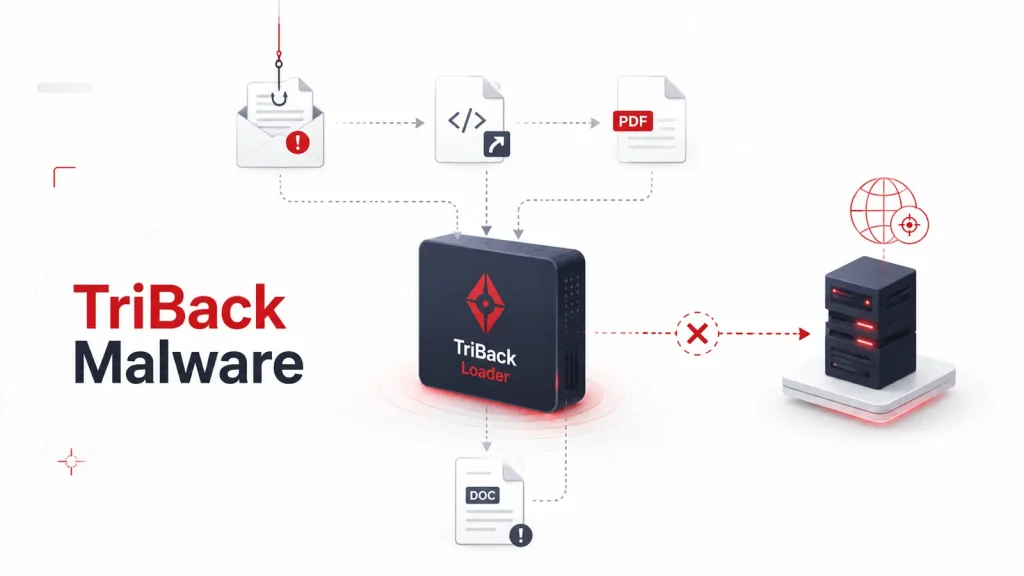
Hackers’ OPSEC Mistake Exposed a Global Espionage Campaign and Its New TriBack Malware
A global espionage campaign, previously operating in the shadows, has been unmasked not by sophisticated counter-intelligence but by a fundamental operational security (OPSEC) blunder. This revealing mistake by cyber adversaries has provided a critical glimpse into their methods, targets, and a newly identified piece of malware dubbed “TriBack.” The incident serves as a stark reminder that even the most advanced threat actors are susceptible to human error, offering invaluable lessons for cybersecurity professionals worldwide.
The Critical OPSEC Failure: What Happened?
In early 2026, a widespread espionage effort was actively targeting a diverse range of organizations across multiple continents. This included critical infrastructure like hospitals, vital government offices, and educational institutions. The campaign remained covert until mid-April when the attackers made a simple yet catastrophic error: they left a staging server openly accessible.
This exposed server was a goldmine of intelligence for security researchers. It contained a comprehensive collection of the tools employed in their attacks, detailed command histories outlining their actions, and various phishing packages ready for deployment. This oversight immediately exposed an active campaign, now being rigorously tracked and analyzed by the cybersecurity community.
Unveiling TriBack Malware: A New Threat
Among the discoveries on the compromised staging server was a previously unknown malware strain, now identified as “TriBack.” While specific technical details beyond its name are still emerging following its discovery, the context of its deployment suggests it is a sophisticated tool designed for espionage and data exfiltration. The presence of TriBack alongside phishing packages indicates a typical attack chain: initial compromise via social engineering, followed by the deployment of persistent malware for long-term access and information gathering.
Cybersecurity analysts are currently dissecting TriBack to understand its capabilities, infection vectors, persistence mechanisms, and command-and-control (C2) infrastructure. Its identification is crucial, as it allows organizations to develop specific detection signatures and defensive strategies.
Targets and Scope of the Espionage Campaign
The breadth of targets revealed by this OPSEC error is particularly concerning. The attackers showed no specific preference, indiscriminately compromising:
- Hospitals: Access to sensitive patient data, operational systems, and research.
- Government Offices: Compromising national security, policy details, and classified information.
- Schools: Potentially gaining access to intellectual property, student data, and research initiatives.
The geographical reach, spanning “several continents,” underscores the global nature of this threat and the sophisticated resources likely backing the perpetrators. This broad targeting strategy suggests a focus on intelligence gathering across various sectors rather than a highly specialized attack on a single industry.
Remediation Actions and Proactive Defense
The exposure of this campaign, particularly the TriBack malware and the attack infrastructure, offers a unique opportunity for organizations to bolster their defenses. Here are critical remediation actions and proactive measures:
- Immediate Threat Hunting: Organizations, especially those in the identified target sectors (healthcare, government, education), must conduct immediate threat hunting activities. Look for indicators of compromise (IoCs) related to the exposed campaign, including IP addresses of the staging server (once publicly disclosed) and any known hashes of TriBack.
- Patch Management: Ensure all systems and software are fully patched and updated. Exploitation often begins with known vulnerabilities.
- Network Segmentation: Implement robust network segmentation to limit the lateral movement of attackers even if an initial compromise occurs.
- Endpoint Detection and Response (EDR): Deploy and optimize EDR solutions to detect and respond to suspicious activities on endpoints, which might indicate TriBack infection or other malware.
- Email Security: Reinforce email security gateways and user awareness training to mitigate the risk of phishing attacks, a primary vector for this campaign.
- Access Management: Enforce the principle of least privilege. Regularly review and revoke unnecessary access rights. Implement multi-factor authentication (MFA) everywhere possible.
- Security Audits and Penetration Testing: Regularly audit security configurations and conduct penetration tests to identify and rectify vulnerabilities before attackers exploit them.
Lessons Learned: OPSEC for Both Sides
This incident is a powerful lesson in operational security, not just for the attackers but for defenders as well.
- For Attackers: Even highly capable adversaries can make simple mistakes that unravel years of covert operations. Rigorous OPSEC is paramount for maintaining anonymity and campaign longevity.
- For Defenders: The discovery highlights the effectiveness of diligent monitoring and intelligence gathering. Even seemingly insignificant misconfigurations can lead to significant intelligence breakthroughs. It also reinforces the adage that “defense in depth” is crucial, as a single point of failure (like an exposed staging server) can turn the tide.
Conclusion
The uncovering of a global espionage campaign and the TriBack malware due to an attacker’s OPSEC oversight is a significant development in the world of cybersecurity. It provides security professionals with a rare and valuable opportunity to understand the tactics, techniques, and procedures (TTPs) of an active, sophisticated threat actor. While the specific details of TriBack and the full extent of the campaign are still being unraveled, the immediate actions for organizations involve heightened vigilance, proactive threat hunting, and a renewed focus on fundamental cybersecurity best practices. This incident underscores that the human element, both in error and in discovery, remains a critical factor in the ongoing struggle for digital security.




