
Hackers Abuse GitHub Actions to Exploit cPanel and WHM Servers and Steal Cloud Credentials
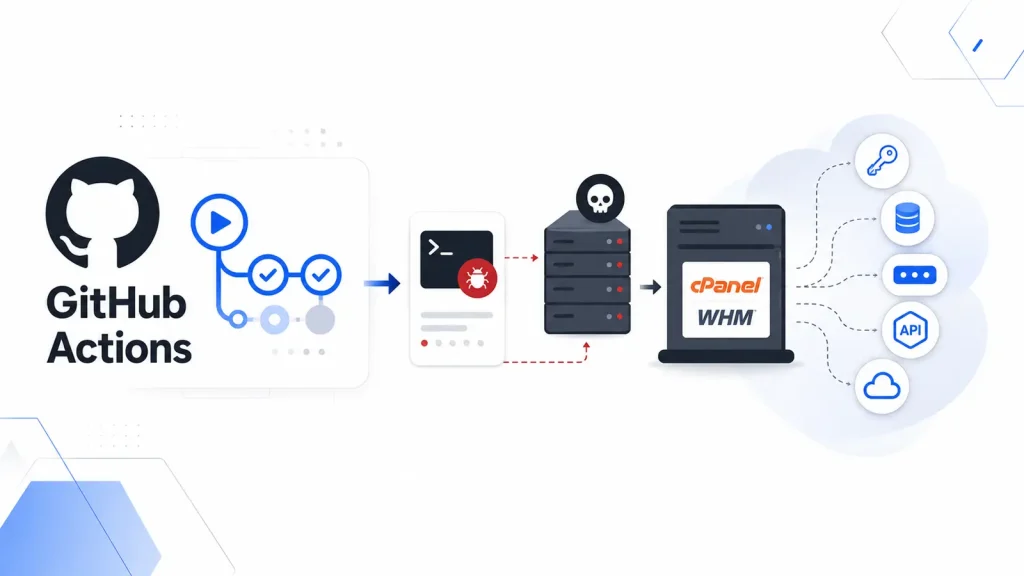
A disturbing new cyber campaign is weaponizing trusted open-source infrastructure to target critical web hosting environments. Threat actors are actively abusing GitHub Actions, transforming what should be a powerful development tool into a launchpad for attacks against cPanel and WHM servers. This large-scale operation aims to compromise these essential systems and ultimately steal cloud credentials, posing a significant risk to countless websites and online services.
The attackers exploit the inherent trust placed in open-source projects, strategically planting malicious workflow files within compromised repositories. They then leverage GitHub’s free compute resources to conduct widespread scanning of the public internet, meticulously searching for vulnerable cPanel and WHM installations. This method not only grants them significant computational power but also allows their nefarious activities to blend in with legitimate GitHub traffic, making detection more challenging.
Understanding the Threat: GitHub Actions Abuse
GitHub Actions provide developers with a robust, automated way to build, test, and deploy code. These workflows are defined by YAML files and run on GitHub-hosted runners, offering considerable flexibility and integration capabilities. However, this power can be co-opted for malicious purposes.
- Malicious Workflow Injection: Attackers gain unauthorized access to legitimate open-source project repositories. Once inside, they inject specially crafted GitHub Actions workflow files.
- Leveraging Free Compute: These malicious workflows are then triggered, utilizing GitHub’s free cloud-based runners to execute arbitrary code. This grants the attackers a powerful, untraceable, and cost-free compute environment.
- Stealth and Evasion: By operating within GitHub’s infrastructure, the attacks appear to originate from legitimate GitHub IP addresses, making it harder for traditional security solutions to flag them as malicious.
Targeting cPanel and WHM Servers
cPanel and WHM (WebHost Manager) are widely used control panels for web hosting, providing comprehensive graphical interfaces for managing websites, email accounts, databases, and more. Their pervasive use makes them a prime target for attackers aiming for maximum impact. A compromise of a cPanel/WHM server can grant an attacker control over numerous hosted websites and associated data.
The campaign specifically focuses on exploiting known weaknesses or newly discovered vulnerabilities within cPanel and WHM installations. While the source material does not specify exact CVEs involved, the modus operandi suggests a focus on common exploitation vectors that might allow initial access or privilege escalation. An example of a recent cPanel vulnerability is CVE-2023-42116, a critical privilege escalation flaw that could lead to full server compromise, though it’s important to note this general example is not confirmed as part of the current campaign.
The Ultimate Goal: Cloud Credential Theft
Once a cPanel/WHM server is compromised, the primary objective of this campaign shifts to stealing cloud credentials. These credentials often grant access to broader cloud infrastructure, including:
- AWS Access Keys: Allowing access to S3 buckets, EC2 instances, and other Amazon Web Services.
- Azure Service Principals: Granting control over Azure resources.
- Google Cloud Platform Tokens: Providing access to GCP services.
With these credentials, attackers can pivot to other cloud resources, exfiltrate sensitive data, deploy further malicious infrastructure, or maintain persistent access to an organization’s cloud environment, leading to significantly larger breaches.
Remediation Actions for Server Administrators
Protecting cPanel and WHM servers from such sophisticated attacks requires a multi-layered security approach. Administrators must be proactive in securing their infrastructure.
- Keep cPanel/WHM Updated: Ensure cPanel & WHM installations are always running the latest stable version. Enable automatic updates where possible. Regularly check release notes for security patches.
- Strong Password Policies and MFA: Enforce strong, unique passwords for all cPanel, WHM, and SSH accounts. Implement Multi-Factor Authentication (MFA) for all administrative interfaces.
- Restrict SSH Access: Limit SSH access to whitelisted IP addresses only. Disable password-based SSH login in favor of SSH keys.
- Regular Security Audits: Conduct regular security audits of web hosting environments. Utilize tools to scan for known vulnerabilities and misconfigurations.
- Monitor GitHub Activity: If you are an open-source project maintainer, monitor your GitHub repositories for any suspicious or unauthorized workflow file changes, especially those that trigger extensive external network activity.
- Implement Web Application Firewalls (WAFs): A WAF can help detect and block malicious requests targeting cPanel/WHM vulnerabilities.
- Intrusion Detection/Prevention Systems (IDPS): Deploy IDPS to monitor network traffic for suspicious patterns indicative of scanning or exploitation attempts.
- Principle of Least Privilege: Ensure that all user accounts and system services operate with the minimum necessary permissions.
Detection and Mitigation Tools
Implementing a robust security posture for cPanel and WHM environments involves leveraging appropriate tools for scanning, detection, and mitigation.
| Tool Name | Purpose | Link |
|---|---|---|
| cPanel Security Advisor | Built-in tool for security recommendations and auditing against cPanel’s best practices. | https://docs.cpanel.net/cpanel/security/security-advisor/ |
| OWASP ZAP | Open-source web application security scanner for identifying vulnerabilities. | https://www.zaproxy.org/ |
| Nessus | Vulnerability scanner for identifying system and application weaknesses. | https://www.tenable.com/products/nessus |
| ClamAV | Open-source antivirus engine for detecting malware on servers. | https://www.clamav.net/ |
| ModSecurity | Open-source Web Application Firewall (WAF) for protecting web applications from various attacks. | https://www.modsecurity.org/ |
Conclusion
The abuse of GitHub Actions to target cPanel and WHM servers represents a sophisticated and concerning evolution in cyberattack methodology. By combining supply chain tactics with free cloud compute, attackers are creating a potent and stealthy threat. Server administrators must prioritize patching and security best practices to defend against relentless scanning and exploitation attempts. Vigilance, strong access controls, and continuous monitoring are critical to safeguarding web hosting infrastructure and the sensitive data it manages from these escalating threats.




