
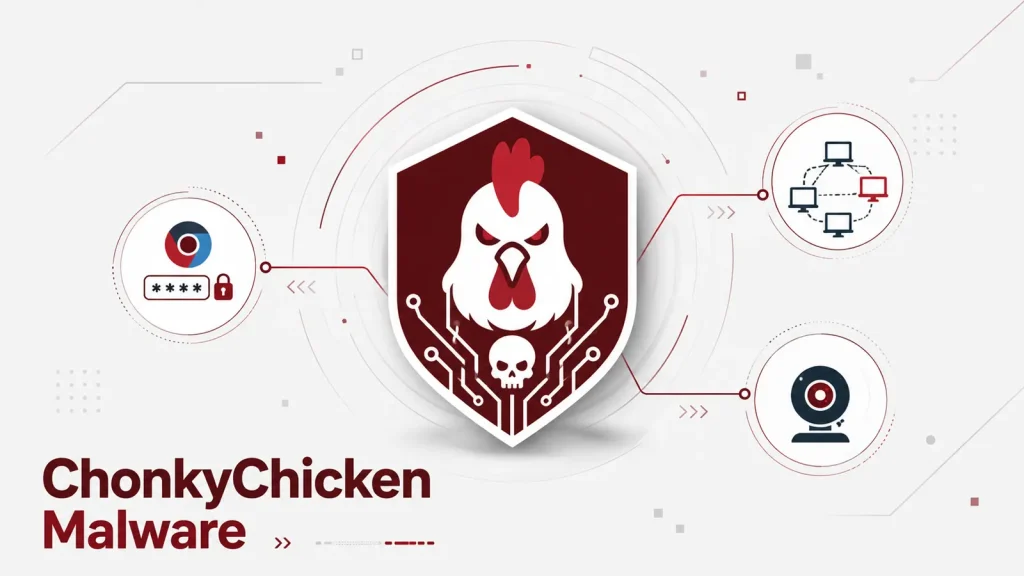
ChonkyChicken Malware Steals Chrome Credentials, Moves Laterally and Spies on Victims
ChonkyChicken Malware: A Predator in Your Digital Coop
In the evolving threat landscape, understanding sophisticated malware campaigns is paramount for robust digital defense. Today, we delve into ChonkyChicken, a newly identified remote access trojan (RAT) that poses a significant threat to Windows environments. This insidious malware isn’t just about simple data theft; it transforms an infected device into a launchpad for credential exfiltration, lateral movement across networks, and persistent surveillance.
Understanding the ChonkyChicken Threat
ChonkyChicken is far more than a standalone piece of malicious code. It’s an integral component of the TAG-195, also known as Golden Chickens or Venom Spider, malware-as-a-service (MaaS) ecosystem. This extensive framework provides financially motivated cybercriminals with advanced tooling, allowing even less skilled operators to execute complex attacks. The primary objective of ChonkyChicken, once it infiltrates a system, is to compromise Google Chrome credentials, enabling broader access and further malicious activities.
Recent campaigns leveraging ChonkyChicken have reportedly commenced with deceptive ClickFix lures. These social engineering tactics are designed to trick users into executing the initial payload, often through seemingly legitimate software updates or system repair tools. Once inside, the malware establishes persistence and begins its operations, silently pilfering sensitive information.
Attack Chain and Capabilities
The operational methodology of ChonkyChicken highlights its advanced design and the comprehensive nature of the TAG-195 ecosystem:
- Initial Compromise: Typically initiated via social engineering tactics, such as the aforementioned ClickFix lures, designed to trick users into executing the malware.
- Credential Theft: ChonkyChicken specifically targets Google Chrome for credential harvesting. This includes saved passwords, cookies, and potentially autofill data, providing attackers with keys to numerous online accounts.
- Establishing Persistence: Once executed, the malware employs various techniques to ensure it reloads after system restarts, maintaining its foothold on the compromised device.
- Remote Access Capabilities: As a remote access trojan, ChonkyChicken grants attackers significant control over the infected machine, allowing for file manipulation, process execution, and further data reconnaissance.
- Lateral Movement: With stolen credentials and remote access, attackers can attempt to move laterally within a network, targeting other systems and expanding their control. This dramatically increases the scope and impact of an attack.
- Surveillance: Beyond data theft, ChonkyChicken facilitates active surveillance of the victim’s activities, potentially capturing screenshots, keystrokes, and other sensitive information.
Remediation Actions and Proactive Defense
Defending against advanced threats like ChonkyChicken requires a multi-layered security strategy. Immediate and proactive measures are crucial to mitigate risk and respond effectively to potential compromises:
- User Education: Implement rigorous security awareness training for all employees. Emphasize the dangers of suspicious links, unsolicited attachments, and social engineering tactics like ClickFix lures.
- Strong Password Policies: Enforce the use of strong, unique passwords for all accounts, especially those accessing critical systems. Implement multi-factor authentication (MFA) wherever possible.
- Regular Software Updates: Ensure operating systems, web browsers (especially Google Chrome), and all installed software are kept up-to-date with the latest security patches. This helps close known vulnerabilities that malware might exploit.
- Endpoint Detection and Response (EDR): Deploy EDR solutions to monitor endpoints for malicious activity in real-time, detect evasive threats, and enable rapid response.
- Network Segmentation: Segment networks to limit lateral movement in the event of a breach. This can contain an infection to a smaller portion of the network.
- Principle of Least Privilege: Grant users and applications only the minimum necessary permissions to perform their tasks. This limits the damage an attacker can inflict if an account is compromised.
- Regular Backups: Maintain regular, offsite backups of critical data to minimize the impact of data loss due to malware or ransomware attacks. Test restore procedures periodically.
- Incident Response Plan: Develop and regularly test a comprehensive incident response plan to ensure a swift and organized reaction to security breaches.
Tools for Detection and Mitigation
Leveraging appropriate cybersecurity tools is vital for detecting and responding to threats such as ChonkyChicken.
| Tool Name | Purpose | Link |
|---|---|---|
| Endpoint Detection & Response (EDR) Solutions | Real-time threat detection, investigation, and response on endpoints. | Gartner Peer Insights for EDR |
| Antivirus/Anti-malware Software | Signature-based and heuristic detection of known and emerging threats. | AV-Comparatives |
| Network Intrusion Detection/Prevention Systems (NIDS/NIPS) | Monitors network traffic for suspicious activity and blocks known attack patterns. | Snort |
| Security Information and Event Management (SIEM) | Aggregates and analyzes security events from various sources to provide a centralized view of security posture. | Splunk |
| Password Manager | Helps users create and manage strong, unique passwords for multiple accounts. | 1Password |
Final Thoughts on ChonkyChicken and the MaaS Landscape
The emergence of ChonkyChicken underscores the persistent threat posed by malware-as-a-service operations like TAG-195. These ecosystems lower the barrier to entry for cybercriminals, enabling more frequent and sophisticated attacks. Organizations must recognize that credential theft and lateral movement are primary objectives for many modern threats. A proactive, adaptive security posture, focused on user education, robust technical controls, and rapid incident response, remains the strongest defense against such pervasive and evolving dangers.




