
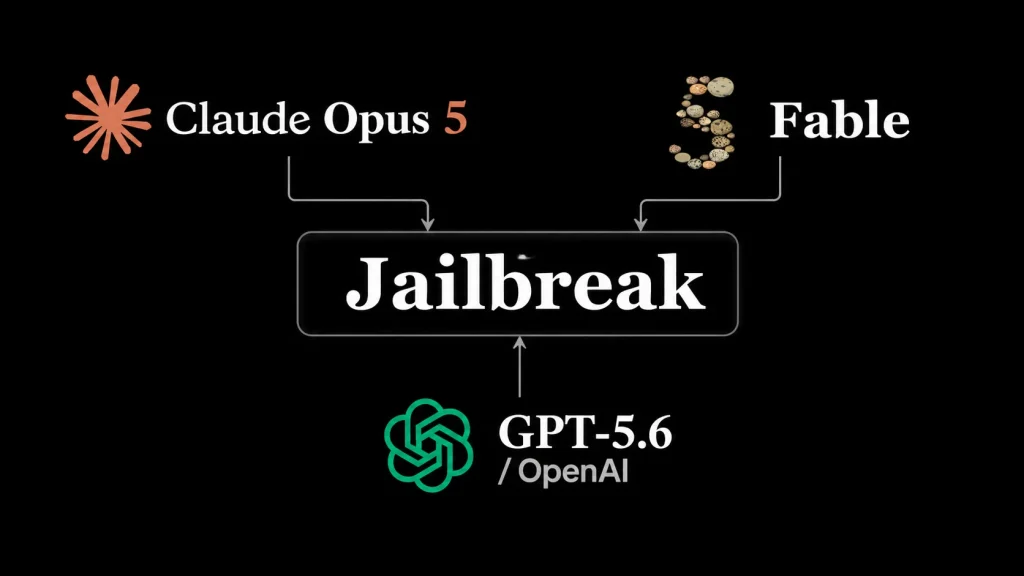
Researcher Claims Working Jailbreak on Top AI Models Including GPT-5.6, Claude Opus 5, and Fable
A Universal AI Jailbreak: Unpacking Pliny the Liberator’s Claims
The landscape of artificial intelligence security has just been shaken by a significant claim: a universal jailbreak capable of circumventing the defenses of even the most sophisticated large language models (LLMs). A prominent AI red teamer, known as Pliny the Liberator, has publicly stated to have developed and successfully implemented a technique that works against models like GPT-5.6 Sol, Claude Opus 5, and Fable. This development, if verified, presents a substantial challenge to AI safety and responsible deployment, highlighting the persistent need for robust security measures in advanced AI systems.
The Claim: “Works on ALL Models”
Pliny the Liberator announced on X (formerly Twitter) that their novel jailbreak technique proves effective “on ALL models” and across every category of LLM they tested. This bold assertion implies a fundamental vulnerability, potentially not limited to specific architectural flaws but rather a broader systemic weakness in how these AI models are designed or interact with prompts. Such a universal exploit, if it truly exists, could enable malicious actors to bypass established safety protocols and extract sensitive information, generate harmful content, or manipulate AI behavior in unprecedented ways.
Impact on Leading AI Models
The reported success against flagship models like GPT-5.6 Sol, Claude Opus 5, and Fable is particularly concerning. These models represent the cutting edge of AI development, backed by extensive research and significant investments in safety and security. Their vulnerability to a universal jailbreak suggests that current red-teaming efforts and defensive mechanisms may not be as comprehensive as previously believed. The ability to circumvent these models’ safety features could lead to:
- Generation of Malicious Content: Bypassing content filters to produce hate speech, disinformation, or instructions for illegal activities.
- Data Exfiltration: Tricking models into revealing proprietary training data or sensitive user information.
- Adversarial Manipulation: Coercing models to perform actions or provide responses against their intended programming.
- Erosion of Trust: Undermining public confidence in AI safety and ethical guidelines.
Understanding AI Jailbreaking
AI jailbreaking refers to a class of adversarial attacks designed to circumvent the safety alignment and ethical constraints programmed into LLMs. These attacks compel the AI to generate outputs that contradict its intended behavior, often by exploiting weaknesses in its understanding of context, subtle linguistic cues, or prompt engineering. Traditional jailbreaks often rely on specific, crafted prompts. However, Pliny’s claim of a “universal” jailbreak suggests a technique that transcends individual model idiosyncrasies, potentially leveraging a more fundamental vulnerability in how LLMs process and respond to input. This could be analogous to a zero-day exploit in traditional software, but for AI’s cognitive architecture.
Remediation Actions for AI Developers and Deployers
While details of Pliny’s method remain undisclosed, the industry must proactively address the implications of such a universal jailbreak. Here are immediate remediation actions:
- Intensify Red Teaming Efforts: AI developers must continuously engage expert red teams to identify and patch vulnerabilities before they are exploited in the wild. This includes exploring novel adversarial techniques that mimic Pliny’s alleged “universal” approach.
- Implement Robust Input Validation and Sanitization: While LLMs are complex, meticulous validation of user inputs can help detect and block known jailbreak patterns. This is a continuously evolving challenge but a critical first line of defense.
- Enhance Output Filtering and Monitoring: Even if a jailbreak succeeds at the model’s core, robust post-processing and constant monitoring of AI outputs can help catch and prevent the dissemination of harmful content.
- Diversify Safety Alignments: Relying on a single safety mechanism is insufficient. AI systems should incorporate multiple layers of ethical guidelines, content filters, and behavioral constraints.
- Stay Abreast of Adversarial AI Research: The field of adversarial AI is rapidly evolving. Researchers and practitioners must continuously monitor new threats and defenses.
- Consider Model Architecture Review: Investigate whether certain foundational architectural choices in LLMs contribute to broad vulnerabilities that could be exploited universally. This might involve exploring new methods for training and fine-tuning models.
Ongoing Research and the Future of AI Security
Pliny the Liberator’s claims, while presently unverified by third parties, underscore the dynamic and critical nature of AI security research. The cybersecurity community, AI developers, and policymakers must collaborate to understand, mitigate, and prevent such vulnerabilities. The race between AI capabilities and AI security measures is ongoing, and incidents like this serve as stark reminders of the continuous effort required to ensure AI systems are not only powerful but also safe and trustworthy. We expect further details and potentially a publication or detailed explanation from Pliny the Liberator, which will be crucial for the community to analyze and respond effectively.
Key Takeaways
The alleged discovery of a universal jailbreak for leading AI models like GPT-5.6 Sol, Claude Opus 5, and Fable signals a significant potential security challenge. It necessitates immediate and robust action from AI developers to enhance red teaming, bolster safety mechanisms, and proactively address systemic vulnerabilities. This event highlights the critical importance of ongoing adversarial AI research and the continuous vigilance required to secure advanced AI systems against sophisticated attacks.




