
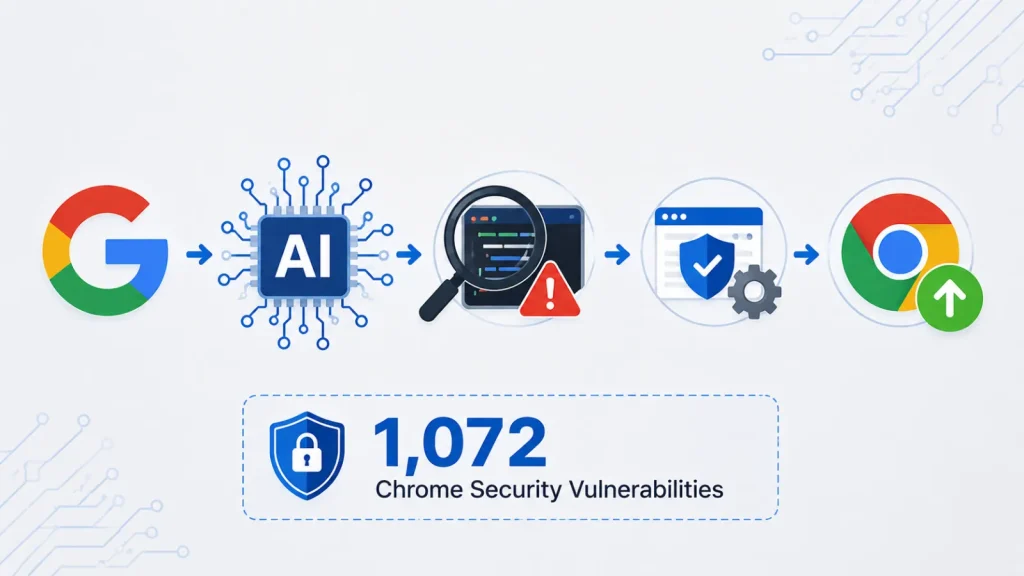
Google Uses AI Agents to Find and Fix 1,072 Chrome Security Vulnerabilities
The AI Frontier: Google’s Agents Fortify Chrome’s Security
The digital landscape is a constant battleground, and browser security is paramount. Google, a titan in this arena, is significantly elevating its defense mechanisms by deploying artificial intelligence (AI) agents across the Chrome security lifecycle. This strategic move isn’t just an incremental improvement; it signifies a fundamental shift in how vulnerabilities are identified, patches are tested, and critical security updates are delivered to millions of users. The results are already impressive, with AI playing a pivotal role in detecting and resolving over a thousand security vulnerabilities within the Chromium codebase.
AI Agents Revolutionize Vulnerability Discovery and Patching
Google’s Chrome Security team has confirmed that AI systems are now instrumental in scouring the extensive Chromium codebase for weaknesses. This goes beyond mere assistance in limited, well-defined areas. Instead, AI agents are actively engaged in discovering vulnerabilities across the entire spectrum of the codebase. This proactive approach allows Google to address potential security flaws before they can be exploited by malicious actors. The integration of AI extends to the crucial phase of patch testing, ensuring that proposed fixes are robust and don’t introduce new vulnerabilities, ultimately accelerating the delivery of vital security updates to end-users.
The Scale of Success: 1,072 Vulnerabilities Fixed
The impact of this AI integration is substantial. Google has publicly credited its AI agents with helping to identify and fix 1,072 Chrome security vulnerabilities. This figure underscores the immense efficiency and thoroughness that AI brings to the table. Traditional manual review and testing, while essential, cannot match the scale and speed at which AI algorithms can analyze vast quantities of code and pinpoint subtle yet critical flaws. This significant reduction in attack surface directly translates to enhanced security for Chrome users worldwide.
Beyond Code Analysis: A Holistic Security Lifecycle Approach
The deployment of AI agents isn’t a singular tool for code analysis; it’s an integrated approach that touches multiple stages of the Chrome security lifecycle. From initial source code weakness identification to the rigorous testing of proposed patches, AI is woven into the fabric of Google’s defensive strategies. This holistic perspective ensures that security considerations are embedded throughout the development process, fostering a more resilient and secure browser environment. The continuous learning capabilities of these AI systems mean that their effectiveness will only grow over time, adapting to new attack vectors and emerging threat landscapes.
Remediation Actions for Users and Developers
While Google’s AI agents work tirelessly behind the scenes, both end-users and developers have critical roles to play in maintaining robust security:
- For End-Users:
- Keep Chrome Updated: Always run the latest version of Chrome. Google’s AI-driven fixes are delivered through these updates. Check for updates regularly via
chrome://settings/help. - Exercise Caution: Be wary of suspicious links, downloads, and unsolicited requests for personal information.
- Use Strong, Unique Passwords: Leverage a password manager to create and store complex, unique passwords for all online accounts.
- Keep Chrome Updated: Always run the latest version of Chrome. Google’s AI-driven fixes are delivered through these updates. Check for updates regularly via
- For Developers:
- Adhere to Secure Coding Practices: Implement security best practices throughout the development lifecycle.
- Regularly Scan Code: Utilize static application security testing (SAST) and dynamic application security testing (DAST) tools to proactively identify vulnerabilities in your own codebases.
- Stay Informed: Keep abreast of the latest security vulnerabilities and patches, especially those related to Chromium and web technologies.
- Report Suspected Vulnerabilities: Participate in bug bounty programs and responsibly disclose any security flaws discovered.
The Future of Cybersecurity: A Collaborative Intelligence
Google’s success story with AI agents in Chrome security highlights a growing trend: the synergy between human expertise and artificial intelligence. AI excels at processing vast datasets, identifying patterns, and executing repetitive tasks with unmatched speed. Human analysts, on the other hand, bring critical thinking, contextual understanding, and the ability to innovate new solutions. This collaborative intelligence paradigm is likely to define the future of cybersecurity, allowing organizations to stay ahead of increasingly sophisticated threats. As AI continues to evolve, its role in securing our digital infrastructure will only become more pronounced.




