
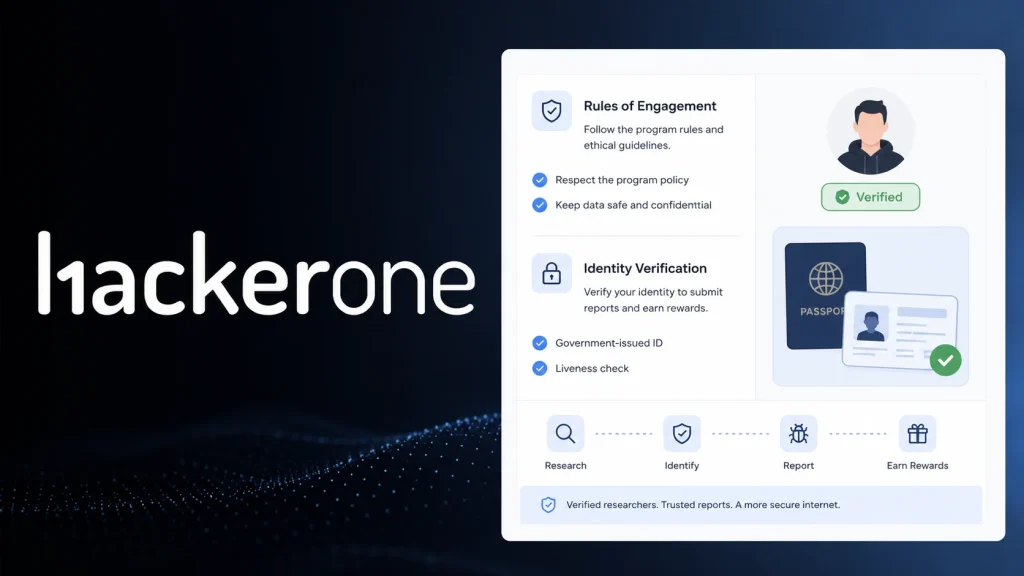
HackerOne Mandates ID Verification for Bug Bounty Submissions
HackerOne Mandates ID Verification: A New Era for Bug Bounty Programs
The landscape of cybersecurity is constantly shifting, and with it, the strategies employed by platforms dedicated to enhancing digital security. A significant recent development has emerged from HackerOne, a leading bug bounty platform. They have officially announced a new policy requiring all hackers to complete identity verification before submitting reports to any bug bounty program (BBP) hosted on their platform. This move, as stated by HackerOne, is driven by the necessity to meet escalating regulatory requirements. This article delves into the implications of this mandate, distinguishing between bug bounty and vulnerability disclosure programs, and what this means for the global community of ethical hackers and organizations.
Understanding the New HackerOne ID Verification Policy
HackerOne’s new policy represents a pivotal shift in how bug bounty programs operate. Previously, researchers could often submit findings with a degree of anonymity. The new mandate eliminates this for BBPs. The core of the policy dictates that anyone wishing to participate in a monetary bug bounty program must successfully pass an identity verification process. This process aims to establish a clear, verifiable link between the researcher and their submissions, thereby enhancing accountability and compliance.
The platform explicitly states that this measure is crucial for them to adhere to various regulatory frameworks. While specific regulations aren’t detailed in the immediate announcement, it’s safe to assume this encompasses a range of compliance standards related to financial transactions, anti-money laundering (AML), and know-your-customer (KYC) protocols, especially given that bug bounties often involve monetary rewards.
Distinguishing Bug Bounty Programs (BBPs) from Vulnerability Disclosure Programs (VDPs)
A critical nuance of the new HackerOne policy lies in its distinction between Bug Bounty Programs (BBPs) and Vulnerability Disclosure Programs (VDPs).
- Bug Bounty Programs (BBPs): These programs typically offer financial rewards, recognition, or other incentives for discovering and responsibly disclosing vulnerabilities. Under the new policy, participation in BBPs now unequivocally requires identity verification. This ensures that when a monetary reward is disbursed, HackerOne can confidently verify the recipient’s identity, aligning with financial regulations.
- Vulnerability Disclosure Programs (VDPs): In contrast, VDPs focus purely on the responsible disclosure of vulnerabilities without the promise of monetary reward. These programs are often a first step for organizations to establish a channel for security researchers. Crucially, HackerOne has confirmed that VDPs will remain open to unverified researchers. This maintains an accessible entry point for new or unverified security talent to contribute to cybersecurity without the immediate overhead of ID verification, while still enabling organizations to receive valuable vulnerability intelligence.
Implications for the Hacker Community and Organizations
This mandate brings several significant implications for various stakeholders:
- For Hackers: Seasoned bounty hunters who prefer anonymity might find this a significant hurdle. However, for those already operating with verified identities or willing to undergo the process, it might lead to increased trust and potentially more secure and high-value programs. It could also deter malicious actors who might have previously attempted to leverage the platform pseudonymously.
- For Organizations Hosting BBPs: Companies running bug bounty programs on HackerOne can expect an increased level of assurance regarding the identity of researchers submitting reports. This can simplify internal compliance processes and potentially reduce risks associated with engaging unknown entities, particularly concerning sensitive findings.
- For the Bug Bounty Ecosystem: While some might view this as an increased barrier to entry, it could also elevate the professional standing of ethical hacking. By standardizing identity verification, HackerOne is professionalizing the space further, potentially attracting more mainstream enterprises to host BBPs due to enhanced regulatory compliance.
While the immediate impact might include a temporary reduction in the number of active participants in BBPs, the long-term goal is likely to foster a more secure, compliant, and trustworthy environment for all parties involved. This aligns with a broader industry trend towards greater accountability and transparency in cybersecurity operations, similar to how vulnerability disclosures are handled by official bodies like MITRE, which assigns CVEs (e.g., CVE-2023-XXXXX for illustrative purposes). While this specific policy isn’t directly tied to a CVE, it’s a procedural enhancement aimed at improving the security and integrity of the disclosure process itself.
Remediation Actions (For Organizations & Researchers)
While this isn’t a vulnerability, there are still actionable “remediation” steps for both organizations and individual researchers:
- For Organizations Hosting BBPs on HackerOne:
- Review Program Policies: Ensure your bug bounty program’s terms and conditions are updated to reflect HackerOne’s new ID verification requirement for participants.
- Communicate Clearly: Proactively communicate this policy to your potential researchers to manage expectations.
- Consider VDPs: If your organization is new to security research programs or prefers not to handle monetary rewards, initiating a VDP can still be a valuable first step to engage with unverified researchers for responsible disclosure.
- For Security Researchers/Hackers:
- Complete ID Verification: If you intend to participate in any bug bounty program on HackerOne, promptly complete the required identity verification process.
- Understand the Distinction: Be aware that you can still contribute to VDPs without verification if your primary goal is disclosure over monetary reward.
- Maintain Professionalism: Embrace the increased professionalism of the platform. Strong, verified identities can build trust and open doors to more exclusive and sensitive programs.
Conclusion
HackerOne’s mandate for identity verification in bug bounty programs marks a significant evolution in the ethical hacking ecosystem. Driven by regulatory compliance, this policy aims to enhance accountability, trust, and professionalism within the platform’s monetary reward programs. While it introduces a new requirement for researchers, it simultaneously fortifies the security posture for organizations and streamlines compliance. The clear distinction between BBPs and VDPs ensures that opportunities for vulnerability disclosure remain accessible to all, fostering a more secure digital environment for everyone.




