
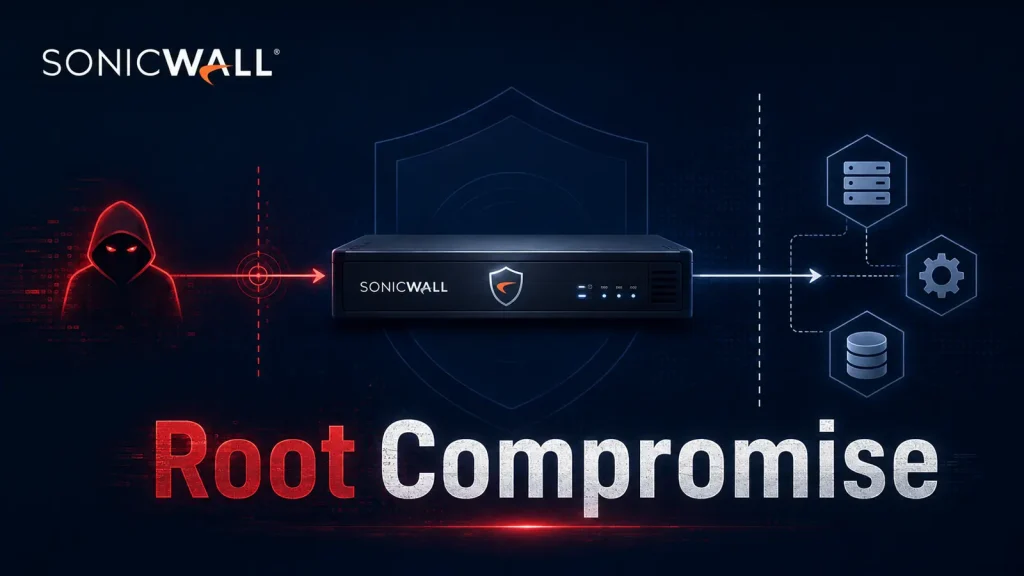
Internet-Facing SonicWall SMA Appliances Face Zero-Click Root Compromise
A critical alert has been issued for organizations utilizing Internet-facing SonicWall Secure Mobile Access (SMA) appliances. Recent findings reveal a sophisticated attack chain capable of achieving zero-click root compromise. This campaign allows malicious actors to gain full control over VPN gateways with minimal effort, posing a severe threat to network security and data integrity.
The implications of such a vulnerability are profound. An attacker can transition from a simple web request to obtaining root-level access without requiring a password, an active session, or any user interaction. This level of access grants complete control over the affected appliance, potentially leading to widespread network infiltration and data exfiltration.
The Zero-Click Root Compromise Explained
The “zero-click” nature of this exploit is what makes it particularly dangerous. Unlike traditional attacks that rely on phishing or social engineering, this campaign requires no interaction from the victim. The vulnerabilities exploited allow an attacker to remotely execute malicious code on the SonicWall SMA appliance by simply sending specially crafted web requests. This bypasses multiple layers of security and provides immediate, unfettered access to the system’s core.
Initial reports indicate that this activity began before public disclosure, suggesting a period where organizations were unknowingly exposed to this critical threat. The swiftness and stealth of the attack underscore the need for immediate action and heightened vigilance from all SonicWall SMA users.
Identified Vulnerabilities and Attack Chain
While specific CVEs were not detailed in the initial source, the attack chain involves turning two distinct flaws into a direct route for full VPN-gateway control. These types of multi-stage exploits often leverage a combination of vulnerabilities, such as authentication bypasses, command injection, or memory corruption issues, to escalate privileges and achieve root access.
For example, a common attack pattern might involve:
- An initial vulnerability (e.g., an unauthenticated arbitrary file read or write) to gather system information or plant a malicious file.
- A second vulnerability (e.g., a command injection or privilege escalation flaw) to execute the planted file or gain higher privileges, culminating in root access.
Organizations should monitor the official SonicWall security advisories for specific CVE numbers as they become available. It is crucial to correlate these vulnerabilities with the attack patterns observed to fully understand the threat landscape.
Remediation Actions and Mitigations
Given the severity of this zero-click root compromise, immediate action is paramount for all organizations utilizing Internet-facing SonicWall SMA appliances. Proactive measures can significantly reduce exposure and protect critical assets.
- Apply Patches Immediately: Monitor SonicWall’s official security advisories and apply all recommended patches and firmware updates as soon as they are released. These updates will contain fixes for the exploited vulnerabilities.
- Isolate and Segment SMA Appliances: If immediate patching is not possible, consider isolating SMA appliances from the broader network. Implement strict network segmentation to limit the potential blast radius of a successful compromise.
- Implement Multi-Factor Authentication (MFA): While this exploit bypasses traditional authentication, MFA remains a critical layer of defense for legitimate user access, reducing the impact of other credential-based attacks.
- Review Logs and Monitor for Anomalies: Scrutinize logs from SMA appliances, firewalls, and intrusion detection/prevention systems (IDS/IPS) for any unusual activity, such as unexplained reboots, unusual outbound connections, or unauthorized access attempts.
- Conduct Regular Vulnerability Assessments and Penetration Tests: Continuously assess the security posture of your Internet-facing infrastructure. Regular testing can identify weaknesses before attackers exploit them.
- Limit Exposed Services: Ensure that only necessary services are exposed to the internet on SMA appliances. Minimize the attack surface by disabling any unused features or protocols.
Detection and Mitigation Tools
Leveraging appropriate tools can significantly aid in the detection and mitigation of threats targeting SonicWall SMA appliances. Here’s a table of relevant tool categories and examples:
| Tool Name | Purpose | Link |
|---|---|---|
| Nessus | Vulnerability Scanning & Assessment | https://www.tenable.com/products/nessus |
| OpenVAS | Open-Source Vulnerability Scanner | https://www.greenbone.net/ |
| Snort/Suricata | Intrusion Detection/Prevention Systems (IDS/IPS) | https://www.snort.org/ https://suricata-ids.org/ |
| Wireshark | Network Protocol Analyzer (for forensic analysis) | https://www.wireshark.org/ |
| SIEM Solutions (e.g., Splunk, Elastic Stack) | Security Information and Event Management (for log aggregation and analysis) | https://www.splunk.com/ https://www.elastic.co/elastic-stack |
Conclusion
The discovery of a zero-click root compromise impacting Internet-facing SonicWall SMA appliances represents a critical security event. The ability for attackers to gain full VPN-gateway control without user interaction underscores the urgency for robust defensive measures. Organizations must prioritize applying patches, enhancing network segmentation, and maintaining vigilant monitoring of their systems. Staying informed through official vendor advisories and proactive security practices are the best defenses against such sophisticated threats.




