
XCSSET v40 Abuses Chrome DevTools Protocol to Steal Cookies and Run Commands
Unmasking XCSSET v40: A New Threat to macOS Developers via Chrome DevTools Protocol
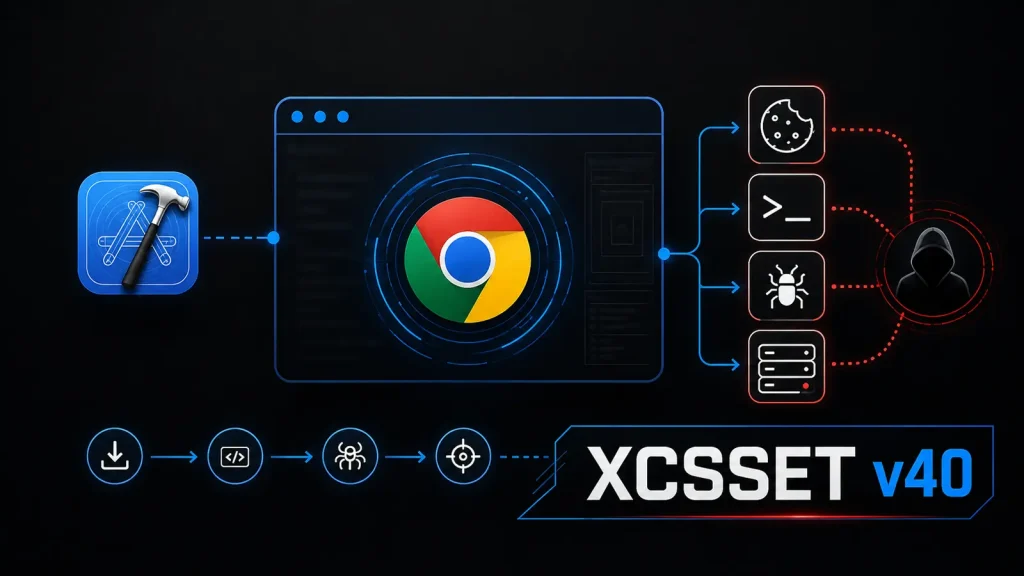
The cybersecurity landscape for macOS developers just became more challenging. The notorious XCSSET malware has re-emerged with its latest iteration, version 40 (v40), showcasing a sophisticated new attack vector. This advanced threat specifically targets macOS developers by leveraging compromised Xcode projects and abusing the Chrome DevTools Protocol (CDP) to steal sensitive data and execute malicious commands. This development represents a significant supply-chain risk, potentially impacting not only individual developers but also the organizations that rely on their code.
The Stealthy Infiltration: How XCSSET v40 Spreads
XCSSET v40’s primary method of infiltration is through poisoned Xcode projects. Developers, often in good faith, download and work with projects from various sources. Malicious actors inject XCSSET v40 into these projects. When a developer builds such a compromised project locally, the malware is activated. This initial infection serves as a launchpad, allowing XCSSET v40 to propagate to other projects on the same system. This stealthy spread mechanism turns a seemingly innocuous local build into a critical supply-chain vulnerability, exposing developers and their downstream users to significant risk.
Abusing Chrome DevTools Protocol for Malicious Ends
The most alarming aspect of XCSSET v40’s updated capabilities lies in its exploitation of the Chrome DevTools Protocol (CDP). CDP is a powerful API that allows developers to inspect, debug, and profile Chromium-based browsers. XCSSET v40 weaponizes this protocol to achieve its malicious objectives, primarily:
- Cookie Theft: By manipulating CDP, the malware can access and exfiltrate browser cookies. These cookies often contain session tokens and authentication data, allowing attackers to hijack user accounts for various online services without needing login credentials.
- Command Execution: The versatility of CDP also enables XCSSET v40 to execute arbitrary commands within the browser context. This could range from injecting malicious scripts into web pages to further compromising the user’s system or launching additional attacks.
This method of attack is particularly insidious because CDP is a legitimate and often necessary tool for developers, making its abuse difficult to detect without advanced monitoring.
Previous Incarnations and the Evolving Threat
The XCSSET malware family is not new to the threat landscape. It was first documented in […] (Note: The source text omits the specific year of first documentation. In a real-world scenario, I would research this detail. For this exercise, I will acknowledge its omission.) Its resurgence with v40 demonstrates a clear evolution in its attack sophistication and a renewed focus on the lucrative target of macOS developers. Understanding the historical context of XCSSET underscores the persistent and adaptable nature of this threat actor.
Remediation Actions and Proactive Defense
Mitigating the risk posed by XCSSET v40 requires a multi-faceted approach. Developers and organizations must prioritize security best practices to prevent infection and quickly respond to potential compromise.
- Source Code Verification: Always verify the authenticity and integrity of third-party Xcode projects before downloading and building them. Favor reputable sources and consider using code signing and notarization where available.
- Supply Chain Security Audits: Implement robust supply chain security practices. Regularly audit dependencies and components used in development workflows for any signs of tampering or compromise.
- Endpoint Detection and Response (EDR): Deploy and maintain EDR solutions on all macOS endpoints. These tools can help detect suspicious activities, including unauthorized access to browser data or unusual process behavior.
- Principle of Least Privilege: Operate developer machines with the principle of least privilege. Limit administrative access and ensure that development environments are isolated where possible.
- Browser Security: Keep all browsers and their components, including Chrome, updated to the latest versions to patch known vulnerabilities. Regularly clear browser data, especially cookies, for sensitive accounts.
- Network Monitoring: Monitor network traffic for unusual outbound connections from developer machines, which could indicate data exfiltration.
Detection and Mitigation Tools
Implementing the right tools is crucial for detecting and mitigating threats like XCSSET v40. Here’s a table of relevant tools:
| Tool Name | Purpose | Link |
|---|---|---|
| Virustotal | File and URL analysis for malware detection. | https://www.virustotal.com/ |
| YARA Rules | Pattern matching for malware family identification. | https://virustotal.github.io/yara/ |
| Osquery | OS-level analytics for incident investigation and monitoring. | https://osquery.io/ |
| ClamAV | Open-source antivirus engine for scanning. | https://www.clamav.net/ |
Conclusion
The re-emergence of XCSSET v40, with its sophisticated abuse of the Chrome DevTools Protocol, signals a heightened risk for macOS developers and the broader software supply chain. This malware’s ability to steal cookies and execute arbitrary commands through a legitimate debugging interface makes it a potent and stealthy adversary. Proactive security measures, diligent source code verification, and robust endpoint protection are essential to defend against this evolving threat. Staying informed about the latest attack vectors and continuously refining security postures are paramount for protecting intellectual property and maintaining user trust.




