
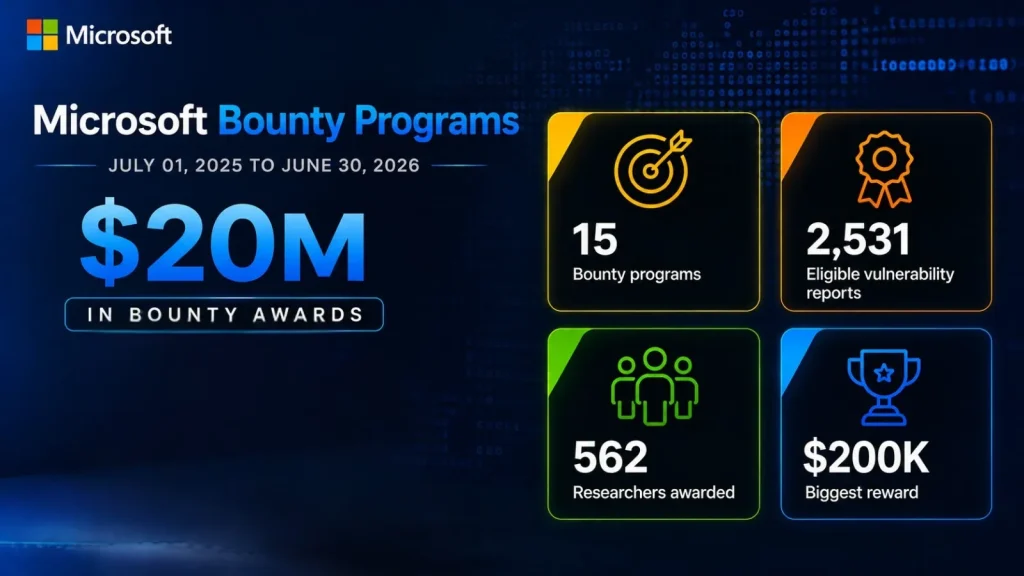
Microsoft Awards Record $20 Million to 562 Researchers in Biggest Bug Bounty Year
The digital frontier is constantly expanding, and with it, the sophisticated threats that target our most critical systems. In this ongoing battle, a robust defense isn’t solely built on firewalls and antivirus software; it thrives on the collective intelligence of the cybersecurity community. Microsoft, a titan in the technology world, recently underscored this principle by awarding a record-breaking $20 million to 562 security researchers through its bug bounty program. This unprecedented payout marks the largest annual sum in the company’s history, highlighting a crucial shift in how major corporations approach securing their digital ecosystems.
Microsoft’s Record-Breaking Bug Bounty Program
Microsoft’s commitment to security research is not new, but the scale of its 2023 bug bounty program sets a new benchmark. The company disbursed over $20 million to 562 researchers, recognizing their invaluable contributions to identifying and reporting security vulnerabilities. This monumental effort involved experts from 64 countries, demonstrating the global nature of both cyber threats and the talent dedicated to mitigating them.
The vulnerabilities unearthed by these researchers were not minor theoretical flaws. They encompassed potential security risks that could have impacted a broad spectrum of Microsoft’s offerings, including customer data, cloud infrastructure, business operations, and the security of individual consumers worldwide. The Microsoft Security Response Center (MSRC) plays a pivotal role in managing these submissions, validating the findings, and ensuring that reported issues are addressed promptly and effectively. This collaborative model, where external researchers are incentivized to find flaws, significantly strengthens Microsoft’s overall security posture.
The Critical Role of Security Researchers
Security researchers, often operating independently or within specialized firms, are the unsung heroes of the digital age. Their meticulous work in probing systems for weaknesses provides a critical layer of defense that internal teams might overlook due to scope limitations or inherent biases. Microsoft’s substantial investment in its bug bounty program acknowledges the indispensable value these researchers bring. By creating a financial incentive, Microsoft encourages ethical hacking and responsible disclosure, channeling expertise towards defensive rather than offensive purposes.
The types of vulnerabilities reported vary widely, from cross-site scripting (XSS) and SQL injection flaws to more complex architectural weaknesses that could lead to data breaches or system compromise. Each reported bug, once validated and remediated, translates into enhanced security for millions of users and organizations globally. This proactive approach helps prevent potential cyberattacks before they can be exploited by malicious actors.
Global Impact and Collaborative Security
The participation of researchers from 64 countries in Microsoft’s bug bounty program underscores the global nature of cybersecurity challenges. Cyber threats do not respect national borders, and neither should the efforts to combat them. This international collaboration fosters a diverse range of perspectives and expertise, leading to the discovery of a wider array of vulnerabilities. It also builds a stronger, more resilient global security community.
This model of collaborative security, where a major vendor actively engages with external security talent, sets a precedent for the industry. It demonstrates that transparency and partnership are more effective than insular security strategies in an increasingly interconnected world. The MSRC’s efforts in coordinating this global network of researchers are vital for the program’s success, ensuring that contributions are recognized and appropriately rewarded.
Remediation Actions: Lessons for All Organizations
While this article celebrates the proactive efforts of Microsoft and its security researchers, it also serves as a critical reminder for all organizations about the importance of robust security practices. Implementing the following actions can significantly enhance your security posture:
- Implement a Vulnerability Disclosure Program (VDP): Even if a full-scale bug bounty is not feasible, establish a clear and accessible channel for security researchers to report vulnerabilities responsibly.
- Regular Security Audits and Penetration Testing: Routinely engage ethical hackers to test your systems for weaknesses.
- Employee Security Training: Educate all employees on common cyber threats like phishing, social engineering, and secure coding practices.
- Patch Management: Maintain a rigorous patching schedule for all software and operating systems to address known vulnerabilities promptly. For example, staying updated on CVEs like CVE-2023-36884, a critical Office and Windows HTML Remote Code Execution Vulnerability, is paramount.
- Multi-Factor Authentication (MFA): Enforce MFA for all user accounts, especially for privileged access.
- Principle of Least Privilege: Grant users and systems only the minimum necessary permissions to perform their functions.
Conclusion
Microsoft’s record-setting $20 million payout to 562 security researchers is more than just a financial milestone; it’s a testament to the power of collaborative security and the critical role external experts play in safeguarding our digital world. This investment underscores the company’s commitment to protecting its vast user base and the broader digital ecosystem. For other organizations, it serves as a powerful reminder: embracing and incentivizing ethical security research is not just good practice, it’s an essential component of a resilient cybersecurity strategy in an era of relentless and evolving threats.




