
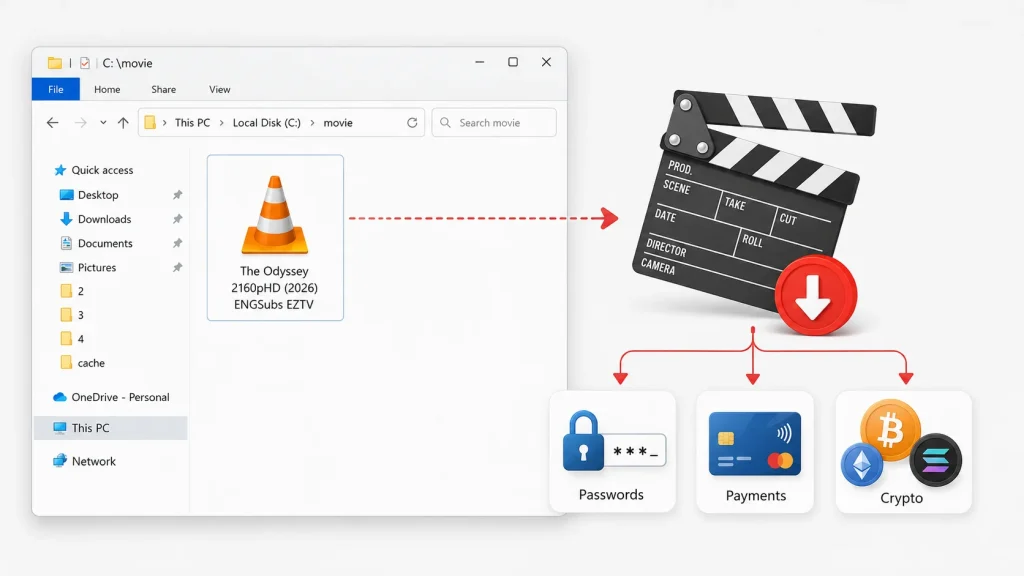
One Fake Movie Download Can Expose Passwords, Payments and Crypto Assets
The allure of a blockbuster film, especially one as anticipated as “The Odyssey (2026),” can be a powerful lure for cybercriminals. But what if a seemingly innocent download of a pirated movie could strip away your digital life – your passwords, payment details, and even your cryptocurrency? This isn’t a scene from a dystopian thriller; it’s a stark reality being exploited right now.
The Deceptive Lure of “The Odyssey (2026)”
As soon as “The Odyssey (2026)” hit theaters, becoming one of the year’s most talked-about releases, cybercriminals were ready. They weaponized the excitement, creating fake download links for pirated versions of the film. These aren’t just empty files; they’re Trojan horses designed to deliver a potent threat: Lumma Stealer.
Understanding Lumma Stealer: A Silent Digital Predator
Lumma Stealer is not a new player in the information-stealing malware arena, but its deployment through high-profile, desirable content like “The Odyssey (2026)” significantly amplifies its reach. This malware operates with stealth, executing quietly in the background, making it difficult for the average user to detect its presence. Once active, Lumma Stealer efficiently exfiltrates sensitive data from compromised systems. Its primary targets include:
- Saved Browser Passwords: Credentials stored in web browsers are a goldmine for attackers, granting access to a multitude of online accounts.
- Payment Card Details: Stored credit card numbers and associated information can lead to immediate financial fraud.
- Cryptocurrency Wallets: Access to digital wallets means direct theft of valuable crypto assets, often with irreversible consequences.
The danger lies in its comprehensive data exfiltration capabilities. A single execution is often enough for Lumma Stealer to gather a significant amount of personal and financial information, effectively compromising the user’s digital identity and assets.
The Broader Threat Landscape: Information Stealers
Lumma Stealer is part of a larger ecosystem of information-stealing malware, all designed to pilfer valuable data. These threats constantly evolve, leveraging social engineering tactics and high-interest content to maximize their infection rates. The rapid deployment of such malware following a major media release highlights the agile nature of cybercriminal operations.
Remediation Actions: Protecting Your Digital Fort Knox
Protecting yourself from threats like Lumma Stealer requires a multi-layered approach to cybersecurity. Here are critical steps to take:
- Exercise Extreme Caution with Downloads: Never download copyrighted content from unofficial sources. Torrent sites and file-sharing platforms are frequently used as distribution channels for malware. Stick to legitimate streaming services and official movie releases.
- Implement Strong Password Hygiene: Use unique, complex passwords for all online accounts. Consider a reputable password manager to securely store and generate these credentials. This prevents credential stuffing attacks if one of your accounts is compromised.
- Enable Multi-Factor Authentication (MFA): Where available, enable MFA on all critical accounts (email, banking, social media, cryptocurrency exchanges). Even if a password is stolen, MFA acts as a crucial second line of defense.
- Keep Software Updated: Regularly update your operating system, web browsers, and all installed applications. Patches often address vulnerabilities that malware could otherwise exploit.
- Utilize Robust Antivirus/Endpoint Detection and Response (EDR): Deploy and maintain up-to-date antivirus software with real-time scanning capabilities. For organizations, EDR solutions offer more advanced threat detection and response.
- Backup Critical Data: Regularly back up important files and data to an external drive or secure cloud service. This can mitigate the impact of data loss due to malware or other incidents.
- Be Skeptical of Phishing Attempts: Phishing emails or messages often lead to malicious downloads. Always verify the sender and the legitimacy of links before clicking.
Essential Tools for Detection and Mitigation
For individuals and organizations alike, several tools can assist in detecting, analyzing, and mitigating the threat of information stealer malware.
| Tool Name | Purpose | Link |
|---|---|---|
| Malwarebytes | Endpoint protection, malware detection, and removal. | https://www.malwarebytes.com/ |
| VirusTotal | Online service to analyze suspicious files and URLs, identifying malware. | https://www.virustotal.com/gui/home/upload |
| Have I Been Pwned? | Checks if your email or phone number has been compromised in a data breach. | https://haveibeenpwned.com/ |
| LastPass / 1Password | Password managers for secure credential storage and generation. | https://www.lastpass.com/ / https://1password.com/ |
The Unseen Costs of a Single Click
A single, seemingly harmless click on a pirated movie download can have cascading consequences, exposing your most sensitive digital information. The immediate gratification of a free movie is never worth the potential loss of financial security, personal data, and peace of mind. Staying vigilant, employing robust security practices, and understanding the tactics of cybercriminals are your best defenses against these evolving threats.




