
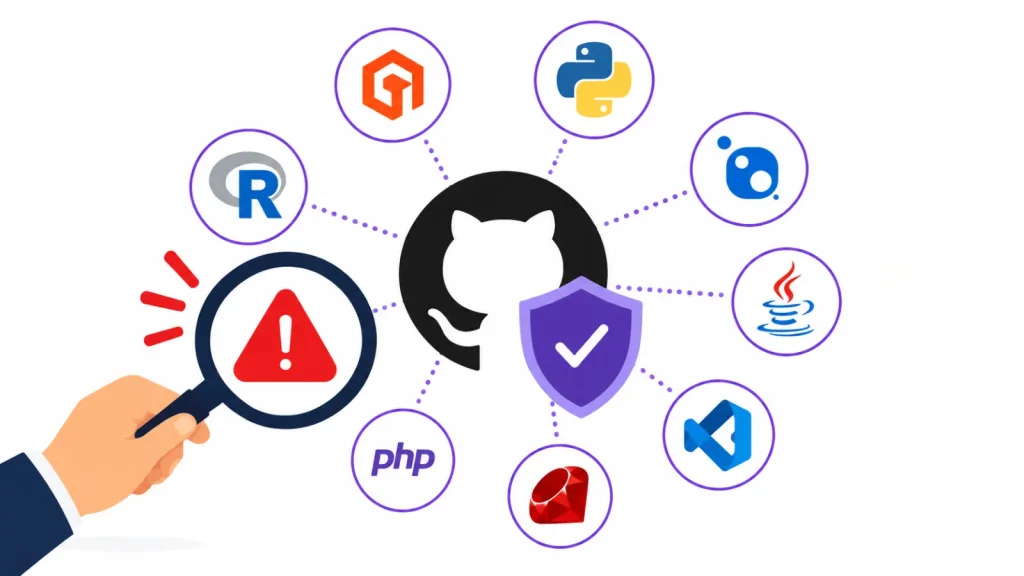
GitHub Expands Supply Chain Malware Detection From npm to 8 Package Registries
The open-source supply chain has become a significant attack vector, with malicious packages posing a constant threat to development pipelines and ultimately, end-user systems. For years, the npm registry has been a primary target, but the landscape of software development relies on a diverse array of package managers. Recognizing this critical expansion of risk, GitHub has significantly bolstered its defenses, extending its sophisticated malware detection capabilities well beyond npm.
GitHub’s Expanded Reach: Securing 8 Key Package Registries
Previously, GitHub’s robust malware detection, integrated within Dependabot alerts, primarily focused on the npm ecosystem. This was a crucial step, but only part of the solution. Now, developers can breathe a collective sigh of relief as GitHub has announced a substantial expansion, providing proactive protection across eight major package ecosystems. This broad coverage means that a wider range of projects and languages are now under the watchful eye of GitHub’s security mechanisms.
The newly supported registries include:
- npm: The ubiquitous package manager for JavaScript.
- PyPI (Python Package Index): The official third-party software repository for Python.
- Maven: A build automation tool primarily used for Java projects.
- RubyGems: The package manager for the Ruby programming language.
- NuGet: The package manager for the Microsoft development platform.
- Go: The package management system for the Go programming language.
- crates.io: The official package registry for Rust.
- PHP Composer: The dependency manager for PHP.
This expansion is a testament to GitHub’s commitment to securing the software supply chain at a foundational level, acknowledging the multi-faceted nature of modern development environments.
Understanding the Threat: The Impact of Malicious Packages
Malicious packages are insidious threats, often designed to appear legitimate while harboring dangerous payloads. The consequences of incorporating such a package into a project can be severe and far-reaching. Attackers leverage these compromised dependencies to:
- Steal Sensitive Information: This includes critical data such as user passwords, API keys, cloud credentials, and cryptocurrency wallet information. The exfiltration of these assets can lead to widespread data breaches and significant financial losses.
- Compromise Source Code: Malicious packages can inject backdoors or alter source code, giving attackers persistent access to a project’s codebase, intellectual property, or even allowing them to introduce further vulnerabilities.
- Supply Chain Attacks: A compromised package can serve as a stepping stone for wider supply chain attacks, affecting not only the direct users of the package but also all downstream projects and end-users that rely on it.
The proactive identification of these threats, exemplified by GitHub’s enhanced Dependabot alerts, is critical in preventing such attacks from escalating. For instance, vulnerabilities like CVE-2023-46736 (related to a malicious PyPI package) highlight the constant need for robust detection mechanisms.
How GitHub’s Malware Detection Works
GitHub’s expanded malware detection leverages sophisticated analysis techniques to identify suspicious behavior and characteristics within package dependencies. While the exact algorithms are proprietary, they likely involve a combination of:
- Static Code Analysis: Examining package code for known malicious patterns, obfuscation techniques, or unusual file operations.
- Dynamic Analysis (Sandboxing): Running packages in isolated environments to observe their runtime behavior, such as network connections, file system modifications, and process execution.
- Dependency Graph Analysis: Identifying unusual or suspicious dependencies within a package’s manifest.
- Heuristic Detection: Employing machine learning and artificial intelligence to detect anomalies that may indicate malicious intent, even if the exact attack pattern is new.
When a malicious package is detected, Dependabot generates an alert, notifying developers about the compromised dependency and often providing remediation guidance. This early warning system is invaluable for maintaining the integrity of software projects.
Remediation Actions for Developers
While GitHub’s expanded detection is a powerful tool, developers must still remain vigilant and proactive. Here are critical remediation and preventative actions:
- Act on Dependabot Alerts Promptly: Do not ignore Dependabot alerts. Investigate every reported vulnerability or malicious package immediately.
- Audit Dependencies Regularly: Beyond automated tools, periodically review your project’s dependencies. Understand what each package does and whether it’s truly necessary.
- Pin Dependency Versions: Avoid using broad version ranges (e.g.,
^1.0.0) in your dependency files. Instead, pin to specific versions (e.g.,1.2.3) to prevent unexpected updates that might introduce malicious code. - Use Private Package Registries: For sensitive projects, consider using private package registries or mirrors to have greater control over approved packages.
- Implement Supply Chain Security Tools: Integrate additional supply chain security tools into your CI/CD pipeline, such as Software Composition Analysis (SCA) tools, to scan for known vulnerabilities and licenses.
- Verify Package Signatures: Where possible, verify cryptographic signatures of packages to ensure they haven’t been tampered with.
- Stay Informed: Keep abreast of the latest supply chain threats and best practices in cybersecurity. Resources like the National Vulnerability Database (NVD) and security blogs are invaluable.
The Path Forward for Supply Chain Security
GitHub’s expansion of malware detection to eight major package registries marks a significant leap forward in securing the open-source supply chain. This move acknowledges the distributed nature of modern software development and provides a broader safety net for millions of developers. However, it’s crucial to understand that security is a shared responsibility. While platforms like GitHub provide powerful tools, developers must integrate these capabilities into a comprehensive security posture, acting on alerts, auditing dependencies, and adopting best practices to protect their projects from the ever-evolving landscape of cyber threats.




