
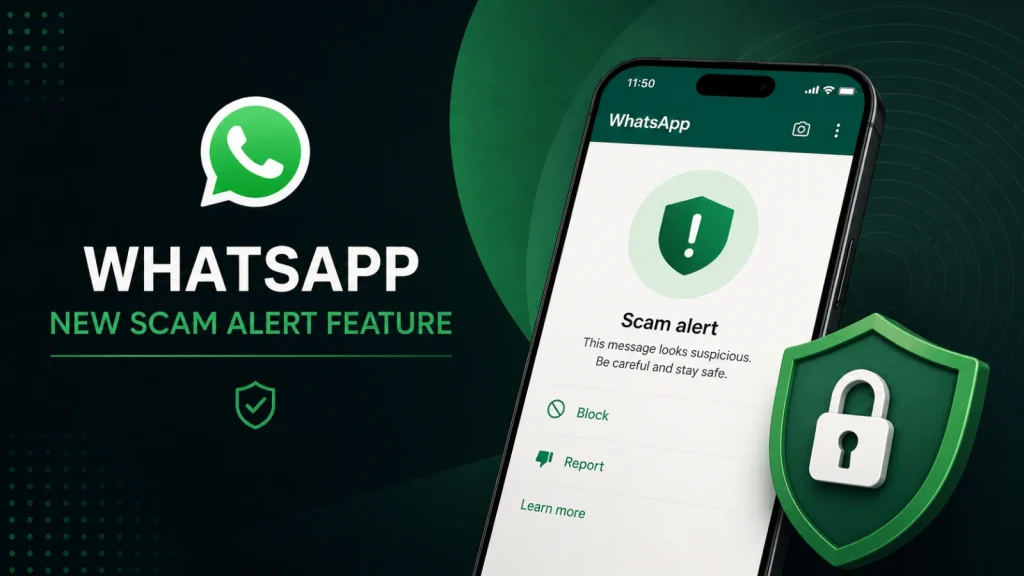
WhatsApp Unveils New Scam Alert Feature to Protect Users from Social Engineering Attacks
Social engineering attacks continue to be a dominant threat vector in the digital landscape. As attackers refine their tactics, leveraging everything from convincing impersonations to sophisticated AI-generated lures, the platforms we rely on for communication must similarly evolve their defenses. WhatsApp, a cornerstone of global messaging, has recognized this critical need by introducing a powerful new feature designed to safeguard its users: Scam Alert.
The Escalating Threat of Social Engineering on Messaging Platforms
The ubiquity of messaging applications like WhatsApp makes them prime targets for social engineering. Attackers exploit trust and urgency, often masquerading as known contacts, financial institutions, or government agencies to trick users into divulging sensitive information or performing actions that compromise their security. These scams range from simple phishing attempts to complex multi-stage cons, often leading to financial losses or identity theft.
Traditional security measures, while important, are often insufficient against these human-centric attacks. The rapid advancement of generative AI has further complicated the situation, enabling threat actors to create highly believable fake profiles, messages, and even voice recordings, making it increasingly difficult for individuals to discern legitimate communications from malicious ones.
WhatsApp’s Innovative Scam Alert Feature
Responding to this evolving threat, WhatsApp has rolled out an optional feature named Scam Alert. This innovative protection is designed to identify and flag potential scam messages in real-time, providing users with an immediate warning. The core strength of this feature lies in its implementation:
- On-Device Machine Learning: The Scam Alert operates using a machine learning model directly on the user’s device. This localized processing is crucial for maintaining privacy.
- End-to-End Encryption Maintained: A significant concern with any security feature on an encrypted platform is the potential compromise of privacy. WhatsApp explicitly states that the Scam Alert works without decrypting messages or sending content to WhatsApp servers, thus preserving its fundamental end-to-end encryption. This ensures user privacy remains paramount while bolstering security.
- Proactive Warning System: Instead of relying solely on user reports after a scam has occurred, this feature aims to prevent successful attacks by alerting users to suspicious messages before they can fall victim.
This approach highlights a shift towards more intelligent, privacy-preserving security mechanisms that empower users with information without infringing on their communication confidentiality.
How On-Device Machine Learning Enhances Privacy and Security
The decision to implement Scam Alert using on-device machine learning is a strategic one, offering dual benefits for privacy and security. By processing message characteristics locally, WhatsApp avoids the need to transmit message content to its servers for analysis. This design choice:
- Strengthens End-to-End Encryption: The integrity of end-to-end encryption, a hallmark of WhatsApp’s security, remains uncompromised. Messages remain encrypted from sender to receiver, with the Scam Alert model analyzing patterns and indicators on the device itself.
- Reduces Data Exposure: No message content leaves the user’s device for scam detection, significantly reducing the risk of data exposure or interception during analysis.
- Enhances User Trust: Users can be confident that their private conversations are not being read or scanned by WhatsApp or any third party, fostering greater trust in the platform’s commitment to privacy.
This method contrasts with server-side scanning approaches, which, while effective for some threats, can raise privacy concerns due to the necessity of data transmission and processing on external systems.
Activating and Utilizing WhatsApp’s Scam Alert
While the exact activation steps may vary slightly depending on device and app version, users should typically look for the Scam Alert option within WhatsApp’s privacy or security settings. Once enabled, the feature will passively monitor incoming messages for suspicious patterns. If a potential scam is detected, a prominent alert or notification will be displayed, prompting the user to exercise caution. It is critical for users to:
- Enable the Feature: Actively seek out and enable the Scam Alert in their settings.
- Heed Warnings: Treat any Scam Alert notification with extreme caution. Do not click links, open attachments, or provide personal information if warned.
- Verify Independently: If a message flagged as suspicious purports to be from a known contact or institution, independently verify its legitimacy through an alternative, trusted communication channel (e.g., calling the person directly, visiting the official website).
Remediation Actions: Comprehensive Protection Against Social Engineering
While WhatsApp’s Scam Alert is a significant step forward, a multi-layered approach to cybersecurity remains essential. Users and organizations should implement the following best practices:
- Enable Multi-Factor Authentication (MFA): Activate MFA on all accounts, especially those linked to financial services or critical data. This adds an extra layer of security beyond just a password.
- Be Skeptical of Unsolicited Messages: Treat all unexpected messages, especially those requesting personal information or immediate action, with suspicion.
- Verify Sender Identity: If a message seems out of character or too good to be true, verify the sender’s identity through an independent channel.
- Educate Yourself and Your Team: Regularly refresh your knowledge of common scam tactics and social engineering techniques. For organizations, conduct frequent security awareness training.
- Report Suspicious Activity: Utilize in-app reporting features for suspicious messages or accounts to help platforms identify and neutralize threats.
- Keep Software Updated: Ensure WhatsApp and your device’s operating system are always updated to the latest versions to benefit from the newest security patches and features.
The Future of AI in Cybersecurity: Balancing Protection and Privacy
WhatsApp’s Scam Alert represents a compelling example of how artificial intelligence can be deployed to enhance cybersecurity without sacrificing user privacy. This model of on-device AI processing is likely to become more prevalent as the demand for sophisticated threat detection grows alongside privacy expectations. The balance between proactive security measures and stringent data protection will continue to be a defining challenge in the cybersecurity landscape, and solutions like Scam Alert offer a promising blueprint for future developments. Further research into AI-driven anomaly detection and behavior analysis, integrated discreetly into user-facing applications, will be crucial in staying ahead of increasingly clever adversaries.
Conclusion
WhatsApp’s introduction of the Scam Alert feature marks a pivotal moment in the fight against social engineering on messaging platforms. By leveraging on-device machine learning, the company delivers a powerful new layer of defense against sophisticated scams, all while upholding its commitment to end-to-end encryption and user privacy. For IT professionals, security analysts, and end-users alike, this update underscores the continuous evolution required in cybersecurity. Staying informed, enabling available security features, and maintaining a healthy skepticism towards unsolicited communications are critical defenses in the modern threat landscape.




