
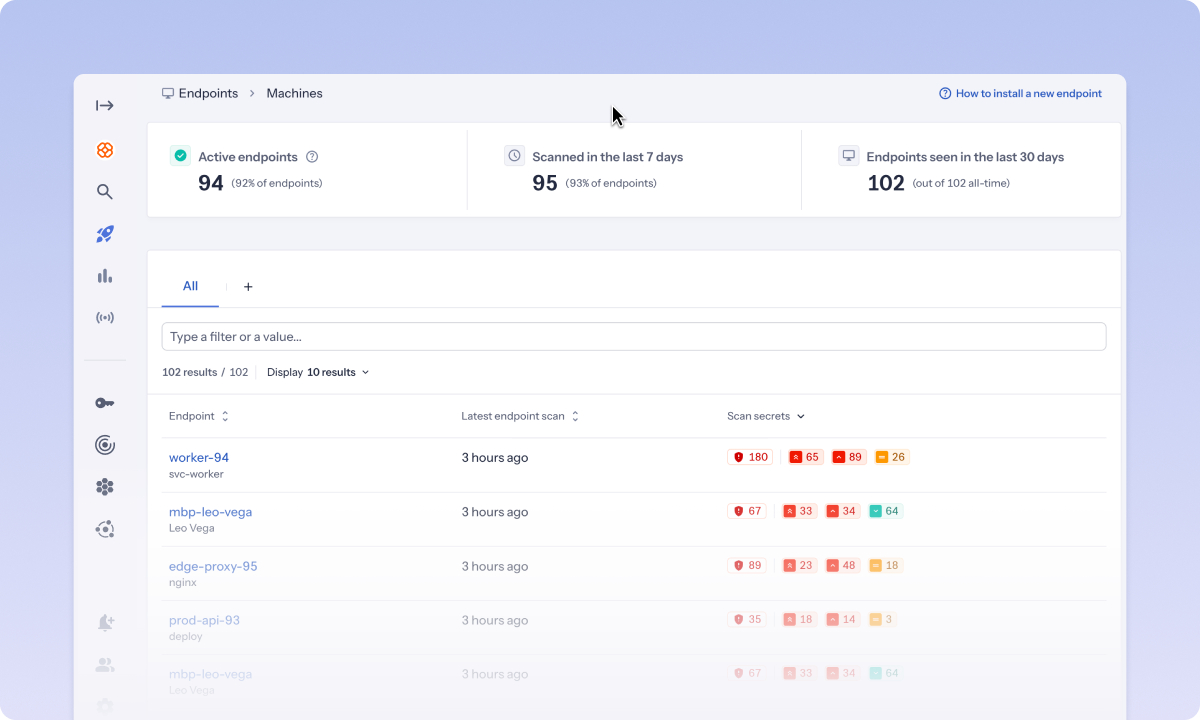
Developer laptops are the credential store attackers are picking through in 2026, GitGuardian announces Endpoint Protection
The developer laptop, once considered a mere workstation, has rapidly evolved into a prime target for attackers. In 2026, cybersecurity experts and organizations like GitGuardian are confirming what many have long suspected: these machines are the new frontier for credential harvesting. After a year marked by relentless supply-chain campaigns exploiting developer environments, the fundamental question of endpoint protection is back on the CISO’s agenda with renewed urgency.
The Evolving Threat Landscape: Developers as the New Frontline
The shift in attacker focus towards developer workstations isn’t random; it’s a strategic pivot. Developers, by nature of their work, often possess elevated privileges, access to sensitive source code repositories, cloud environments, and a multitude of non-human identities (NHIs) such as API keys, tokens, and service account credentials. When these credentials are compromised, attackers gain direct access to critical infrastructure, intellectual property, and even customer data.
The last 12 months have seen a significant uptick in supply-chain attacks specifically targeting developer machines. These campaigns often involve sophisticated phishing, malware injection through compromised libraries, or exploitation of misconfigured development tools. Once a developer’s machine is breached, attackers meticulously “pick through” the credential store, exfiltrating valuable secrets that grant them deeper access into an organization’s ecosystem.
GitGuardian Introduces Developer Endpoint Protection
In response to this escalating threat, GitGuardian has announced its Developer Endpoint Protection. This new offering extends their established secrets and non-human identity (NHI) security platform directly to developer workstations. This expansion acknowledges that while code repositories and CI/CD pipelines are crucial checkpoints, the initial compromise often originates at the individual developer’s machine.
The move signifies a critical understanding that traditional endpoint protection, while necessary, may not be sufficient for the unique security posture demanded by developer environments. Developers utilize a diverse set of tools, often operate with greater autonomy, and interact with a broader range of external services than typical end-users. This complexity creates a larger attack surface that requires specialized protection.
Why Developer Laptops are Credential Goldmines
- Direct Access to Sensitive Systems: Developers routinely access source code management systems (Git, SVN), cloud provider consoles (AWS, Azure, GCP), internal APIs, and production environments.
- Proliferation of Non-Human Identities (NHIs): Developer machines are often home to numerous API keys, secret tokens, database credentials, SSH keys, and service account credentials necessary for automated tasks and integrations.
- Development Tool Vulnerabilities: Integrated Development Environments (IDEs), package managers, and various plugins can harbor vulnerabilities or be susceptible to malicious injections. For instance, a recent vulnerability in a popular IDE plugin could have exposed sensitive configuration files, though a specific CVE for widespread exploitation against developer credentials hasn’t been broadly assigned yet for this exact scenario.
- Local Credential Management: Developers may store credentials locally in environment variables, configuration files, or even plain text, often for convenience, making them easily discoverable post-breach.
- Supply-Chain Attack Vectors: Compromised open-source libraries or dependencies can introduce malicious code that specifically targets local credential stores, bypassing traditional network perimeter defenses.
Remediation Actions and Best Practices
Securing developer laptops requires a multi-faceted approach, integrating robust security practices with developer workflows to minimize friction while maximizing protection.
- Implement Strong Authentication: Enforce multi-factor authentication (MFA) for all critical systems, including Git repositories, cloud consoles, and internal applications. Consider hardware security keys for maximum protection.
- Credential Management Best Practices:
- Utilize secure secret management tools (e.g., HashiCorp Vault, AWS Secrets Manager, Azure Key Vault) to store and retrieve credentials dynamically, avoiding local storage.
- Implement Git credential helpers that encrypt and manage credentials securely, rather than hardcoding them.
- Regularly rotate API keys and other non-human identities.
- Endpoint Detection and Response (EDR) with Developer Context: Deploy EDR solutions that are capable of monitoring developer-specific activities, detecting anomalous behavior related to credential access, and integrating with developer security platforms like GitGuardian’s.
- Secure Development Environment Configuration:
- Enforce principle of least privilege for developer accounts and machine access.
- Regularly audit IDEs, plugins, and dependencies for known vulnerabilities and ensure they are patched promptly. Monitor CVEs like CVE-2024-XXXX (placeholder for a future developer tool vulnerability) for relevant updates.
- Isolate development environments using containers or virtual machines where sensitive operations are performed.
- Developer Security Awareness Training: Educate developers on common attack vectors, the importance of secure coding practices, recognizing phishing attempts, and proper credential hygiene.
- Supply Chain Security Measures:
- Implement software composition analysis (SCA) to identify and remediate vulnerabilities in third-party libraries.
- Vet open-source dependencies carefully and prefer well-maintained projects.
- Utilize build system hardening to prevent malicious code injection during the build process.
Tools for Developer Endpoint Security
| Tool Name | Purpose | Link |
|---|---|---|
| GitGuardian Developer Endpoint Protection | Detects and prevents secrets & NHI exposure on developer workstations. | GitGuardian |
| HashiCorp Vault | Centralized secrets management for dynamic credential provisioning. | Vault Project |
| AWS Secrets Manager | Manages database credentials, API keys, and other secrets through AWS. | AWS Secrets Manager |
| Azure Key Vault | Securely stores and accesses secrets, keys, and certificates for Azure applications. | Azure Key Vault |
| GitHub Advanced Security | Includes secret scanning, dependency scanning, and code scanning for repositories. | GitHub Advanced Security |
Conclusion: Reinforcing the Developer Security Perimeter
The announcement from GitGuardian underscores a critical shift in cybersecurity; securing developer laptops is no longer an afterthought but a foundational element of organizational security. Attackers are increasingly adept at exploiting the unique environment of developer workstations, turning these powerful tools into sensitive credential stores. By adopting specialized developer endpoint protection, implementing stringent credential management, fostering security awareness, and embracing a proactive approach to supply chain security, organizations can significantly reduce their exposure. Protecting developer assets directly translates to safeguarding the entire software development lifecycle and the integrity of the business itself.




