
North Korean EtherHiding Campaign Targets Crypto Wallets and Developer Credentials
A sophisticated new cyber threat is actively targeting cryptocurrency enthusiasts and developers, turning what appears to be a routine web search into a potential gateway for significant compromise. North Korean-linked threat actors are deploying an insidious campaign dubbed “EtherHiding,” leveraging fake macOS update screens to trick unsuspecting users into installing malware. This operation isn’t just about stealing crypto; it’s a multi-pronged attack aimed at siphoning browser data and, critically, developer credentials. Understanding the mechanics of this campaign is vital for anyone operating in the cryptocurrency space or developing on macOS.
The EtherHiding Campaign Unveiled
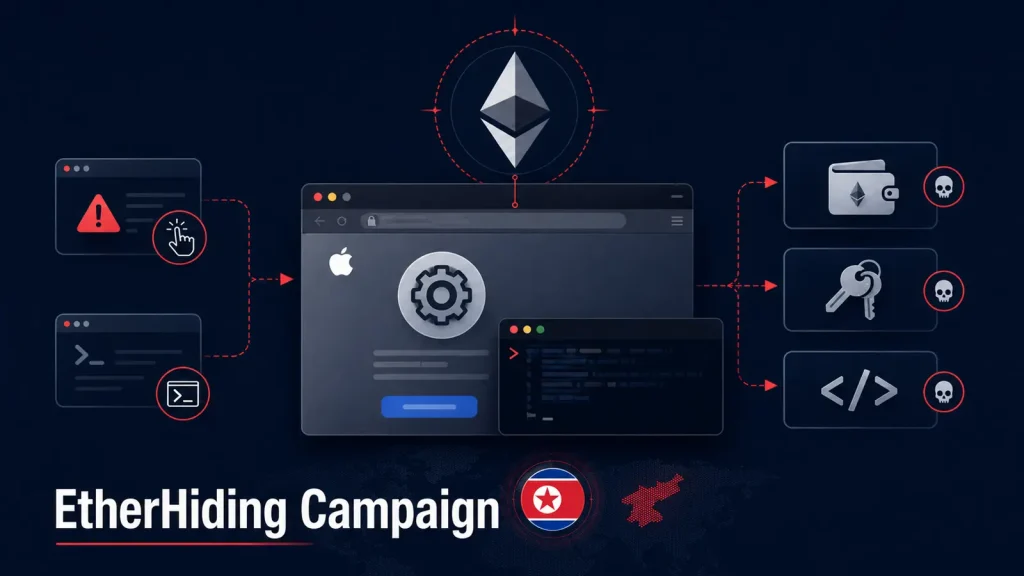
The EtherHiding campaign represents a cunning evolution in social engineering and malware deployment. It begins with a technique reminiscent of “ClickFix” lures, where a browser page is manipulated to present a deceptive interface. This initial deception is designed to create a sense of urgency or legitimacy, guiding the victim towards the primary payload.
Once ensnared, users are presented with what appears to be a legitimate macOS update prompt. This fake update screen is meticulously crafted to mimic Apple’s official interface, making it difficult for an average user to discern its true nature. The unsuspecting victim, believing they are maintaining their system’s security, proceeds to “install” the update. In reality, they are initiating the download and execution of sophisticated malware.
Targeted Information: What’s at Stake?
The objectives of the EtherHiding campaign are broad and financially motivated, consistent with known North Korean state-sponsored cyber operations. The primary targets include:
- Cryptocurrency Wallets: The most obvious and immediate goal is to gain unauthorized access to digital currency holdings. This includes hot wallets, browser-based wallets, and potentially even seed phrases or private keys if exfiltrated from compromised systems.
- Browser Data: Beyond crypto, threat actors are interested in a treasure trove of sensitive information stored within web browsers. This can encompass saved passwords, autofill data, browsing history, cookies, and session tokens, all of which can be leveraged for further attacks or identity theft.
- Developer Credentials: This is a particularly concerning aspect of the campaign. By targeting developer credentials, the attackers aim to compromise development environments, source code repositories, and potentially even supply chains. Access to developer accounts can lead to the insertion of malicious code into legitimate software, signing malicious applications, or gaining access to intellectual property.
Attack Vector: From Search to Compromise
The EtherHiding campaign cleverly exploits common user behaviors, specifically routine web searches. A seemingly innocuous search can lead users to compromised websites or malicious advertisements that initiate the ClickFix-style lure. This makes the attack surface incredibly broad, as almost any internet user could inadvertently encounter the initial deception.
The seamless transition from a deceptive browser interface to a convincing fake macOS update screen highlights the advanced social engineering tactics employed. The attackers understand user psychology, capitalizing on the trust users place in system updates and official-looking prompts.
Remediation Actions and Protective Measures
Protecting against campaigns like EtherHiding requires a multi-layered approach, combining user awareness with robust security practices.
- Verify Software Updates: Always initiate macOS updates directly from System Settings (or System Preferences for older versions) or the App Store. Never click on pop-ups or download update files from untrusted websites. If a browser prompts you for an OS update, it is almost certainly malicious.
- Enable Multi-Factor Authentication (MFA): Implement MFA on all cryptocurrency exchanges, wallets, and developer accounts. This adds a critical layer of security, making it significantly harder for attackers to gain access even if they steal your credentials.
- Use Hardware Wallets: For significant cryptocurrency holdings, a hardware wallet provides the strongest protection against software-based attacks.
- Practice Prudent Browsing: Exercise caution when clicking on search results, especially those that seem unusual or lead to unexpected redirects. Use reputable ad blockers and security browser extensions.
- Regularly Back Up Data: Maintain regular, encrypted backups of all critical data, including developer projects and personal files. This can mitigate the impact of data theft or ransomware attacks.
- Keep Software Updated: While the campaign uses fake updates, it’s crucial to keep your legitimate operating system, browsers, and security software patched to protect against known vulnerabilities.
- Educate Yourself and Your Team: Stay informed about the latest phishing techniques and social engineering tactics. Regular security awareness training is essential for developers and cryptocurrency users alike.
- Monitor Network Traffic: For organizations, implement robust network monitoring to detect unusual outbound connections or data exfiltration attempts.
Tools for Detection and Mitigation
Deploying the right tools can significantly enhance your defensive posture against sophisticated threats like EtherHiding.
| Tool Name | Purpose | Link |
|---|---|---|
| Endpoint Detection and Response (EDR) Solutions | Detects and responds to malicious activities on endpoints, including suspicious process execution and file modifications. | Gartner Peer Insights |
| Antivirus/Anti-Malware Software | Provides real-time protection against known malware and can often detect heuristic or behavioral anomalies. | AV-TEST macOS |
| Network Intrusion Detection/Prevention Systems (NIDS/NIPS) | Monitors network traffic for suspicious patterns and can block known malicious connections. | Snort |
| Password Managers | Securely stores and manages strong, unique passwords, reducing the risk of credential compromise. | LastPass |
| Hardware Security Keys (e.g., YubiKey) | Provides robust multi-factor authentication, making account takeover significantly more difficult. | YubiKey |
Conclusion
The North Korean EtherHiding campaign underscores the persistent and evolving threat landscape facing cryptocurrency users and developers. By masquerading as legitimate macOS updates and employing sophisticated social engineering, these actors aim to steal valuable digital assets and sensitive credentials. Vigilance, critical thinking, and the adoption of strong security practices are paramount. Always verify the authenticity of software updates, deploy robust multi-factor authentication, and remain skeptical of unexpected prompts. Staying informed and proactive is your best defense against these cunning adversaries.




