
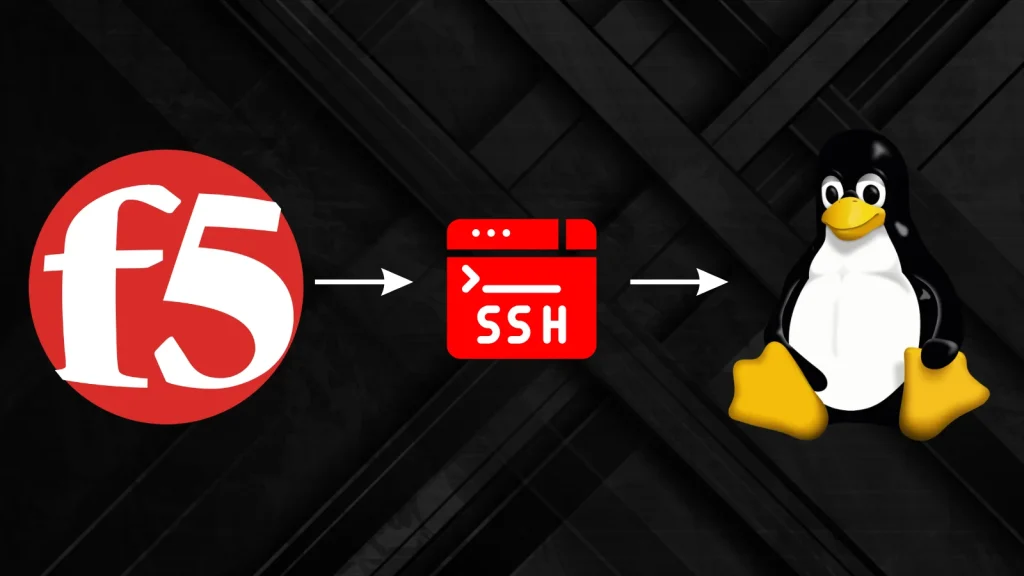
Hackers Exploit F5 BIG-IP Appliance to Gain SSH Access and Pivot Into Enterprise Linux Networks
A disturbing trend is emerging in the landscape of widespread enterprise attacks: threat actors are increasingly targeting network edge devices as their initial foray into an organization’s internal infrastructure. Recently, one such sophisticated, multi-stage intrusion leveraged an internet-facing F5 BIG-IP appliance to gain SSH access, ultimately pivoting into Active Directory and compromising enterprise Linux networks. This incident underscores a critical shift in attack methodologies, moving beyond traditional endpoint compromises to strategic exploitation of security boundaries.
F5 BIG-IP: A Gateway to Enterprise Networks
The F5 BIG-IP device, often deployed as a load balancer or VPN gateway, serves as a critical internet-facing component for many organizations. Its position at the network edge makes it an attractive target for adversaries seeking a high-value entry point. In this particular attack, the threat actor exploited vulnerabilities within the BIG-IP appliance to establish initial access. While the specific vulnerability leveraged for the initial breach wasn’t detailed, the immediate objective was clear: gain SSH access.
Gaining SSH access to such a device provides a powerful foothold. It allows for command execution, data exfiltration, and, most critically, the ability to establish persistence and pivot deeper into the network. This incident, as highlighted by Microsoft’s Defender Security Research, reflects a growing trend where devices traditionally considered security bastions are becoming attractive targets for initial compromise.
The Multi-Stage Intrusion: From Edge to Active Directory
Once SSH access was secured on the F5 BIG-IP appliance, the attackers embarked on a deliberate, multi-stage intrusion. This wasn’t a smash-and-grab operation but a calculated effort to expand their presence and achieve deeper network control. The primary goal of this phase was to pivot from the compromised BIG-IP device into the core enterprise Linux networks and, ultimately, compromise Active Directory.
The transition from a network appliance to Active Directory signifies an identity-focused attack strategy. Active Directory remains the crown jewel for many attackers, as compromising it grants control over user accounts, group policies, and ultimately, access to a vast array of resources across the entire organization. The use of the F5 BIG-IP as a springboard illustrates that attackers are adapting their initial access vectors to high-value infrastructure components.
Why Edge Appliances Are Prime Targets
Firewalls, VPN gateways, and load balancers like the F5 BIG-IP are deployed precisely because they are security boundaries. However, their critical function and internet exposure also make them high-value targets. They often handle sensitive traffic, possess high network privileges, and may have less stringent monitoring compared to internal servers. Furthermore, vulnerabilities in these devices can grant attackers immediate access to the internal network, bypassing perimeter defenses designed to stop less sophisticated attacks.
The attack documented serves as a stark reminder that the security posture of these edge devices is paramount. A single point of failure at the network perimeter can cascade into a full-scale enterprise compromise, demonstrating the need for comprehensive and proactive security measures.
Remediation Actions for F5 BIG-IP and Enterprise Networks
Mitigating the risks posed by such attacks requires a multi-layered approach, focusing on both the F5 BIG-IP appliances and the broader enterprise network. Proactive measures are essential to prevent initial access and to detect and contain any attempted pivots.
- Keep BIG-IP Firmware Up-to-Date: Regularly apply security patches and updates to F5 BIG-IP appliances. New vulnerabilities are constantly discovered, and timely patching is your first line of defense. Specific vulnerabilities that have impacted F5 BIG-IP in the past include CVE-2023-46747, which allowed for unauthenticated RCE, and CVE-2023-46746. Always refer to F5’s official advisories.
- Strong Authentication Practices: Implement robust authentication mechanisms for all administrative interfaces, including SSH. This includes multi-factor authentication (MFA) and strong, unique passwords.
- Restrict SSH Access: Limit SSH access to F5 BIG-IP devices from trusted IP addresses only. Disable password-based SSH authentication in favor of key-based authentication where possible.
- Network Segmentation: Isolate management interfaces of BIG-IP devices from general network traffic. Implement strict firewall rules to control communication between the BIG-IP and internal networks.
- Monitor Logs Aggressively: Implement comprehensive logging and monitoring for F5 BIG-IP devices. Look for unusual SSH activity, failed login attempts, unusual command execution, and unexpected network connections originating from the device.
- Endpoint Detection and Response (EDR)/Extended Detection and Response (XDR): Deploy EDR/XDR solutions across enterprise Linux networks and Active Directory to detect post-exploitation activities, lateral movement, and privilege escalation attempts.
- Regular Penetration Testing: Conduct regular penetration tests specifically targeting your network edge devices and the potential pivot points into your internal networks.
- Identity and Access Management (IAM): Strengthen Active Directory security by enforcing the principle of least privilege, conducting regular access reviews, and monitoring for suspicious activity (e.g., unusual account creation, privilege escalations).
Relevant Tools for Detection and Mitigation
A combination of network and endpoint security tools is crucial for identifying and responding to such sophisticated attacks.
| Tool Name | Purpose | Link |
|---|---|---|
| F5 BIG-IP System Logs | Built-in logging for security events, access attempts, and configuration changes. | F5 TechDocs |
| Security Information and Event Management (SIEM) | Aggregates logs from various sources (F5 BIG-IP, Linux servers, AD) for centralized analysis and threat detection. | Gartner SIEM Market Guide |
| Network Intrusion Detection/Prevention Systems (NIDS/NIPS) | Monitors network traffic for suspicious patterns indicating compromise or lateral movement. | Snort, Suricata |
| Endpoint Detection and Response (EDR) Solutions | Monitors and responds to threats on Linux servers, detecting malicious activity, process injection, and unauthorized data access. | CrowdStrike Falcon, Microsoft Defender for Endpoint |
| Vulnerability Scanners | Identifies known vulnerabilities in F5 BIG-IP devices and other network appliances. | Tenable Nessus, Rapid7 Nexpose |
Shifting Perimeters: The Future of Enterprise Security
The F5 BIG-IP exploitation serves as a stark reminder that traditional security perimeters are blurring. Threat actors are no longer solely focused on internal systems but are actively targeting the very devices designed to protect the network edge. Organizations must adopt a zero-trust mindset, assuming that every device and user, both internal and external, could potentially be compromised.
Securing critical network infrastructure such as F5 BIG-IP appliances is no longer just about preventing denial-of-service attacks or ensuring availability; it’s about safeguarding the primary entry points for sophisticated, identity-focused intrusions that can cripple an entire enterprise. Continuous vigilance, proactive patching, and comprehensive monitoring are non-negotiable in this evolving threat landscape.




