HoneyMyte CoolClient Backdoor Uses Signed Kernel Rootkit to Hide Processes, Files and C2 Traffic
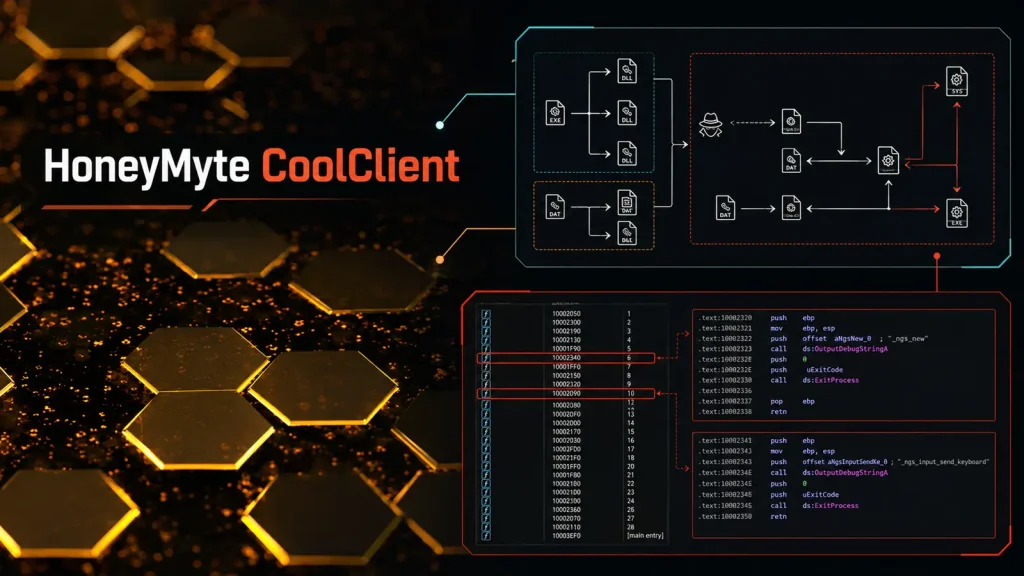
HoneyMyte’s CoolClient Backdoor: A Deep Dive into Kernel-Level Evasion
The landscape of cyber threats continuously evolves, with adversaries adopting increasingly sophisticated techniques to evade detection. A stark example of this progression is the recent upgrade to the HoneyMyte group’s CoolClient backdoor. This notorious malware now incorporates a signed kernel-level rootkit for Windows, presenting a significant challenge to conventional cybersecurity defenses. This development makes routine incident response and forensic investigation considerably more difficult, providing attackers with potent tools designed to withstand typical security scrutiny.
The Evolution of CoolClient: A New Era of Stealth
HoneyMyte has historically been associated with advanced persistent threat (APT) activities. Their recent enhancement of the CoolClient backdoor with a kernel-level rootkit signifies a strategic escalation in their capabilities. A kernel-level rootkit operates within the core of the operating system, granting it unparalleled control and stealth. By manipulating the kernel, the rootkit can effectively:
- Hide Processes: Malicious processes can be made invisible to standard task managers and security tools.
- Conceal Files: Files associated with the backdoor, including its components and stolen data, can be hidden from file system explorers.
- Obscure Command and Control (C2) Traffic: Network communications between the compromised system and the attacker’s C2 server can be obfuscated, making detection by network monitoring solutions extremely challenging.
The use of a signed kernel rootkit further complicates defensive measures. Digital signatures are typically used to verify the authenticity and integrity of software. A rootkit that is signed, even if maliciously, can often bypass integrity checks and security mechanisms designed to block unsigned drivers, lending it an air of legitimacy that can trick the operating system and some security software.
Targeted Campaigns and Geopolitical Context
The activities involving this upgraded CoolClient backdoor have targeted a specific set of regions and entities, underscoring a calculated and strategic approach by the HoneyMyte group. Organizations in Pakistan, Mongolia, Myanmar, and Russia have been identified as targets, including various government entities. This geographical focus suggests a potential link to state-sponsored activities or intelligence gathering operations.
In Myanmar, the attack chain reportedly began with the deployment of PlugX, another well-known remote access Trojan (RAT). PlugX often serves as an initial foothold, establishing persistence and gathering preliminary information, before subsequently installing more sophisticated tools like CoolClient. This layered approach allows attackers to maintain access even if one component is detected and removed.
Understanding the Impact: Why Kernel-Level Matters
The shift to a kernel-level rootkit is not merely an incremental update; it represents a fundamental change in the threat’s severity. Traditional antivirus and endpoint detection and response (EDR) solutions primarily operate in user mode. While effective against many threats, they can struggle to detect and eradicate malware that operates at the kernel level. Kernel-level malware can directly manipulate system calls, hook into core OS functions, and even disable security software, making it extremely persistent and difficult to remove without advanced forensic techniques or complete system re-imaging.
Furthermore, the ability to hide C2 traffic means that even robust network intrusion detection systems (NIDS) and firewalls may be bypassed. This stealth capability grants attackers extended dwell times within compromised networks, facilitating deeper reconnaissance, data exfiltration, and lateral movement.
Remediation Actions and Proactive Defenses
Defending against a sophisticated threat like the CoolClient backdoor with a signed kernel rootkit requires a multi-layered and proactive strategy. Standard security practices are essential, but organizations must also consider advanced techniques to detect and mitigate such deeply embedded threats.
- Enhanced Endpoint Protection: Deploy advanced EDR solutions that incorporate kernel-level monitoring and behavioral analysis capabilities. These tools can often detect anomalous activities that bypass traditional signature-based detection.
- Driver Signature Enforcement (DSE): Ensure that Windows Driver Signature Enforcement is fully enabled and monitored. While the rootkit is signed, verifying the legitimacy of the signing certificate and its issuer is crucial. Any unusual or suspicious driver installations should trigger alerts.
- Memory Forensics: Implement memory acquisition and analysis capabilities. Kernel-level rootkits often reside in volatile memory, making memory forensics a vital tool for detection and understanding their behavior.
- Network Traffic Analysis: Employ deep packet inspection and network behavioral analytics to identify subtle anomalies in C2 traffic, even if attempts are made to obfuscate it. Look for unusual protocols, destination IP addresses, or data transfer patterns.
- Threat Hunting: Actively hunt for indicators of compromise (IOCs) and suspicious activity. This includes regularly reviewing system logs, process lists, and network connections for any signs of the backdoor.
- Regular Patch Management: Keep all operating systems and software patched and updated to close known vulnerabilities that attackers might exploit for initial access.
- User Education and Awareness: Train employees to recognize and report phishing attempts and suspicious emails, as initial compromises often leverage social engineering.
- Incident Response Plan: Develop and regularly test a robust incident response plan specifically tailored to address sophisticated kernel-level malware infections.
Detection and Analysis Tools
| Tool Name | Purpose | Link |
|---|---|---|
| Volatility Framework | Advanced memory forensics for malware analysis and rootkit detection. | https://www.volatilityfoundation.org/ |
| Sysinternals Suite (e.g., Process Explorer, Autoruns) | System monitoring, process analysis, and startup program auditing to uncover hidden components. | https://learn.microsoft.com/en-us/sysinternals/downloads/ |
| Wireshark | Network protocol analyzer for deep inspection of C2 traffic and network anomalies. | https://www.wireshark.org/ |
| Yara | Pattern matching tool used by malware researchers to identify and classify malware samples. | https://virustotal.github.io/yara/ |
| Sandbox Environments (e.g., Cuckoo Sandbox) | Safe execution of suspicious files to observe their behavior without risking production systems. | https://cuckoosandbox.org/ |
Conclusion
The HoneyMyte group’s deployment of a signed kernel-level rootkit within their CoolClient backdoor signals a significant escalation in the cyber threat landscape. This advancement allows for unparalleled stealth and persistence, making traditional detection and remediation methods less effective. Organizations, especially those in government and critical sectors, must recognize the elevated risk posed by such threats. A proactive defense strategy combining advanced endpoint security, vigilant network monitoring, robust threat hunting, and comprehensive incident response planning is paramount to defending against these highly sophisticated and evasive attacks.