
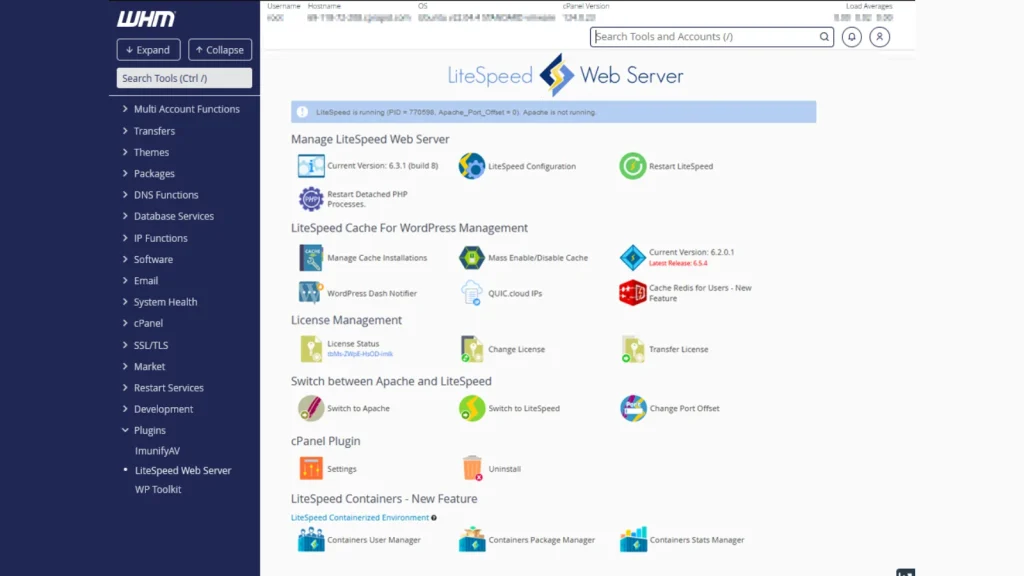
LiteSpeed cPanel Plugin 0-Day Exploited in the wild to Gain Server Root Access
A Critical Alert: LiteSpeed cPanel Plugin 0-Day Actively Exploited for Root Access
The cybersecurity landscape remains a dynamic and often precarious environment. Latest intelligence from LiteSpeed confirms a critical 0-day privilege escalation vulnerability within its widely used cPanel user-end plugin. This flaw, actively exploited in the wild, allows attackers to gain root access on Linux hosting servers, posing an immediate and significant threat to server integrity and data security.
This urgent disclosure highlights the persistent challenges in maintaining robust server defenses and the critical importance of rapid patch deployment. Our analysis delves into the specifics of this vulnerability, its impact, and the essential steps required for remediation.
Understanding the LiteSpeed cPanel 0-Day Vulnerability
LiteSpeed has officially disclosed a severe privilege escalation flaw, tracked as CVE-2026-48172. This vulnerability affects specific versions of the LiteSpeed cPanel user-end plugin. Exploitation of this 0-day allows a malicious actor, potentially with limited access, to escalate their privileges to root level on Linux hosting servers. Gaining root access provides attackers with complete control over the compromised system, enabling them to install malware, steal sensitive data, alter configurations, or launch further attacks.
- Vulnerability ID: CVE-2026-48172
- Affected Components: LiteSpeed cPanel user-end plugin
- Affected Versions: Versions from v2.3 up to, but not including, v2.4.5
- Impact: Privilege escalation to root access, leading to full server compromise.
- Exploitation Status: Actively exploited in the wild.
The “0-day” designation signifies that this vulnerability was exploited before a patch was officially available. This makes timely detection and response particularly challenging for system administrators and hosting providers.
The Risk to Linux Hosting Servers
The broad adoption of LiteSpeed web servers in conjunction with cPanel hosting environments means that a significant number of Linux hosting servers were potentially exposed to this threat. Attackers leverage the privilege escalation to bypass standard security measures and essentially “own” the server. This has severe implications:
- Data Breaches: Access to all data stored on the server, including customer information, databases, and proprietary code.
- Website Defacement/Tampering: Undermining the integrity of hosted websites.
- Malware Injection: Installing backdoors, ransomware, or other malicious software.
- Resource Abuse: Using the compromised server for cryptocurrency mining, launching DDoS attacks, or spam campaigns.
- Reputational Damage: For hosting providers and businesses whose sites are hosted on affected servers.
The active exploitation reported by LiteSpeed underscores the severity; this is not a theoretical threat but an ongoing attack vector.
Remediation Actions
Immediate action is paramount to mitigate the risks associated with CVE-2026-48172. System administrators and hosting providers must prioritize these steps:
- Update Immediately: The most crucial step is to update the LiteSpeed cPanel user-end plugin to version 2.4.5 or later. LiteSpeed has released a patch that addresses this vulnerability. Users should consult LiteSpeed’s official documentation for the precise update procedure within their cPanel environment.
- Verify Plugin Version: Confirm the currently installed version of the LiteSpeed cPanel user-end plugin. If it falls within the vulnerable range (v2.3 to < v2.4.5), an update is mandatory.
- Conduct Integrity Checks: After updating, perform thorough integrity checks on your Linux servers. Look for any unusual files, processes, or configuration changes that might indicate prior compromise. Utilize tools like rootkit detectors and file integrity monitoring systems.
- Review Access Logs: Scrutinize authentication and system logs for any unauthorized access attempts, anomalous activity, or privilege escalation events, particularly around the period of the vulnerability’s public disclosure.
- Implement Least Privilege: Ensure that all user accounts and applications operate with the minimum necessary permissions. Review and enforce strict access controls.
- Regular Backups: Maintain comprehensive and recent backups of all critical data. This is crucial for recovery in the event of a successful exploitation or other disaster.
Tools for Detection and Mitigation
To assist in securing affected systems, several types of tools can be beneficial:
| Tool Name | Purpose | Link |
|---|---|---|
| LiteSpeed cPanel Plugin Updater | Official tool for updating the LiteSpeed cPanel plugin. | LiteSpeed Official Documentation (specific path depends on cPanel setup) |
| ClamAV | Open-source antivirus engine for detecting malware and suspicious files. | https://www.clamav.net/ |
| Rootkit Hunter (RKHunter) | Scans for rootkits, backdoors, and local exploits. | http://rkhunter.sourceforge.net/ |
| Lynis | Security auditing tool for Unix-like systems, performs extensive vulnerability scans. | https://cisofy.com/lynis/ |
| OSSEC | Host-based Intrusion Detection System (HIDS) for log analysis, file integrity monitoring, and rootkit detection. | https://www.ossec.net/ |
Conclusion
The disclosure and active exploitation of CVE-2026-48172 in the LiteSpeed cPanel user-end plugin serve as a stark reminder of the persistent and evolving threats facing Linux hosting environments. Prompt patching to version 2.4.5 or higher is not merely recommended; it is an imperative action to prevent unauthorized root access and secure your servers. Beyond immediate patching, maintaining a proactive security posture through regular auditing, vigilance, and adherence to best practices remains crucial for safeguarding digital assets against sophisticated attacks.
Stay informed, stay patched, and prioritize your server security.




