
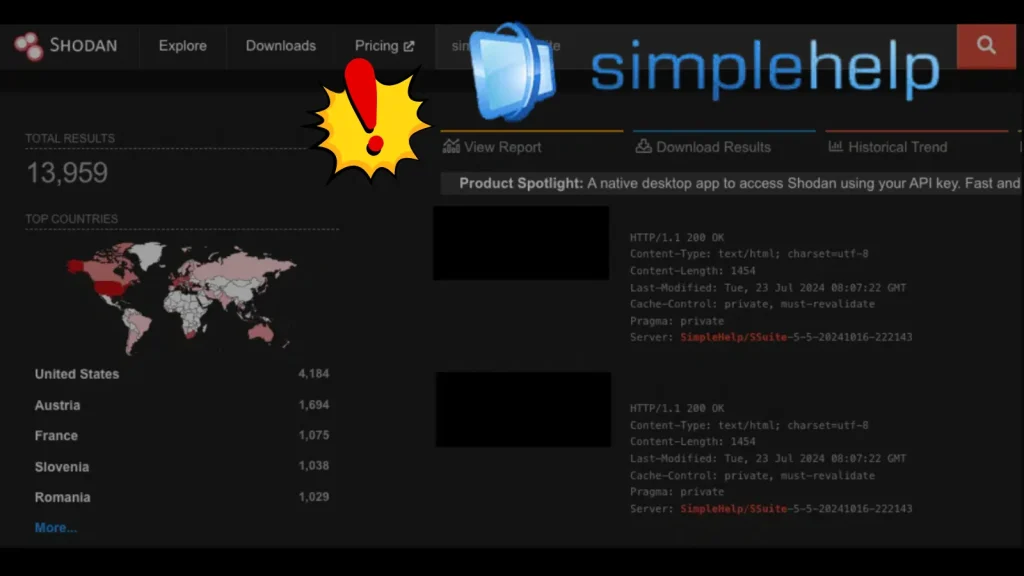
Nearly 14,000 SimpleHelp Servers Exposed Amid Critical Authentication Bypass Disclosure
The digital landscape is a constant battleground, and the latest skirmish puts nearly 14,000 internet-facing SimpleHelp servers squarely in the crosshairs. A critical authentication bypass vulnerability, tracked as CVE-2026-48558, has been disclosed, sending shivers down the spines of IT professionals relying on this remote monitoring and management (RMM) platform. This exposure presents a significant and immediate threat to enterprises, highlighting the pervasive risks associated with critical software flaws.
Understanding the SimpleHelp Authentication Bypass Vulnerability
At the heart of this urgent concern is CVE-2026-48558, an authentication bypass vulnerability within the SimpleHelp RMM platform. An authentication bypass flaw is particularly insidious because it allows unauthorized attackers to circumvent the security measures designed to verify legitimate users. In essence, an attacker could potentially gain unauthorized access to an exposed SimpleHelp server without needing valid credentials.
This vulnerability was uncovered by Horizon3.ai through their “Sua Sponte” initiative, an autonomous research program that leverages AI-driven analysis to identify exploitable weaknesses in software. The critical nature of this flaw stems from the extensive control an RMM platform grants over an organization’s IT infrastructure. Gaining unauthorized access to a SimpleHelp server could lead to:
- Remote code execution on managed endpoints.
- Data exfiltration of sensitive information.
- Disruption of critical business operations.
- Lateral movement within the corporate network.
The Scope of Exposure: Nearly 14,000 Servers at Risk
The sheer scale of the exposure is alarming. Publicly accessible sources indicate that nearly 14,000 internet-facing SimpleHelp servers are currently vulnerable to CVE-2026-48558. This number underscores the widespread adoption of SimpleHelp and the potential for a broad impact across various industries. Organizations relying on SimpleHelp for their remote support and management operations need to act swiftly to mitigate this significant risk. The internet-facing nature of these servers makes them prime targets for opportunistic attackers constantly scanning for known vulnerabilities.
Impact on Enterprises and the Threat Landscape
For enterprises, the disclosure of CVE-2026-48558 represents a serious escalation in their threat landscape. RMM tools are often the backbone of IT operations, providing deep access to systems and data. An attacker exploiting an authentication bypass in such a platform could achieve administrative control, effectively holding the keys to the kingdom. This can lead to:
- Supply Chain Attacks: Compromising a SimpleHelp server could allow attackers to distribute malware or ransomware to all connected client systems.
- Espionage and Data Theft: Access to an RMM tool offers a direct conduit for exfiltrating intellectual property, customer data, and other sensitive information.
- Operational Disruption: Attackers could cripple business operations by shutting down servers, encrypting data, or deleting critical files.
The autonomous discovery method employed by Horizon3.ai also signals a growing trend where AI-powered tools are increasingly effective at finding sophisticated vulnerabilities, placing even greater pressure on rapid patching and proactive security measures.
Remediation Actions and Best Practices
Given the critical nature of CVE-2026-48558, immediate action is paramount for any organization using SimpleHelp. Follow these remediation steps and best practices:
- Patch Immediately: The most crucial step is to apply the security patch released by SimpleHelp as soon as it becomes available. Monitor official SimpleHelp channels for announcements and updates.
- Isolate and Segment: If immediate patching is not feasible, consider isolating SimpleHelp servers from the broader network or implementing strict network segmentation to limit potential lateral movement.
- Review Access Logs: Scrutinize SimpleHelp server logs for any unusual or unauthorized access attempts, especially prior to the patch being applied.
- Strengthen Authentication: Beyond the current vulnerability, ensure all RMM platforms utilize strong, multi-factor authentication (MFA) to add an extra layer of security.
- Regular Vulnerability Scanning: Implement continuous vulnerability scanning on all internet-facing assets to proactively identify and address weaknesses.
- Principle of Least Privilege: Ensure that SimpleHelp and other RMM tools operate with the minimal necessary privileges to perform their functions.
- Incident Response Plan: Update and test your incident response plan to account for potential compromises of critical RMM infrastructure.
Tools for Detection and Mitigation
Leveraging the right tools is essential for identifying vulnerable systems and fortifying your defenses. Here’s a table of relevant tools:
| Tool Name | Purpose | Link |
|---|---|---|
| Shodan | Internet-facing asset discovery and reconnaissance | https://www.shodan.io/ |
| Nessus | Vulnerability scanning and assessment | https://www.tenable.com/products/nessus |
| OpenVAS | Open-source vulnerability scanner | https://www.openvas.org/ |
| Firewall/WAF | Network perimeter defense and web application protection | (Vendor Specific) |
| SIEM Solutions | Security Information and Event Management for log analysis and threat detection | (Vendor Specific) |
Conclusion
The disclosure of CVE-2026-48558 affecting SimpleHelp servers serves as a stark reminder of the persistent and evolving threats facing organizations. With nearly 14,000 servers exposed, the window for exploitation is open, and the consequences of inaction could be severe. Prioritizing immediate patching, strengthening authentication, and adhering to robust cybersecurity best practices are not merely recommendations but critical imperatives for safeguarding organizational assets against this significant authentication bypass vulnerability.




