
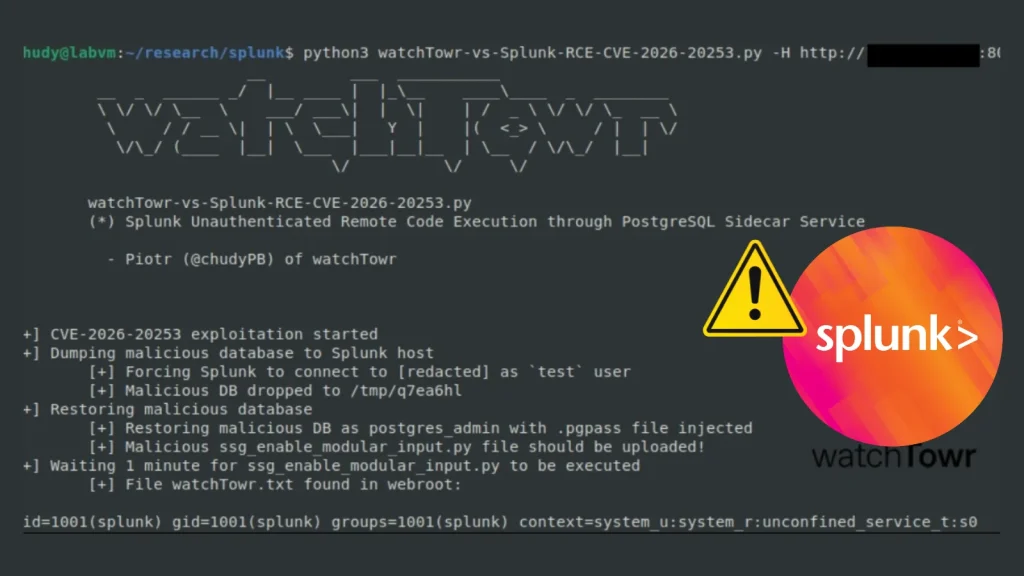
Splunk Enterprise Pre-Auth RCE Chain Exposes Database With Zero Authentication
A severe vulnerability chain has recently surfaced within Splunk Enterprise, posing a significant risk to organizations leveraging this powerful data analysis platform. Identified as a pre-authentication Remote Code Execution (RCE) vulnerability, this flaw allows unauthenticated attackers to gain full control over the underlying database without needing any credentials. This deep dive will explore the technical details, impact, and critical remediation steps organizations must take to protect their environments.
The Critical Threat: Unauthenticated RCE in Splunk Enterprise
The core of this critical security flaw lies in a misconfigured PostgreSQL Sidecar Service. This internal component, introduced in Splunk Enterprise 10 and later, is intended to facilitate specific functionalities. However, its improper configuration creates an avenue for attackers to achieve complete remote code execution.
The vulnerability, tracked as CVE-2026-20253, carries an alarming CVSS score of 9.8 (Critical). This score reflects the immense danger it presents, indicating that exploitation requires no authentication and can lead to a complete compromise of the affected system. Successful exploitation means an attacker can not only access all data within the Splunk Enterprise database but also execute arbitrary code on the host machine, potentially leading to broader network compromise.
Understanding the PostgreSQL Sidecar Service Misconfiguration
The PostgreSQL Sidecar Service is designed to operate in the background, assisting Splunk Enterprise with database-related tasks. Its misconfiguration essentially creates an open door for malicious actors. While the exact technical specifics of the misconfiguration haven’t been fully detailed, the outcome is clear: the service can be manipulated to execute commands on the server without prior authentication. This is particularly concerning because Splunk Enterprise often handles sensitive operational and security data, making its compromise highly impactful.
The severity of “pre-authentication” vulnerabilities cannot be overstated. Unlike flaws requiring stolen credentials or social engineering, pre-auth RCE allows attackers to initiate an attack directly from the network perimeter, often with minimal effort. This significantly lowers the bar for compromise and increases the urgency for immediate mitigation.
Affected Versions and Potential Impact
This vulnerability chain specifically affects Splunk Enterprise 10 and all subsequent versions. Organizations running these versions are strongly advised to review their Splunk deployments and implement the recommended security measures without delay.
The potential impact of this RCE is vast:
- Data Exfiltration: Attackers can access and steal all indexed data, including sensitive logs, security events, and operational metrics.
- System Compromise: Remote code execution allows an attacker to take full control of the Splunk server, install malware, or pivot to other systems within the network.
- Disruption of Services: Malicious actors could corrupt data, disable Splunk services, or render the platform inoperable.
- Compliance and Reputation Damage: Data breaches resulting from such a critical vulnerability can lead to severe regulatory fines and significant damage to an organization’s reputation.
Remediation Actions
Addressing CVE-2026-20253 requires prompt and decisive action. Organizations should prioritize these steps:
- Apply Patches Immediately: Monitor official Splunk security advisories and promptly apply all recommended patches and updates for your Splunk Enterprise deployments. This is the most crucial step.
- Network Segmentation: Isolate Splunk Enterprise instances on a segmented network, restricting external and unnecessary internal access to the platform.
- Firewall Rules: Implement strict firewall rules to limit inbound and outbound connections to and from the Splunk Enterprise server, allowing only essential communication on required ports.
- Principle of Least Privilege: Ensure that the Splunk Enterprise service and its associated components, including the PostgreSQL Sidecar Service, operate with the absolute minimum necessary privileges.
- Security Monitoring: Enhance logging and monitoring for suspicious activity on Splunk Enterprise servers. Look for unusual process execution, unauthorized data access attempts, or network connections from the Splunk host.
- Vulnerability Scanning: Regularly scan your network and systems for known vulnerabilities, paying close attention to critical components like Splunk.
Detection and Assessment Tools
Utilizing the right tools can significantly aid in detecting and assessing potential exposure to this Splunk vulnerability.
| Tool Name | Purpose | Link |
|---|---|---|
| Nessus | Vulnerability Scanning & Assessment | https://www.tenable.com/products/nessus |
| OpenVAS | Open Source Vulnerability Scanner | http://www.openvas.org/ |
| Qualys VMDR | Complete Vulnerability Management | https://www.qualys.com/apps/vulnerability-management-detection-response/ |
| Splunk Enterprise Security | SIEM for detecting post-exploitation activity | https://www.splunk.com/en_us/software/splunk-enterprise-security.html |
Conclusion
The disclosure of CVE-2026-20253 within Splunk Enterprise presents a severe and immediate threat to any organization running affected versions. The combination of pre-authentication access and remote code execution capabilities makes this a top-tier vulnerability that demands immediate attention. System administrators and security teams must prioritize applying patches, reinforcing network segmentation, and enhancing monitoring to prevent potential compromise and safeguard their critical data assets.




