Top 10 Best Software-Defined Perimeter (SDP) Solutions in 2026
Unveiling the Invisible: Top 10 Software-Defined Perimeter (SDP) Solutions for 2026
The digital landscape demands more than traditional network security. As infrastructures grow more distributed and threats more sophisticated, the concept of a hardened perimeter is increasingly obsolete. This is where the Software-Defined Perimeter (SDP) emerges as a critical defense. An SDP makes your infrastructure fundamentally invisible to unauthorized entities; resources accept no unauthenticated connections, effectively preventing attackers from scanning, probing, or exploiting what they cannot even see.
This approach radically minimizes the attack surface by establishing a “zero-trust” model for network access. Instead of trusting internal networks by default, every connection attempt, regardless of origin, is authenticated and authorized before any network access is granted. For organizations grappling with remote workforces, multi-cloud environments, and the persistent threat of lateral movement, an SDP is not just an advantage—it’s a necessity. We’ve analyzed the market to bring you the top 10 Software-Defined Perimeter solutions that will define security in 2026.
What is a Software-Defined Perimeter (SDP)?
At its core, a Software-Defined Perimeter creates a dynamic, cryptographically secure boundary around enterprise applications and services. Unlike a traditional VPN, which grants broad network access once authenticated, an SDP establishes a one-to-one network connection between a user and a specific resource, and only after robust authentication and authorization. This “dark cloud” or “black network” approach means that resources are cloaked from discovery by unauthorized users, making them inaccessible to common reconnaissance techniques. This architecture significantly reduces the risk of breaches, lateral movement, and DDoS attacks.
The Imperative for SDP in Modern Cybersecurity
Organizations are increasingly adopting hybrid cloud strategies and supporting distributed workforces. This decentralization shatters the traditional network perimeter. VPNs, while useful, often present a significant attack vector if compromised, as they can grant extensive network access. SDPs address these challenges by:
- Minimizing Attack Surface: Resources are hidden from the internet and unauthorized users.
- Enforcing Zero Trust: Every access request is verified, regardless of location or previous access.
- Enhancing User Experience: Providing direct, secure access to applications without exposing the entire network.
- Improving Regulatory Compliance: Granular access controls aid in meeting various compliance requirements.
- Reducing Operational Overhead: Simplifying access management across complex environments.
Top 10 Software-Defined Perimeter Solutions in 2026
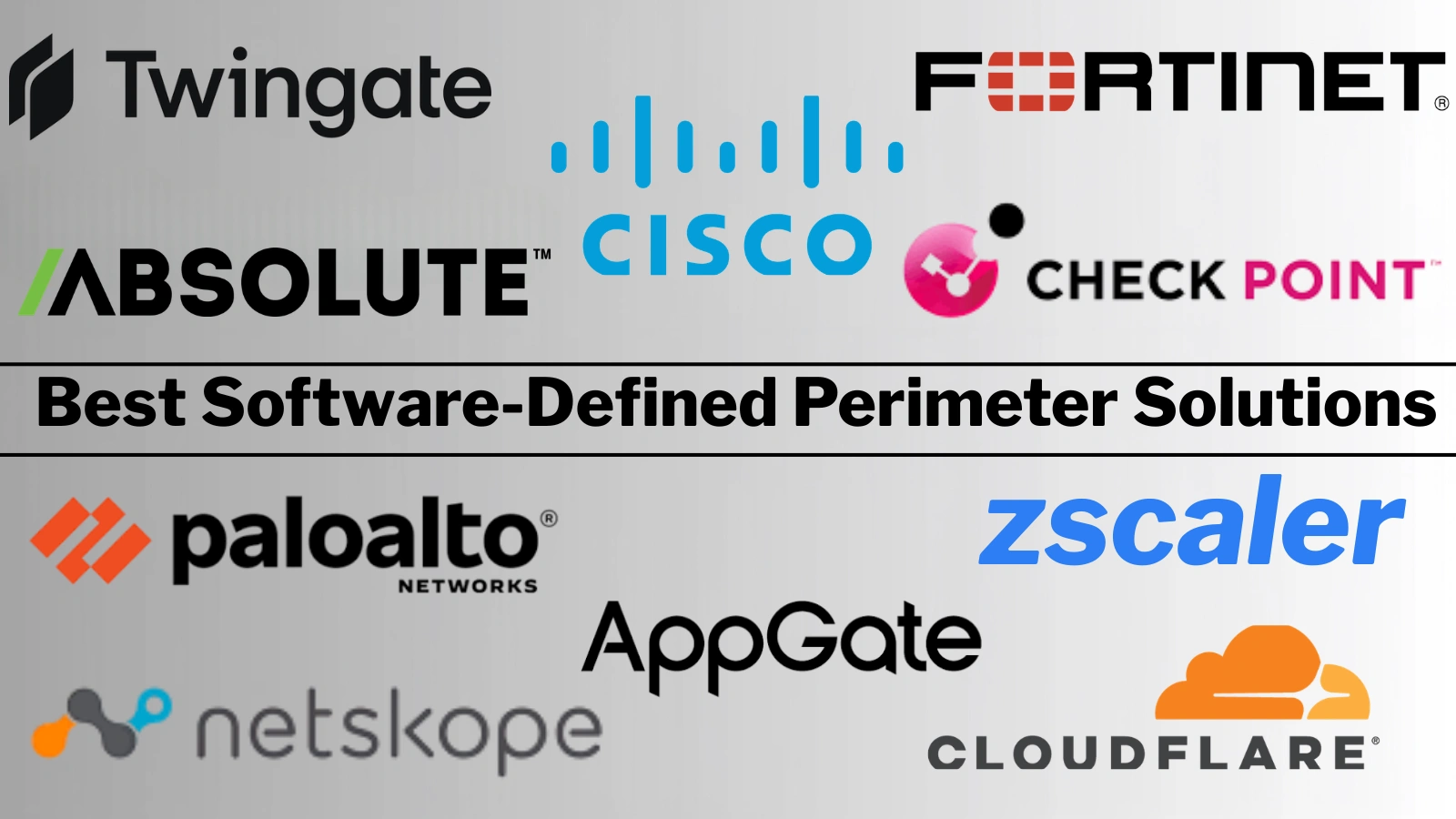
Based on market analysis, technological innovation, and enterprise adoption, here are the leading SDP solutions:
1. Zscaler Private Access (ZPA)
Zscaler continues to lead the market, particularly at enterprise scale. ZPA extends the Zscaler Zero Trust Exchange to private applications, connecting authorized users directly to internal resources without placing them on the network. Its global cloud infrastructure provides unparalleled performance and scalability, making it a robust solution for large, geographically dispersed organizations.
2. Appgate SDP
Appgate remains perhaps the purest implementation of the original SDP architecture. It delivers dynamic, attribute-based access control, ensuring that only authenticated and authorized users can see and connect to specific resources. Appgate’s emphasis on micro-segmentation and contextual access policies makes it highly adaptable to complex security requirements.
3. Twingate
For teams looking to replace a VPN quickly and efficiently, Twingate offers a fast path to SDP adoption. It focuses on simplicity and ease of deployment while delivering strong zero-trust principles. Twingate is particularly appealing for startups and SMBs needing to secure remote access without extensive configuration or infrastructure changes.
4. Palo Alto Networks Prisma Access
Palo Alto Networks integrates SDP capabilities within its comprehensive SASE (Secure Access Service Edge) platform, Prisma Access. It provides secure access to private applications from any location, leveraging a global network of cloud-delivered security services. Prisma Access is ideal for organizations seeking a unified security solution for both internet and private application access.
5. Akamai Enterprise Application Access (EAA)
Akamai EAA offers a highly scalable and secure way to deliver internal applications to users without exposing them to the public internet. Leveraging Akamai’s intelligent edge platform, EAA minimizes latency and provides robust protection against DDoS and web application attacks, all while enforcing zero-trust principles for access.
6. Cloudflare Zero Trust
Cloudflare’s Zero Trust platform, including Cloudflare Access, offers a modern approach to securing application access. It replaces legacy VPNs by connecting users directly to internal applications through Cloudflare’s global network, enforcing identity and context-based policies. Its ease of integration and comprehensive security features make it a strong contender.
7. Fortinet FortiSASE
Fortinet’s FortiSASE converges networking and security into a single, cloud-delivered service, encompassing SDP functionalities. It allows secure access to private applications from anywhere, protected by Fortinet’s advanced security capabilities like NGFW, secure web gateway, and CASB. FortiSASE is particularly attractive to organizations invested in the Fortinet ecosystem.
8. Cisco Secure Access (formerly Duo Network Gateway)
Cisco’s Secure Access solutions incorporate zero-trust principles for application access. While its primary focus is on strong authentication, its offerings like Duo Network Gateway extend to providing secure, perimeter-less access to on-premises applications. This is a strong option for organizations already utilizing Cisco’s identity and security products.
9. Banyan Security
Banyan Security delivers a cloud-native, zero-trust network access (ZTNA) solution. It focuses on simplifying secure access to applications and services across hybrid and multi-cloud environments. Banyan provides granular access controls based on user identity, device posture, and application context, ensuring highly adaptive security.
10. Perimeter 81
Perimeter 81 offers a holistic SASE platform that includes robust SDP capabilities. It simplifies network security for hybrid teams by providing secure remote access, network segmentation, and cloud-based security services. Perimeter 81 is known for its user-friendly interface and quick deployment, making it suitable for growing businesses.
Conclusion
The evolution of cybersecurity dictates a move away from easily breached network perimeters towards dynamic, user-centric access models. Software-Defined Perimeters are at the forefront of this shift, offering an unparalleled ability to hide resources from attackers while providing seamless, secure access to authorized users. Whether an organization requires enterprise-grade scalability like Zscaler, the architectural purity of Appgate, or the rapid deployment of Twingate, the market offers a robust SDP solution. Implementing an SDP is no longer a luxury but a fundamental component of a resilient cybersecurity strategy in 2026 and beyond.