
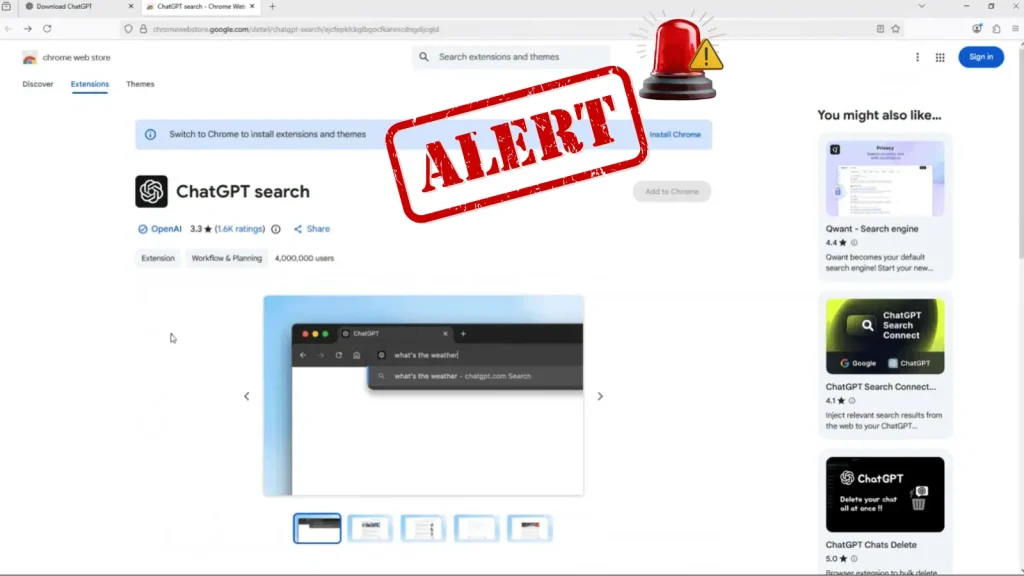
Weaponized ChatGPT Download Site Delivers Malware Via Sponsored Search Results
The digital landscape is a constant battleground, where the allure of new technology often becomes a weapon in the hands of malicious actors. Our latest intelligence reveals a potent threat exploiting the widespread popularity of ChatGPT: a sophisticated malvertising campaign delivering malware to both Windows and macOS users via weaponized fake download sites.
This isn’t just another phishing attempt; it’s a meticulously crafted operation identified by Evalian’s SOC team, leveraging convincing OpenAI branding and sponsored search results to ensnare unsuspecting users. As cybersecurity analysts, understanding these tactics is critical to protecting our systems and educating our users. This post delves into the mechanics of this threat, its implications, and the essential steps for mitigation.
The Malvertising Deception: How It Works
The campaign’s success hinges on exploiting legitimate user intent. Individuals actively seeking to download or utilize AI tools like ChatGPT are prime targets. Threat actors meticulously craft fake download sites that mimic the official OpenAI interface, complete with familiar branding and seemingly legitimate download buttons. These sites are then promoted through sponsored search results, often appearing at the top of search engine pages when users query terms like “download ChatGPT” or “ChatGPT desktop app.”
Once a user clicks on one of these malicious ads, they are redirected to the fake site. Believing they are accessing a legitimate tool, they are then prompted to download what appears to be an installer for ChatGPT. This downloaded file, however, is weaponized, carrying various forms of malware designed to compromise the user’s system.
Malware Delivery Across Platforms
A particularly concerning aspect of this campaign is its cross-platform targeting. Unlike many malvertising efforts that focus solely on Windows devices, this operation delivers malware to both Windows and macOS users. This indicates a broader, more sophisticated attack infrastructure capable of developing and deploying payloads for different operating systems.
The specific malware delivered can vary, but common payloads in such campaigns include infostealers, remote access Trojans (RATs), and even ransomware. Once executed, these malicious programs can compromise sensitive data, establish persistent backdoors, or encrypt critical files, leading to significant data breaches and operational disruptions.
Tactics of the Threat Actors
- Search Engine Advertising: The primary distribution vector is sponsored search results. Threat actors bid on high-value keywords related to ChatGPT downloads, ensuring their malicious links appear prominently. This technique, known as malvertising, is a consistently effective way to reach a broad audience.
- Brand Impersonation: The fake websites are designed with a high degree of fidelity to OpenAI’s actual branding. This visual authenticity is crucial for building trust and deceiving users into believing they are interacting with a legitimate service.
- Urgency and Convenience: The desire for immediate access to cutting-edge tools like ChatGPT can override caution. The promise of a direct download and easy installation plays into this urgency.
Remediation Actions and Prevention
Mitigating the risks posed by this malvertising campaign requires a multi-layered approach, combining user education with robust technical controls.
- Verify Download Sources: Always download software directly from official vendor websites. For ChatGPT, this means going through openai.com. Avoid unofficial download portals, software aggregators, or links from sponsored search results without prior verification.
- Scrutinize URLs: Before clicking a link or downloading a file, carefully examine the URL. Look for subtle misspellings, unusual domain extensions, or redirects. Malicious sites often use domains that are similar but not identical to the legitimate ones.
- Utilize Ad Blockers and Browser Security Features: While not foolproof, reputable ad blockers can sometimes prevent malicious ads from displaying. Modern browsers also include built-in security features that warn users about suspicious sites.
- Endpoint Detection and Response (EDR): Implement and maintain robust EDR solutions on all workstations and servers. EDR can detect and respond to malicious activity post-compromise, even if initial defenses are bypassed.
- Regular Software Updates: Ensure operating systems, web browsers, and all installed software are kept up-to-date. Patching known vulnerabilities can prevent attackers from exploiting them, although no specific CVE has been associated with the initial compromise vector here, the malware itself may exploit existing vulnerabilities.
- User Education and Awareness: Conduct regular security awareness training for all users. Emphasize the dangers of malvertising, social engineering, and the importance of verifying software download sources.
- Leverage Threat Intelligence: Stay informed about emerging threats and campaigns. Feeds from reputable cybersecurity news outlets and threat intelligence platforms are invaluable.
Detection and Analysis Tools
During an incident response or proactive hunting, several tools can assist in detecting and analyzing potential compromises related to such campaigns.
| Tool Name | Purpose | Link |
|---|---|---|
| Virustotal | File and URL analysis for malware detection | https://www.virustotal.com/ |
| URLScan.io | Website scanning for malicious indicators | https://urlscan.io/ |
| Cuckoo Sandbox | Automated malware analysis sandbox | https://cuckoosandbox.org/ |
| Autopsy | Digital forensics platform for disk image analysis | https://www.autopsy.com/ |
| Malwarebytes | Endpoint protection and malware removal | https://www.malwarebytes.com/ |
Conclusion
The weaponized ChatGPT download site represents a significant threat, highlighting the agility of threat actors in leveraging popular trends for malicious purposes. This malvertising campaign underscores the critical need for vigilance, robust security controls, and continuous user education. By understanding how these attacks are executed and implementing proactive measures, we can significantly reduce the attack surface and protect our organizations from similar sophisticated threats. Always verify your sources, trust your security tools, and prioritize caution over convenience when interacting with emerging technologies.




