Zero Trust Network Access (ZTNA) Over Wireless Networks.
Zero Trust Network Access (ZTNA) over Wireless Networks and Access Solutions
In an era where digital threats constantly evolve, safeguarding your enterprise’s digital infrastructure is not merely an an option, but an imperative. This article delves into Zero Trust Network Access (ZTNA), an advanced security paradigm designed to protect your valuable assets, especially when integrating with wireless networks and diverse access solutions, emphasizes the importance of granular access policies..
Understanding Zero Trust

What is Zero Trust?
Zero Trust is a strategic approach to cybersecurity that operates on the fundamental principle of “never trust, always verify.” Unlike traditional security models that assume everything inside the network perimeter is trustworthy, Zero Trust mandates strict identity-based access control for every user and device attempting to gain access. network access, regardless of their location. This robust framework ensures that only authorized entities with validated credentials can access specific resources, thereby preventing unauthorized access and bolstering overall network security through defined access control policies.
Key Principles of Zero Trust
The core tenets of Zero Trust revolve around several critical principles, including identity-based access control and least-privilege access. First, continuous verification ensures that every access request is rigorously authenticated and authorized before granting network access. Second, least-privileged access dictates that users are granted access only to specific resources absolutely necessary for their role, rather than broad network access. Third, micro-segmentation isolates network segments and resources, limiting the potential impact of a breach. These principles collectively forge a resilient Zero Trust architecture designed to defend against sophisticated cyber threats.
How Zero Trust Differs from Traditional Security Models
Traditional security models, often built around a defined network perimeter, typically grant implicit trust to users and devices once they are inside the corporate network. This inherent trust can leave organizations vulnerable to internal threats and lateral movement once an attacker breaches the perimeter. In stark contrast, the principles of ZTNA emphasize a more secure and controlled access environment. Zero Trust security dismantles this implicit trust, requiring explicit verification for every access request, irrespective of whether the request originates from within or outside the network. This fundamental shift provides granular access control and significantly enhances an organization’s security posture through the implementation of least-privilege access. security posture against evolving cyber threats.
ZTNA Explained

What is ZTNA?
Zero Trust Network Access (ZTNA) represents a sophisticated evolution in network security, fundamentally shifting the paradigm of how users gain access to corporate resources. At its core, ZTNA provides secure access to applications and data based on the principle of “never trust, always verify,” extending the principles of Zero Trust security to every access request. Unlike traditional models that often grant broad network access, ZTNA improves security by enforcing application-level access controls. ZTNA ensures that only authorized users and devices are granted access only to specific applications they need, drastically reducing the attack surface and mitigating risks associated with unauthorized access. This approach is instrumental in protecting sensitive corporate data, especially within increasingly distributed and hybrid work environments, by applying granular access policies.
How ZTNA Works
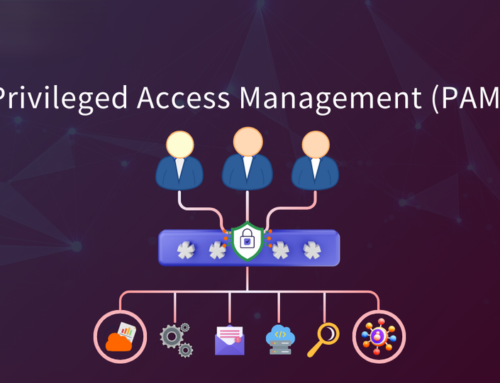
The operational mechanics of ZTNA revolve around rigorous identity-based authentication and granular access control, which are essential for effective access security. When a user attempts to gain network access, the ZTNA solution first verifies their identity and device posture, regardless of their location, ensuring that access is granted only under strict conditions. An agent-based ZTNA often resides on the endpoint, facilitating this verification. Once authenticated, the ZTNA service establishes a secure, encrypted tunnel directly to the specific application or resource the user is authorized to access, rather than granting broad network access to the entire network. Access decisions are dynamically made based on a comprehensive set of access policies, user identity, device health, and environmental factors, ensuring that every access request adheres to the principle of least-privileged access and bolstering overall network security.
ZTNA vs VPN: A Comparison
While both ZTNA and VPNs offer secure access, ZTNA helps to provide more granular control over user permissions. remote accessWhile both ZTNA and VPNs offer secure access, their underlying architectures and security models differ significantly in terms of application-level access. Traditional VPNs typically grant users access to the entire network once connected, effectively extending the corporate network perimeter to the remote user and creating a larger attack surface. This can inadvertently expose internal resources to potential threats if an attacker compromises a connected device, highlighting the need for robust network segmentation. In contrast, the adoption of role-based access control can significantly enhance security measures in conjunction with ZTNA. ZTNA provides secure remote access to applications by establishing individual, encrypted tunnels to specific applications, rather than the entire network, thus enhancing the access model.. This granular access control, combined with continuous verification and identity-based access, offers superior protection against unauthorized access, aligning perfectly with modern Zero Trust principles and significantly enhancing an organization’s security posture over traditional VPN solutions.
Benefits of ZTNA
Advantages of ZTNA for Organizations
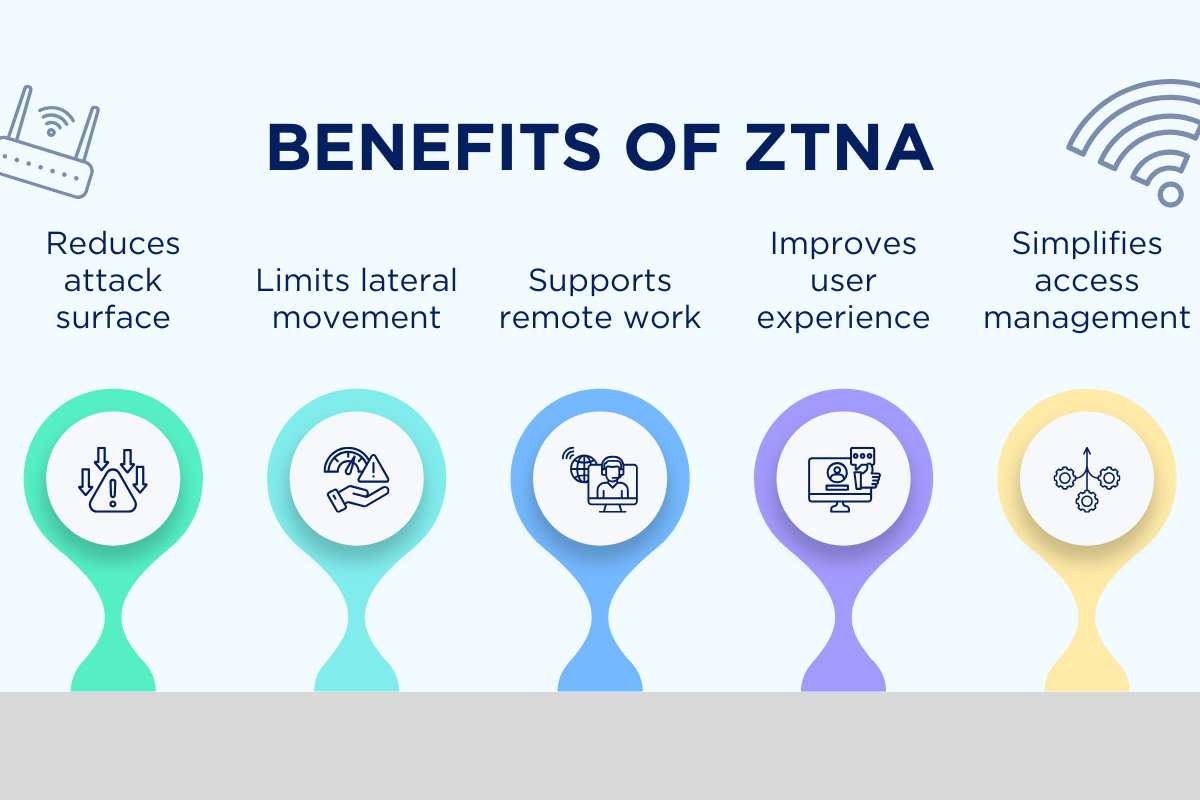
Zero Trust Network Access (ZTNA) offers a myriad of compelling advantages for organizations seeking to fortify their cybersecurity posture in today’s complex threat landscape by implementing least privilege access. A primary benefit of ZTNA is its ability to ensure that users can access only what they need, reducing the attack surface. significantly reduce the attack surface by enforcing granular access control, ensuring that users only have access to specific applications they require, rather than the entire network. This proactive approach minimizes the potential impact of a security breach and provides enhanced network security. Furthermore, ZTNA streamlines secure remote access, allowing employees to access corporate resources securely from any location or device, aligning perfectly with the demands of modern hybrid work environments and safeguarding sensitive data.
Enhanced Security with ZTNA
The enhanced security provided by ZTNA is a cornerstone of its appeal, fundamentally shifting an organization’s defense mechanisms from a perimeter-centric model to one of continuous verification. By implementing Zero Trust principles, organizations can effectively implement zero-trust network access to enhance security. every access request is rigorously authenticated and authorized, irrespective of the user’s location or device. This identity-based access, combined with device posture checks, ensures that only trusted users on healthy devices gain secure access to applications. The ZTNA solution actively prevents unauthorized access and lateral movement within the corporate network, bolstering overall network security and significantly mitigating risks associated with sophisticated cyber threats, thereby providing a robust Zero Trust security framework.
Improved User Experience with ZTNA
Beyond its profound security advantages, ZTNA also plays a crucial role in significantly improving the user experience, often in contrast to traditional VPN solutions. With ZTNA, access is granted based on strict verification processes, ensuring enhanced security. users can enjoy seamless and secure access to applications without the complexities and potential performance bottlenecks often associated with broad network access via VPNs. The ZTNA service provides direct, encrypted connections to specific applications, eliminating the need to connect to the entire network. This streamlined approach, combined with identity-based authentication, ensures a more efficient and less intrusive access experience, allowing employees to remain productive while maintaining the highest levels of Zero Trust security.
Implementing ZTNA
Steps to Implement ZTNA
Implementing a ZTNA solution involves a structured approach to ensure a smooth transition and maximize its security benefits while establishing defined access control policies aligned with least-privilege access. The initial steps typically include a thorough assessment of existing infrastructure and application access requirements to define precise access policies. Subsequently, organizations must deploy the ZTNA service, which may involve installing agent-based ZTNA components on endpoints or configuring a cloud-based access service edge. The crucial phase involves gradually migrating users and applications to the ZTNA platform, rigorously testing access decisions and refining granular access control. This methodical implementation ensures that every access request adheres to Zero Trust principles, enhancing overall network security without disrupting business operations through defined access control policies.
Choosing the Right ZTNA Solution
Selecting the appropriate ZTNA solution is a critical decision that profoundly impacts an organization’s security posture and operational efficiency, particularly in terms of access security. When evaluating options, organizations should consider ZTNA use cases that best fit their security needs. consider solutions that offer robust identity-based authentication and granular access control capabilities, allowing for precise access policies. It is essential to choose a ZTNA provider that integrates seamlessly with your existing identity and access management systems and provides comprehensive visibility into user and device activity. Furthermore, assess whether the ZTNA solution supports your specific application access needs, offers agent-based ZTNA if required, and can scale to accommodate future growth, ensuring a comprehensive and effective Zero Trust architecture that secures your corporate network.
Common Challenges in ZTNA Implementation
While the benefits of ZTNA are compelling, organizations may encounter several common challenges during its implementation. One significant hurdle can be the complexity of defining and managing detailed access policies for every access request, especially in large, diverse environments. Ensuring seamless integration with legacy systems and applications that may not be designed for Zero Trust security principles can also pose difficulties. Overcoming user resistance to new access control mechanisms and providing adequate training is another critical factor in successfully implementing zero-trust network access. Addressing these challenges through meticulous planning, clear communication, and a phased implementation strategy is vital to successfully implement ZTNA and achieve enhanced network security.
Secure Application Access
How ZTNA Facilitates Secure Application Access
Zero Trust Network Access (ZTNA) fundamentally reshapes how organizations provide secure application access, moving away from perimeter-based security to a model of continuous verification. A ZTNA solution ensures that every access request is meticulously authenticated and authorized before granting access only to specific applications, rather than the entire network. This granular access control is achieved through identity-based authentication and device posture checks, rigorously verifying both the user’s identity and the health of their device. The ZTNA service then establishes a secure, encrypted tunnel directly to the application, effectively isolating it from the broader corporate network and drastically reducing the attack surface against potential threats and unauthorized access.
Integration with Existing Security Frameworks
Effective ZTNA implementation necessitates seamless integration with an organization’s existing security frameworks to maximize its benefits and ensure comprehensive network security. A robust ZTNA solution should integrate effortlessly with current identity and access management (IAM) systems, leveraging existing user directories and authentication protocols to enable role-based access control.. Furthermore, integration with security information and event management (SIEM) platforms provides enhanced visibility into access decisions and potential security incidents, allowing for proactive threat detection and response. This interoperability ensures that ZTNA complements and strengthens the overall Zero Trust architecture, providing a unified and resilient defense against evolving cyber threats while optimizing existing security investments.
Monitoring and Managing Access in ZTNA
Monitoring and managing access in a ZTNA environment are critical components for maintaining a strong security posture and ensuring compliance with established access policies. The ZTNA solution provides comprehensive visibility into every access request, offering detailed logs and real-time alerts on user activity and device posture. This continuous monitoring allows security teams to identify and respond swiftly to suspicious behaviour, preventing unauthorized access and potential data breaches. Regular audits of access decisions and granular access control policies ensure that least-privileged access is consistently enforced, while also providing valuable insights for refining security protocols and adapting to new threats, thus solidifying the Zero Trust principles within the corporate network.
Wireless Networks and ZTNA

Challenges of Zero Trust in Wireless Environments
Implementing Zero Trust principles within wireless environments presents unique challenges due to the inherent fluidity and decentralized nature of identity-based access control. wireless network access. The traditional network perimeter becomes even more ambiguous in a wireless setting, making it difficult to enforce strict access control without a robust ZTNA solution that employs least privilege access. Ensuring identity-based authentication and consistent device posture checks across a multitude of diverse wireless devices, often operating outside traditional corporate network boundaries, requires sophisticated management. Furthermore, maintaining secure access and preventing unauthorized access in environments where devices frequently connect and disconnect, such as public Wi-Fi or hybrid work settings, demands dynamic and adaptive access policies to uphold the integrity of the Zero Trust architecture.
Best Practices for Wireless ZTNA Implementation
To effectively implement ZTNA over wireless networks, organizations must adopt several best practices to mitigate inherent challenges and fortify their security posture. Prioritizing robust identity-based authentication for every access request, coupled with continuous device posture assessment for all connecting devices, is paramount. Employing micro-segmentation to isolate wireless network segments and restrict application access to only necessary resources significantly limits potential lateral movement by attackers. Additionally, leveraging an agent-based ZTNA solution on endpoints can enhance visibility and control, while dynamically adjusting access decisions based on real-time risk assessments ensures that secure access is maintained without compromising user experience, thereby strengthening the Zero Trust security model.
Future Trends in Wireless ZTNA Solutions
The landscape of wireless ZTNA solutions is continually evolving, driven by advancements in technology and the increasing demand for secure, flexible remote access. Future trends anticipate more integrated and intelligent ZTNA services, leveraging artificial intelligence and machine learning to predict and prevent threats with greater accuracy. The convergence of ZTNA with Secure Access Service Edge (SASE) frameworks will provide a more unified and streamlined approach to network security, offering comprehensive protection from the cloud through principles of ZTNA. Furthermore, enhanced support for IoT devices and operational technology (OT) in wireless environments will expand the scope of Zero Trust, ensuring that every connected entity, regardless of its nature, adheres to stringent access control and identity-based authentication protocols, solidifying the Zero Trust architecture.

What is zero trust network access and how does it change network access control?
Zero trust network access (ZTNA) is a security model that eliminates implicit trust and requires continuous verification of users, devices and applications. Unlike traditional network access control that grants broad access once inside a network perimeter, ZTNA enforces least-privilege, contextual access to specific resources and sessions. This approach reduces lateral movement risks and shifts enforcement from the network edge to per-application and per-session controls, which enhances overall access security.
How do the principles of ZTNA enable secure access over wireless networks?
The principles of ZTNA—verify explicitly, use least privilege, and assume breach—are applied over wireless networks by continuously authenticating device posture, user identity and session context before granting access. Secure access on Wi‑Fi or cellular links relies on strong device and user verification, dynamic policies that consider location and threat signals, and per-application segmentation so that wireless clients only get access to the specific applications they need.
How can organizations implement zero trust network access for access to applications based environments and third-party access?
To implement zero trust network access for application-based environments and third-party access, organizations should map applications and dependencies, adopt per-application access brokers (ZTNA gateways), integrate identity and device posture checks, and apply policy-driven least-privilege rules. For third-party access, use just-in-time credentials, time-bound sessions and strict monitoring to minimize exposure while ensuring contractors or partners can reach only the required application resources.
What are common challenges when deploying ZTNA over wireless networks and how does it affect network access control?
Common challenges include variable wireless performance, device diversity, roaming between access points, and ensuring consistent enforcement of policies across Wi‑Fi and cellular links. Deploying ZTNA affects network access control by shifting enforcement from VLANs/firewalls to identity- and application-centric controls, requiring integration with identity providers, endpoint detection, and network telemetry to maintain seamless, secure access without degrading user experience.